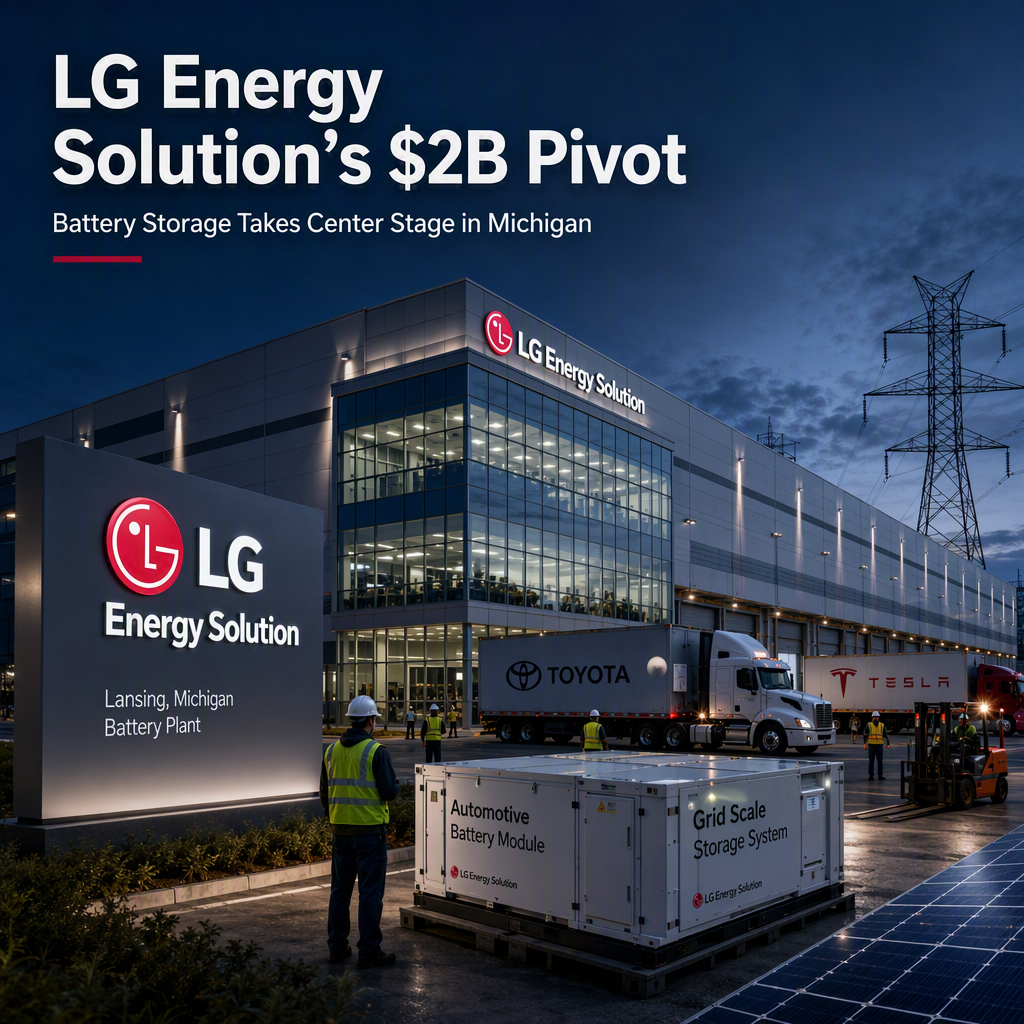
LG Energy Solution has inaugurated a new lithium-ion battery plant in Lansing, Michigan, representing an investment of approximately $2 billion. The facility opened half a year later than originally planned, a delay attributed to a slowdown in U.S. electric vehicle (EV) demand [1]. Initially intended to primarily supply battery cells for LG Energy Solution Vertech, the plant is now pivoting its production focus toward battery storage systems, reflecting a strategic response to changing market conditions [1].
The Lansing plant is positioned to serve major clients, including Toyota and Tesla, and is designed to support both automotive and grid-scale storage requirements. This shift comes as battery storage costs have reportedly fallen below those of gas-fired power plants for the first time, prompting LG Energy Solution to adapt its business model to capture growing demand from corporate clients, utilities, and automakers seeking reliable storage solutions [1].
The $2 billion investment underscores LG Energy Solution's commitment to maintaining its competitive position in the global battery market, especially as Chinese battery makers now account for over 70% of global EV battery market share. The Lansing facility incorporates advanced manufacturing processes aimed at improving efficiency and reducing production costs, which is increasingly important as price competition intensifies in the sector [1].
Industry analysts cited in the article note that the plant is well-placed to support Toyota and Tesla as they diversify their energy portfolios. The facility is also part of LG Energy Solution's broader North American strategy, aligning with shifting consumer preferences and regulatory incentives for clean energy and storage technologies [1]. While no explicit trading advice or technical analysis was provided, market sentiment is described as cautiously optimistic for battery makers pivoting toward energy storage amid the EV market slowdown [1].
CONCLUSION
LG Energy Solution's $2 billion investment in its new Michigan plant marks a strategic pivot toward battery storage systems as EV demand slows in the U.S. The facility is expected to strengthen the company's position in both automotive and energy storage markets, with cautiously optimistic sentiment for battery makers adapting to these evolving market dynamics.