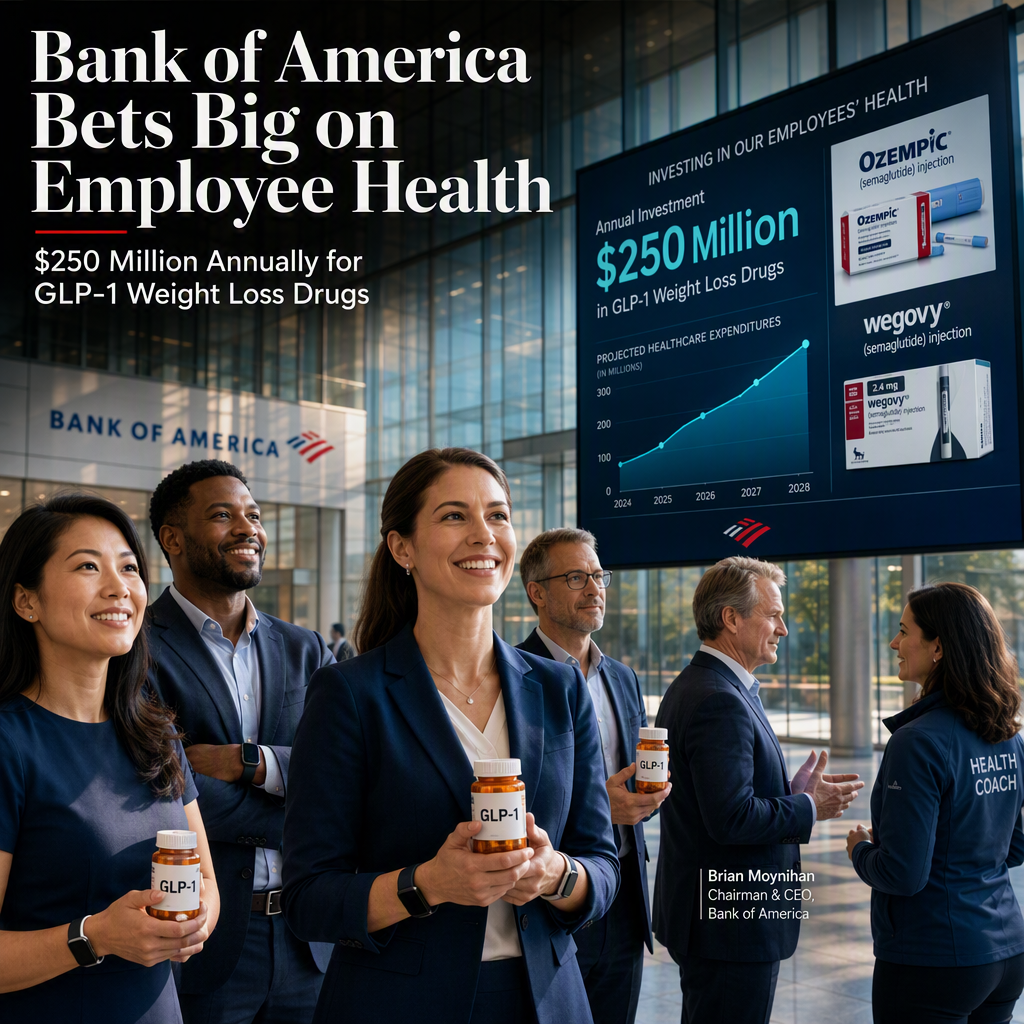
Bank of America CEO Brian Moynihan revealed that the company is spending more than $250 million each year to provide GLP-1 weight loss medications, such as Ozempic and Wegovy, to its employees, a figure that has surged from zero just four or five years ago [1]. Moynihan described this rapidly rising cost as a 'good investment,' citing both near- and long-term health benefits for employees, including reduced incidents of heart issues and emerging clinical data suggesting a lower incidence of cardiovascular events [1].
The $250 million annual expenditure on GLP-1 drugs now accounts for roughly 13% of Bank of America's total healthcare spending, which exceeds $2 billion annually for its approximately 211,000 employees [1]. Moynihan acknowledged that while some employees may leave before the company realizes the full long-term savings from improved health, the decision to cover these drugs reflects a broader commitment to providing valuable benefits [1].
Bank of America pairs access to GLP-1 medications with health coaching to monitor weight loss and lifestyle adjustments among employees [1]. Moynihan noted that the company is leveraging its size to negotiate lower prices with drugmakers and pharmacy benefit managers, emphasizing ongoing efforts to manage costs while maintaining access to these treatments [1].
The CEO's comments come amid a broader trend of employers nationwide grappling with the soaring demand and high costs of GLP-1 drugs, with many companies debating coverage or imposing restrictions as utilization climbs [1].
CONCLUSION
Bank of America's significant investment in GLP-1 drugs underscores the growing importance of employee health benefits and the financial challenges posed by high-cost medications. The company's approach may influence other large employers as they evaluate the balance between healthcare costs and workforce well-being.