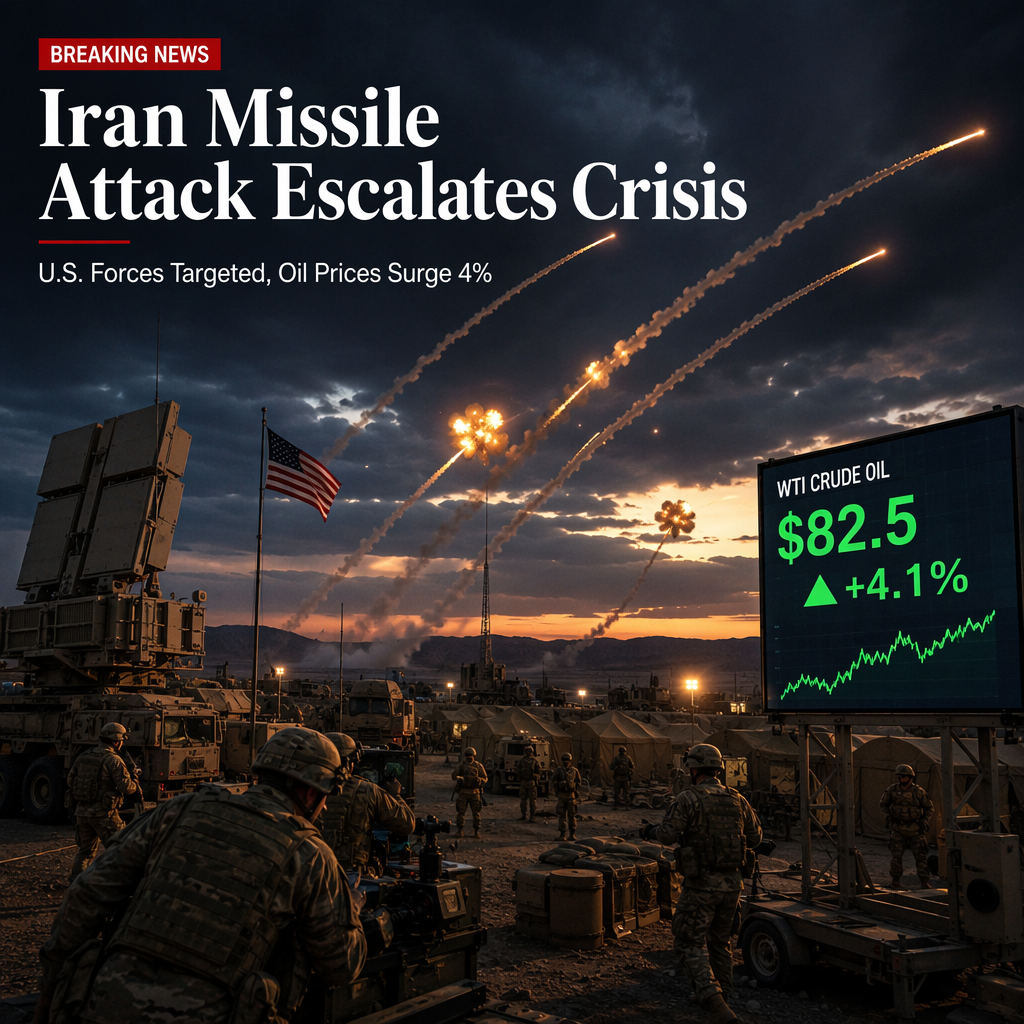
Iran launched a surprise ballistic missile attack targeting U.S. forces in the Middle East late Tuesday, according to the U.S. Central Command (Centcom) [1]. Centcom stated in a post on X that the missiles originated from Iran and were aimed at U.S. forces, but all missiles were intercepted [1]. While Centcom did not specify the exact location of the intended targets, Axios reported, citing U.S. officials, that the attack was directed at a U.S. base in Jordan [1].
In a related development, the U.K. Maritime Trade Operations Centre reported 'suspicious activity' in the Red Sea, noting that the master of a tanker heard an explosion while transiting the southern Red Sea. The incident was reported on Monday, with the advisory issued on Tuesday, but no further details were provided [1]. It is not confirmed if this incident was linked to Houthi rebels, although the rebels had previously claimed attacks on two Saudi oil tankers in the area last week, prompting retaliation from Saudi Arabia [1].
The news of the missile attack and heightened tensions in the region had an immediate impact on markets. U.S. crude futures surged over 4%, trading at $82.5 per barrel in reaction to the developments [1].
No forward-looking statements or analyst opinions were provided in the source article.
CONCLUSION
Iran's attempted missile attack on U.S. forces, though intercepted, has sharply escalated tensions in the Middle East and triggered a significant spike in oil prices. The market's reaction underscores the sensitivity to geopolitical risks in the region, with crude futures jumping over 4% on the news.