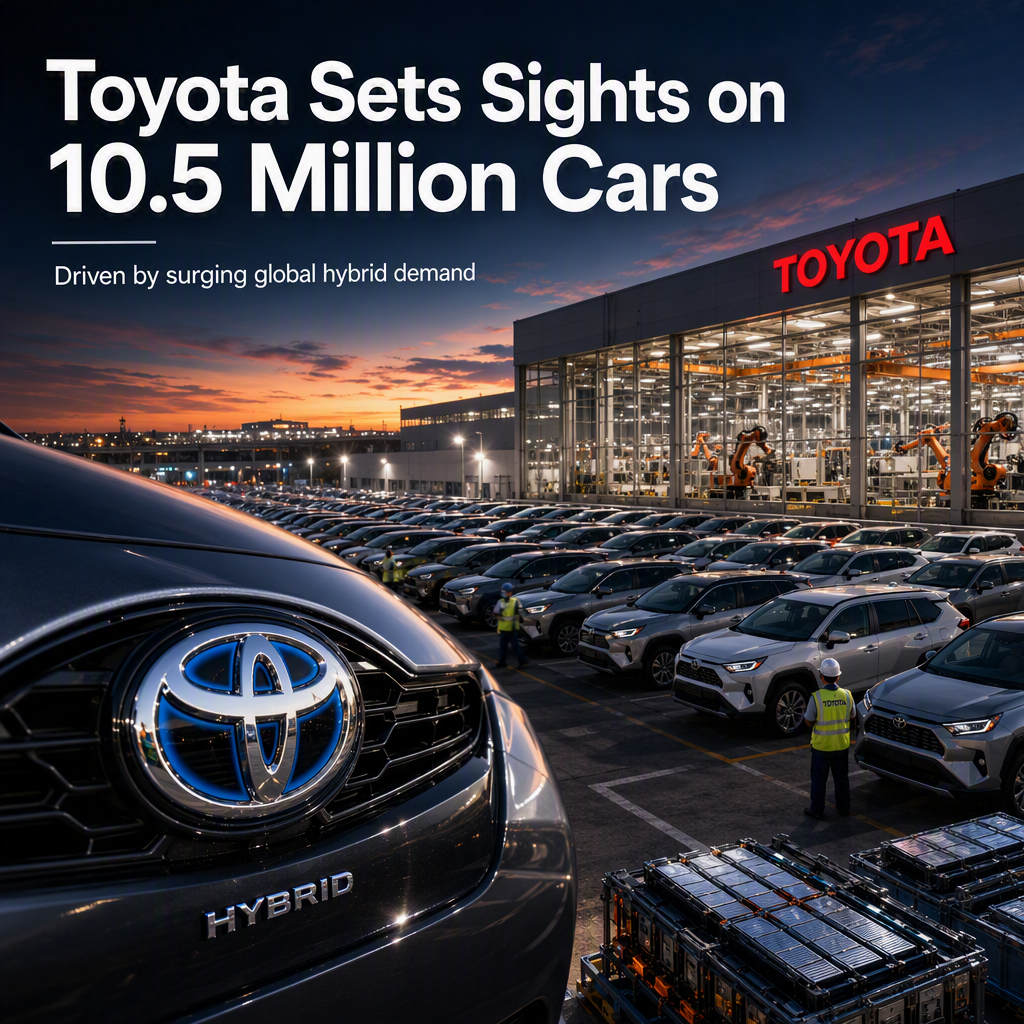
Toyota Motor has announced plans to produce 10.5 million vehicles globally in 2027, marking the first time since 2023 that the automaker aims to surpass the 10 million unit threshold. This ambitious production target is driven by robust global demand for hybrid vehicles, which combine internal combustion engines with electric motors to enhance fuel efficiency and reduce emissions [1].
The company is focusing on popular models such as the RAV4, a compact sport utility vehicle, and intends to manufacture next-generation hybrid batteries in the coming years. Toyota's strategy is to leverage its established hybrid portfolio to maintain a competitive advantage as the automotive industry navigates the transition between hybrid, electric, and traditional gasoline vehicles [1].
Toyota's continued investment in hybrid technology is a response to evolving market trends and increasingly stringent environmental regulations. The automaker's new production goal reflects confidence in sustained demand for hybrids, even as competition from purely electric vehicle manufacturers intensifies [1].
CONCLUSION
Toyota's plan to boost global vehicle production to 10.5 million units in 2027 underscores its confidence in the ongoing demand for hybrid vehicles. The company's focus on hybrid technology and next-generation batteries positions it to maintain a strong market presence amid industry shifts and regulatory changes.