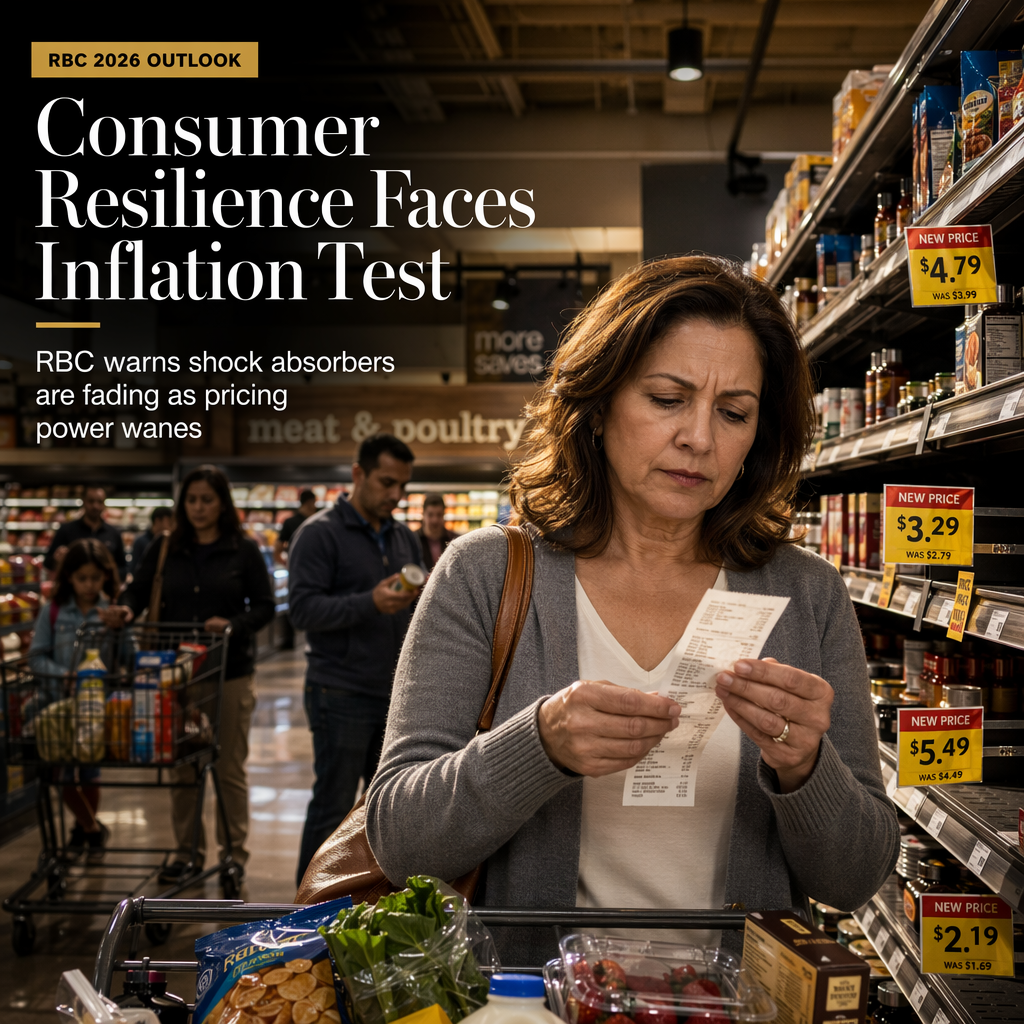
Royal Bank of Canada (RBC) strategists have highlighted that the United States consumer has demonstrated resilience throughout 2026, even as energy costs surged earlier in the year. This resilience was supported by factors such as tax refunds, substantial savings, and manageable debt levels, which acted as shock absorbers against inflationary pressures and the energy price shock [1].
However, RBC notes that while energy costs are now declining, persistent non-energy inflation continues to strain households, reducing their capacity to absorb further price increases. The strategists caution that, despite the temptation to expect an acceleration in consumer spending as energy prices fall, the cumulative impact of previous shocks has left consumers more vulnerable [1].
RBC maintains a cautiously optimistic outlook on the U.S. economy, citing strong demand from high-income households and a tight labor market as positive factors. Nevertheless, they warn that corporate pricing power may be weakening for the first time since the pandemic, as businesses are finding it increasingly difficult to pass on higher costs to end consumers. This shift in pricing dynamics is identified as a key trend to monitor going forward [1].
CONCLUSION
RBC strategists believe the U.S. consumer remains resilient but warn that persistent inflation and the fading ability of businesses to pass on costs could challenge this strength. While the overall economic outlook remains cautiously optimistic, the erosion of household shock absorbers and corporate pricing power may limit future growth.