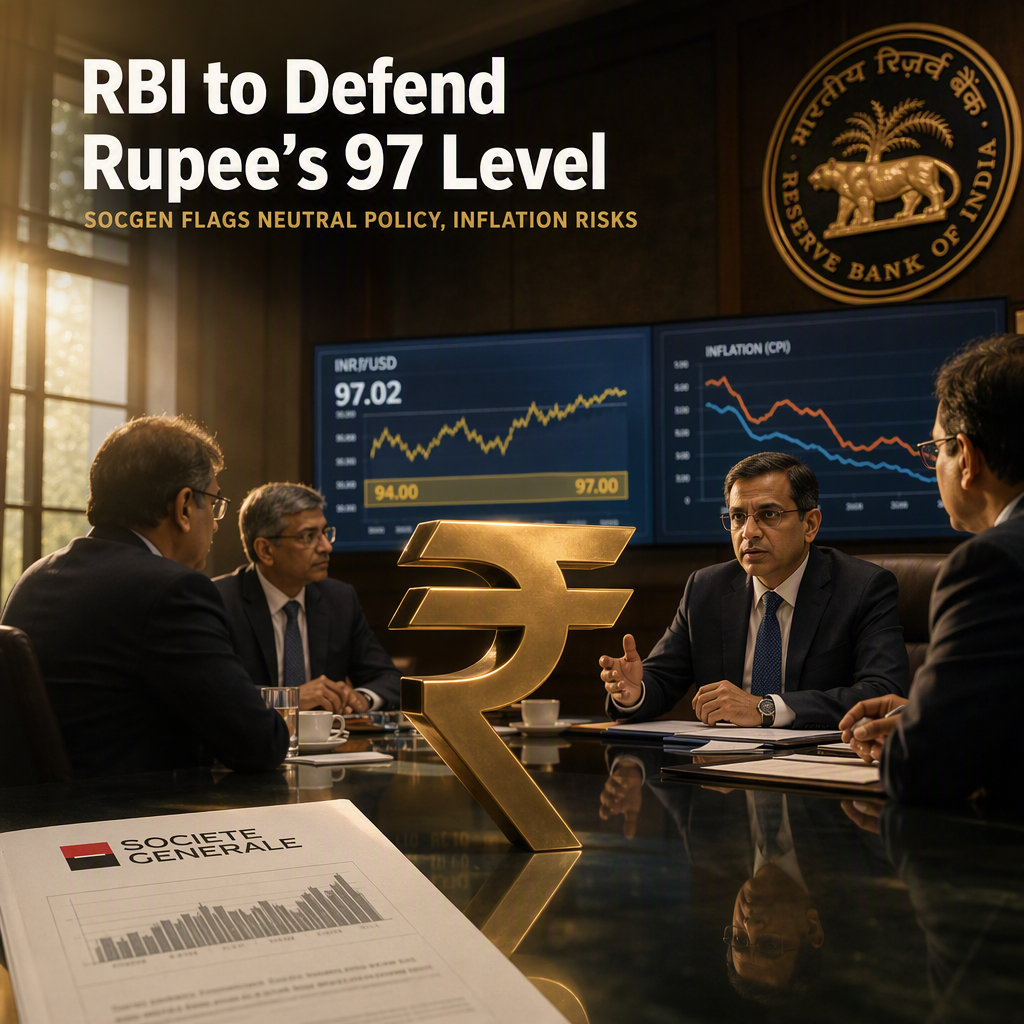
Societe Generale analysts Kunal Kundu and Galvin Chia assessed the Reserve Bank of India's (RBI) latest policy outcome as neutral for the Indian Rupee (INR), noting that the central bank made fewer comments on the INR and capital flows compared to previous meetings. The analysts referenced Governor Malhotra’s recent statement that the INR is 'not undervalued' and expect the RBI to defend the 97 onshore level, likely resulting in the INR trading within a 94–97 range in the coming weeks [1].
The RBI’s decision to pause policy changes was described as understandable, but Societe Generale expressed concern that the central bank’s communication on inflation appeared overly comfortable. While benign core inflation suggests weak underlying demand and limited pricing power, the analysts highlighted that India’s near-term inflation risks are driven more by supply shocks, food acreage gaps, energy volatility, imported cost pressures, and firming expectations rather than excess demand [1].
Societe Generale noted that the RBI lowered its inflation projection while acknowledging risks such as El Niño and geopolitical factors. However, the analysts believe the RBI may be placing too much confidence in a benign baseline scenario and not enough emphasis on upside risks. They warned that the disinflation path remains fragile and vulnerable to cost-push shocks, and that rising household inflation expectations could become unanchored if not addressed [1].
Regarding foreign exchange, the analysts described the RBI’s latest decision as neutral, with continued portfolio inflows reducing external macroeconomic vulnerabilities. They expect the RBI to continue accumulating US Dollars as the INR rallies, maintaining the currency within the 94–97 range in the near term [1].
CONCLUSION
Societe Generale views the RBI’s recent policy stance as neutral for the Indian Rupee, with expectations that the central bank will defend the 97 level and keep the INR within a 94–97 range. While inflation risks persist, the RBI’s current approach is seen as complacent, and the outlook for inflation remains uncertain.