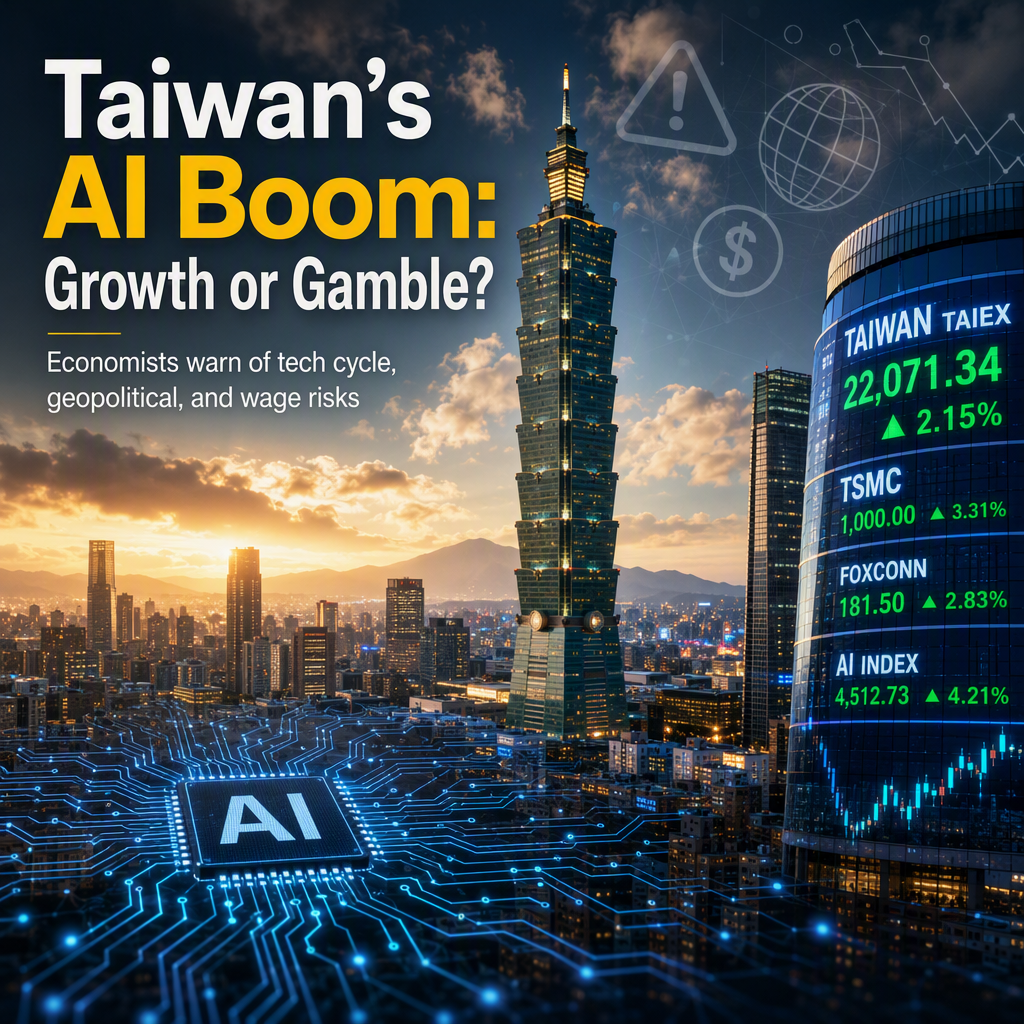
Taiwan's government has projected a double-digit GDP growth rate of 11.05% for 2026, an increase from the 9.64% forecast issued in May, reflecting optimism fueled by the artificial intelligence (AI) boom and robust demand for its technology and semiconductor sectors [1]. The country's weighted stock index has surged over 56% year-to-date, supported by global investments in AI-related products and technology [1]. However, economists caution that this exceptional pace of growth is unlikely to be sustained in the long term due to several risks. Saktiandi Supaat, head of FX research at Maybank, emphasized that Taiwan's heavy reliance on technology and semiconductors makes it particularly vulnerable to swings in global technology and AI capital expenditure cycles, as well as geopolitical developments [1]. If the pace of AI investment slows, it could quickly impact Taiwan's exports, manufacturing, and investment [1]. Jeremy Tan, CEO of Tiger Fund Management, also questioned the long-term sustainability of such rapid growth, citing these risks [1]. Additionally, Caroline Wong, country risk analyst at BMI, warned that a potential rise in global interest rates due to inflation risks could weigh on Taiwan's budding AI startups. Tighter global financial conditions may deepen equity market pullbacks and increase stress in private credit markets, limiting refinancing options for tech firms and slowing investment growth [1]. Heightened cross-strait tensions with Beijing could further dampen risk sentiment and prompt customers of key chip manufacturers to diversify away from Taiwan [1]. Another concern is the stagnation of real wages, which have not kept pace with the booming tech-heavy equities market, suggesting that the benefits of the AI boom are not evenly distributed across the economy [1].
CONCLUSION
While Taiwan's AI-driven economic surge has propelled its GDP and stock market to new heights, economists and analysts warn that sustainability is threatened by tech cycle volatility, geopolitical risks, and stagnant wage growth. The market impact is high, but forward-looking statements highlight the need for caution as global financial conditions and cross-strait tensions could undermine future growth.