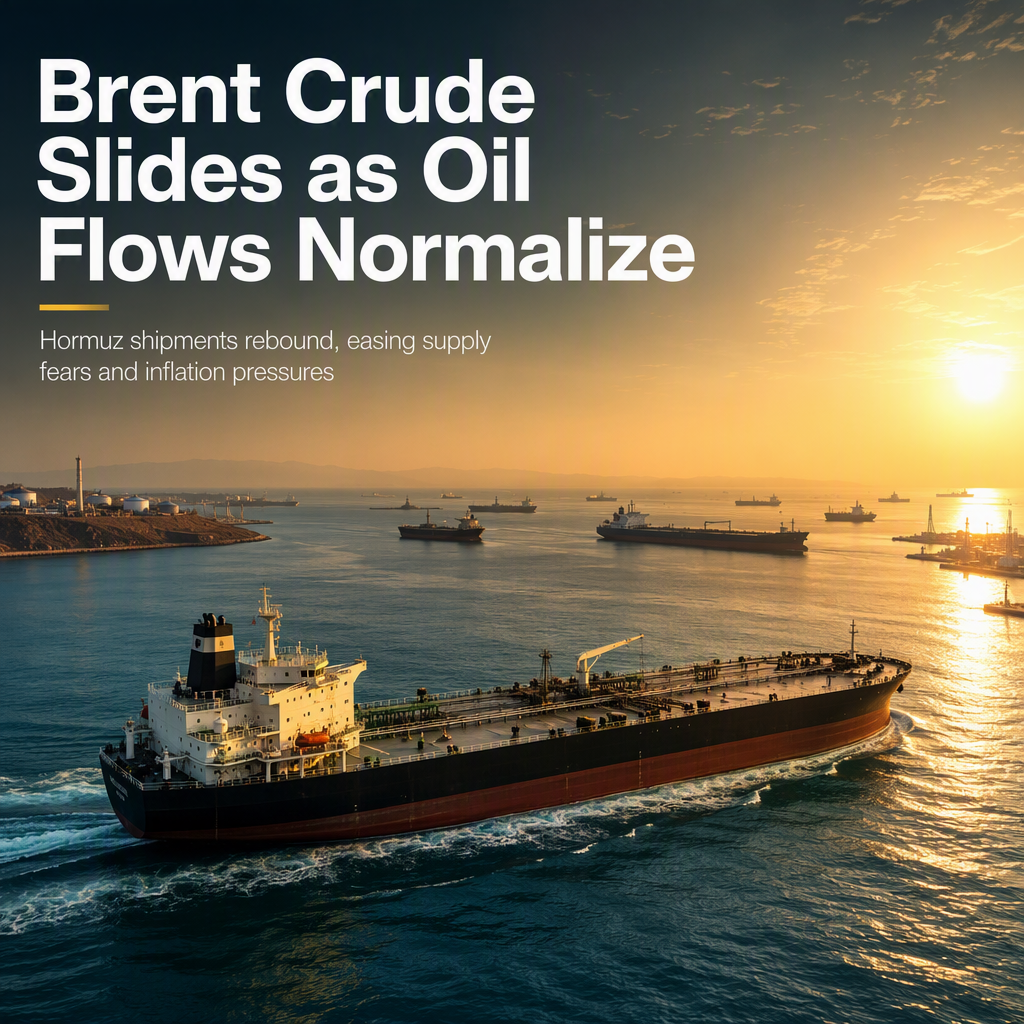
According to Geoff Yu at BNY, oil supply fears are easing as flows through the Strait of Hormuz improve, leading to a lower Brent crude price profile [1]. Kuwait and Qatar have restored crude shipments to approximately 70% of pre-war levels, which has contributed to an increase in total oil flows through the strait [1]. Specifically, total flows have risen to roughly 7 million to 8 million barrels per day, up from about 4 million barrels per day in mid-July [1].
This normalization of supply has resulted in Brent crude prices holding near $87 per barrel, significantly below the late-April peak of over $120 per barrel [1]. The increased availability of Gulf oil has compressed the supply disruption premium in oil prices, despite ongoing tensions between the United States and Iran regarding control of the strait [1].
The improved oil flows are also providing reassurance on inflation, as the reduction in energy-driven price pressures supports the global disinflation outlook [1]. The market appears to be responding positively to the normalization of supply, with Brent prices declining as fears of a prolonged supply shock diminish [1].
No specific forward-looking statements or analyst opinions beyond the current observations were provided in the source [1].
CONCLUSION
The recovery of oil shipments through the Strait of Hormuz, particularly from Kuwait and Qatar, has eased supply concerns and led to a notable decline in Brent crude prices. This development is reducing the supply disruption premium and alleviating inflationary pressures, despite ongoing geopolitical tensions in the region.