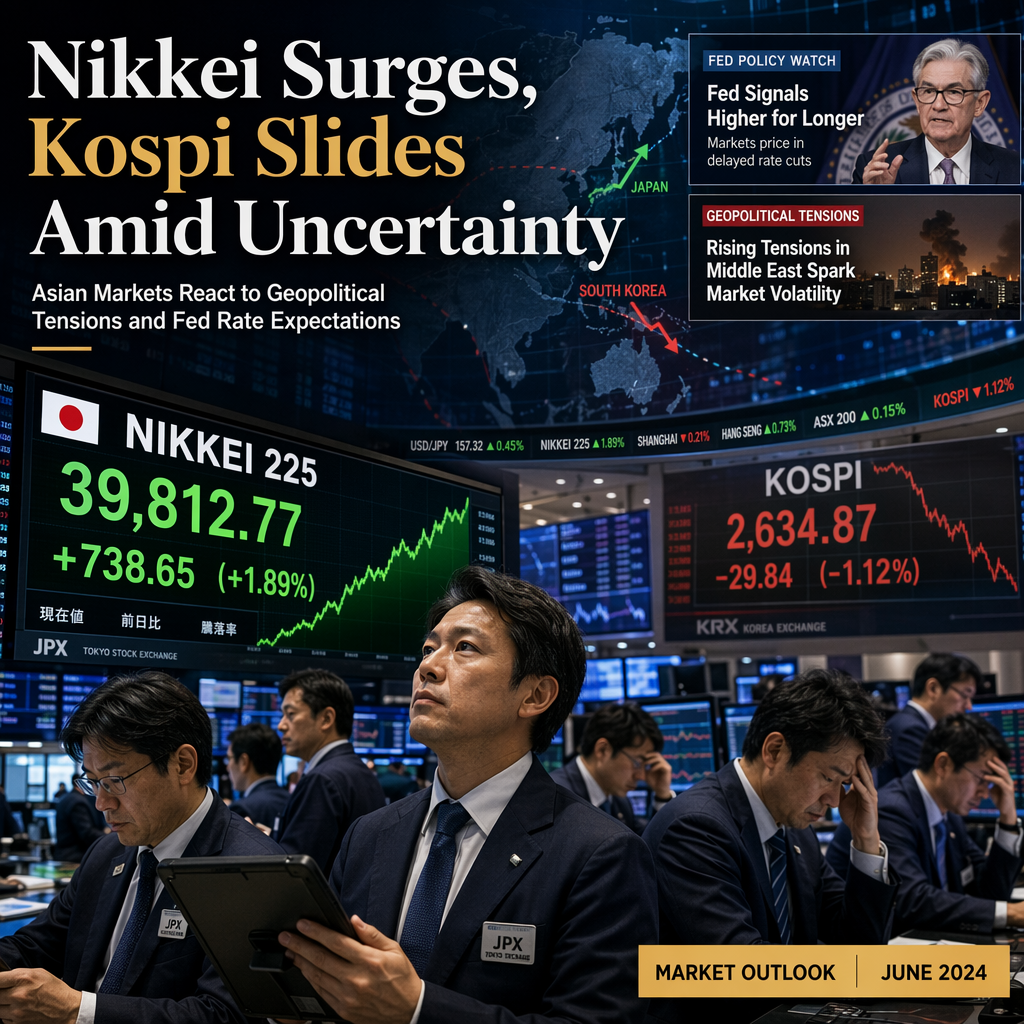
Asian markets displayed mixed performance on Wednesday, influenced by a global technology rally and ongoing geopolitical tensions. Japan's Nikkei 225 index rose nearly 1%, buoyed by stronger manufacturing PMIs from both Japan and China, which improved overall market sentiment. In contrast, South Korea's Kospi index declined by over 1%, as investors engaged in profit-taking following a remarkable 70% rally in the previous quarter, marking its best performance since 1998. Australia's S&P/ASX 200 remained largely flat, while Hong Kong's markets were closed due to a public holiday [1].
Geopolitical uncertainties continued to weigh on investor sentiment. US negotiators Jared Kushner and Steve Witkoff arrived in Qatar for talks regarding the implementation of an initial deal to end the war in Iran. However, Tehran denied any planned meetings with US envoys, casting doubt on the prospects for a lasting peace agreement. Additionally, the US and Iran remain far apart on a framework to fully open the strategic Strait of Hormuz. The Wall Street Journal reported that US President Donald Trump recently considered resuming large-scale military action against Iran but has opted to continue diplomatic efforts for now, maintaining a geopolitical risk premium in the markets [1].
Monetary policy expectations also played a significant role in capping gains for Asian equities. According to the CME Group's FedWatch Tool, traders are pricing in an approximately 80% chance that the US Federal Reserve will raise borrowing costs at least once by the end of the year. This expectation was reinforced by the US Job Openings and Labor Turnover Survey (JOLTS), which showed job openings rising to 7.594 million in May, a two-year high. Additionally, the Conference Board’s US Consumer Confidence Index increased to 91.2 in June from 90.6 in May. Cleveland Fed President Beth Hammack indicated that she may support higher interest rates if inflation pressures persist. Market participants are now turning their attention to an upcoming speech by Fed Chair Kevin Warsh at the European Central Bank Forum in Sintra [1].
Overall, while stronger manufacturing data provided some support, persistent geopolitical risks and elevated US rate hike expectations kept investors cautious and limited further upside in Asian equities [1].
CONCLUSION
Asian markets reflected mixed sentiment as positive manufacturing data was offset by ongoing geopolitical tensions and expectations of higher US interest rates. Investors remain cautious, with profit-taking evident in South Korea and a focus on upcoming central bank commentary. The market outlook is tempered by persistent uncertainties on both the geopolitical and monetary policy fronts.