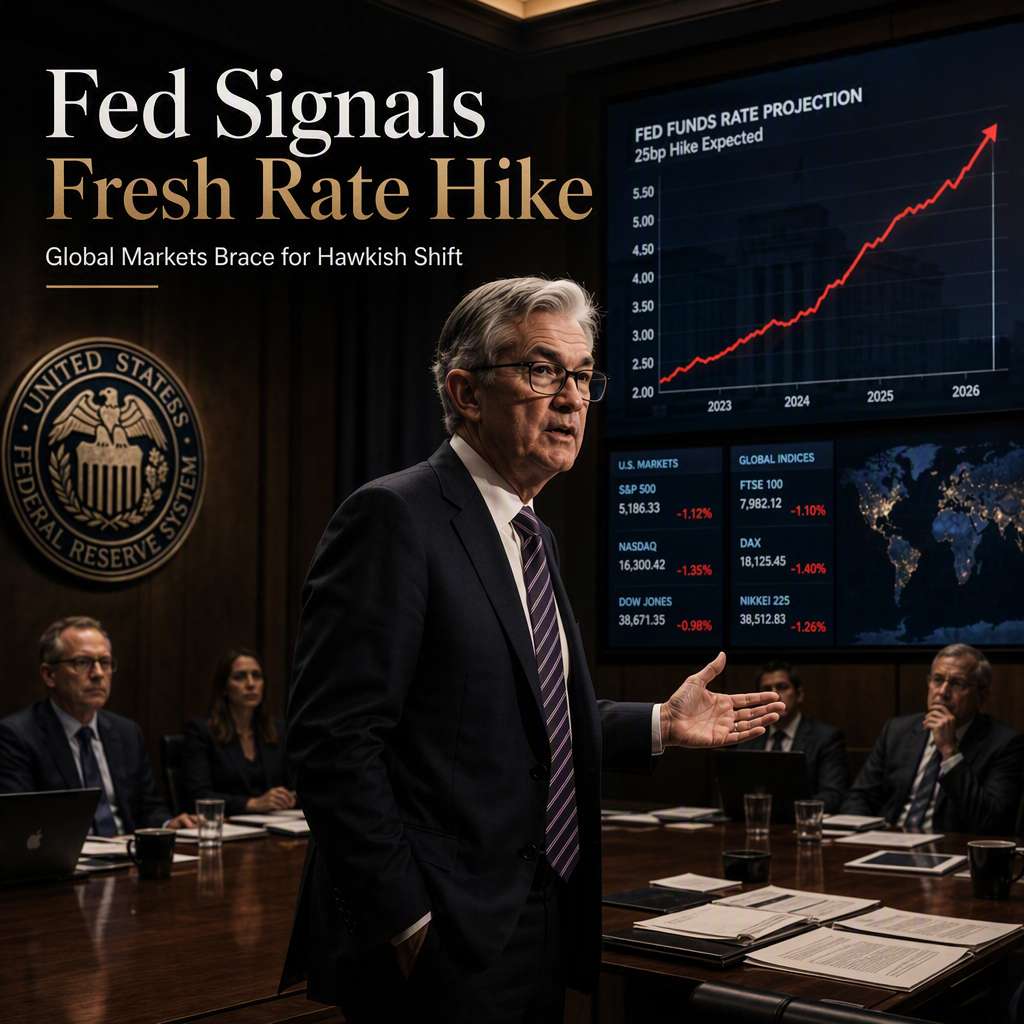
BNY’s John Velis anticipates that the Federal Reserve will raise interest rates by 25 basis points at this week’s FOMC meeting, aligning with market probabilities that currently price in over a 90% likelihood of such an action [1]. Velis also expects at least one more rate hike later this year, though he notes that the path to significantly tighter policy is fraught with potential obstacles [1]. The report highlights that while markets are pricing in nearly 100 basis points of tightening through the end of 2027—equivalent to four standard 25bp hikes—Velis believes the U.S. economy may not be able to sustain such restrictive rates for an extended period [1].
The analysis points out that the July FOMC meeting saw three regional Fed presidents dissent in favor of a rate hike when rates were held steady, suggesting the possibility of further dissents from less hawkish committee members at the upcoming meeting [1]. Velis acknowledges a murky outlook for 2027 and suggests that while additional rate increases are possible next year, the Federal Reserve may consider reducing its policy restrictiveness in the second half of the year if economic conditions warrant [1].
On the global stage, dynamic factor modeling indicates a deteriorating risk appetite for long-dated bonds and increasingly hawkish monetary policy expectations worldwide [1]. Velis warns that shorter-maturity yields may have moved too far and could eventually reverse, while also noting that current hawkish expectations may persist for several months before rate expectations begin to moderate [1].
Market implications include ongoing pressure on longer-dated bonds and the potential for rate expectations to peak and eventually decline, though the timing remains uncertain [1]. No specific market reactions or ticker symbols are mentioned in the article.
CONCLUSION
BNY’s outlook suggests that while the Federal Reserve is likely to continue tightening policy in the near term, the sustainability of higher rates is in question. Market participants should be alert to the possibility of rate expectations topping out and a potential shift in policy stance if economic conditions soften.