
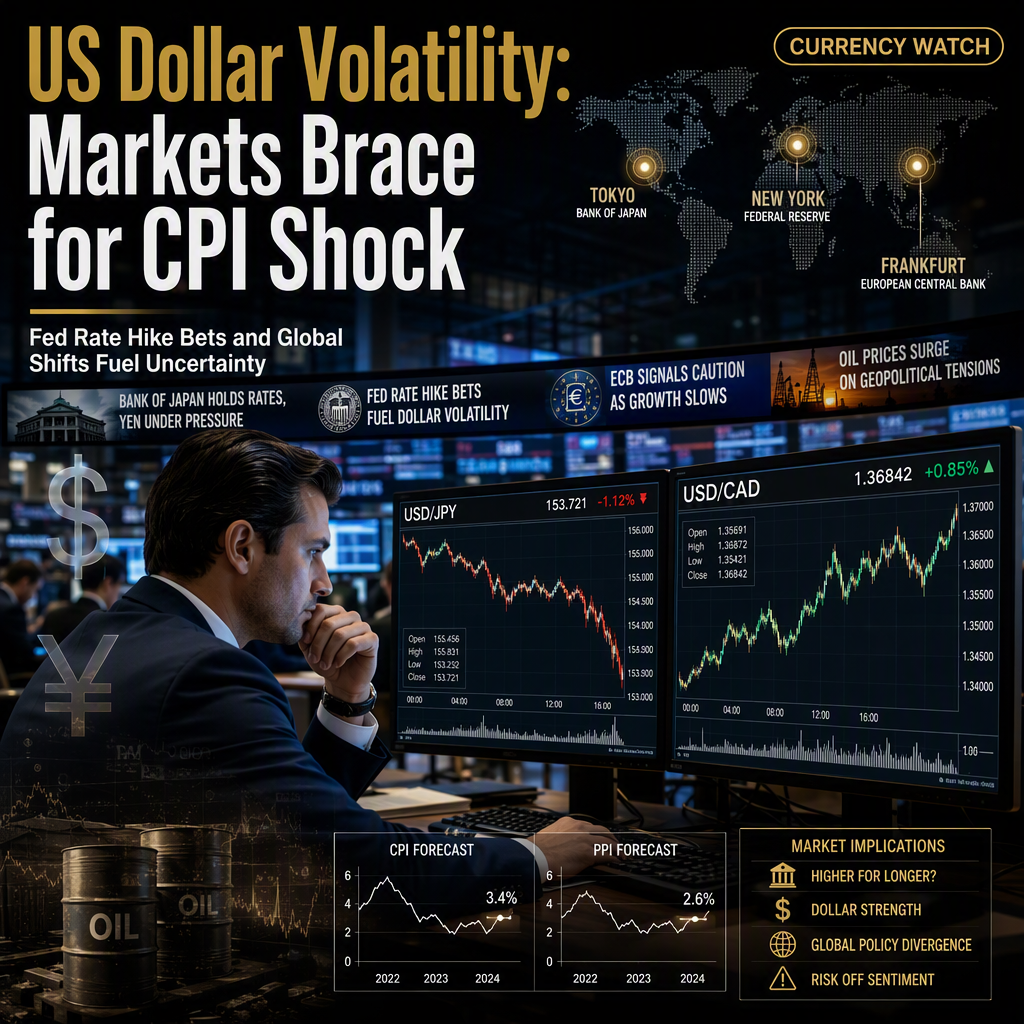
The US Dollar (USD) experienced notable volatility, initially weakening against the Japanese Yen (JPY) due to broad Yen strength and hawkish Bank of Japan (BoJ) expectations, before partially recovering as strong US August payrolls revived bets for a September Federal Reserve (Fed) rate hike [1][2]. The USD/JPY pair traded around 154.42, down more than 1% on the day, marking its lowest level since February, with thin trading conditions amplified by the US Labor Day holiday [2]. Markets have fully priced in a 25-basis-point BoJ rate hike to 1.25% at the September 17-18 meeting, and Japan's Ministry of Finance reported a record ¥15.4 trillion (approximately $98.66 billion) intervention between July 30 and August 26 to support the Yen [2].
On the US side, Friday’s Nonfarm Payrolls (NFP) report showed an increase of 162K in August, well above the market forecast of 56K, while the unemployment rate held steady at 4.1% [2]. This strong employment data has reinforced expectations for a Fed rate hike at the September 15-16 meeting, with traders pricing in a 58% chance of an increase [2][4]. However, Fed officials, including New York Fed President John Williams and Fed Governor Christopher Waller, have tempered these expectations by highlighting encouraging inflation trends, and Fed Chair Kevin Warsh cautioned that recent positive PCE and CPI readings do not necessarily indicate meaningful improvement in underlying trends [1].
The upcoming US August Consumer Price Index (CPI) and Producer Price Index (PPI) reports are seen as pivotal for the Fed’s next move and USD direction, with balanced risks suggesting potentially volatile price action [1][4]. TD Securities projects August Core CPI at 0.19% month-over-month (m/m) and 2.3% year-over-year (y/y), with services driving gains and core goods slightly negative. Headline CPI is forecast at 0.37% m/m and 3.4% y/y, mainly due to higher energy and food prices [3]. Risks to these forecasts are skewed to the upside, particularly in tariff-exposed goods categories, and inflationary risks remain prevalent according to ISM survey comments [3].
Meanwhile, the Canadian Dollar (CAD) found support from a surge in Oil prices, with West Texas Intermediate (WTI) climbing above $90, following strikes on Saudi Aramco facilities in Jizan [4]. Higher Oil prices tend to bolster the CAD due to improved export revenue outlook, helping the currency withstand the impact of Friday’s weak Canadian employment report [4]. Geopolitical tensions in the Middle East and rising energy prices have also contributed to USD strength as a safe-haven asset, maintaining a risk premium in markets [4]. Technical analysis shows USD/CAD trading at 1.3813 with a modest bearish bias, immediate resistance at 1.3842, and initial support at 1.3765 [4].
Strategists at OCBC remain tactically constructive on JPY in the near term, but note that further gains will depend on whether expectations shift toward a faster pace of BoJ normalization and whether recent repatriation chatter translates into more visible flows [2]. The ECB is also expected to deliver its second 25bps increase of the year, limiting USD’s potential for new cyclical highs due to reduced policy divergence [1].
CONCLUSION
Markets are bracing for heightened volatility as the US CPI and PPI reports approach, with the Fed’s September rate decision hanging in the balance. Strong US employment data and rising energy prices have reinforced rate hike expectations, but central bank policy shifts in Japan and Europe are curbing USD gains. Investors will closely watch inflation data and geopolitical developments for further direction.