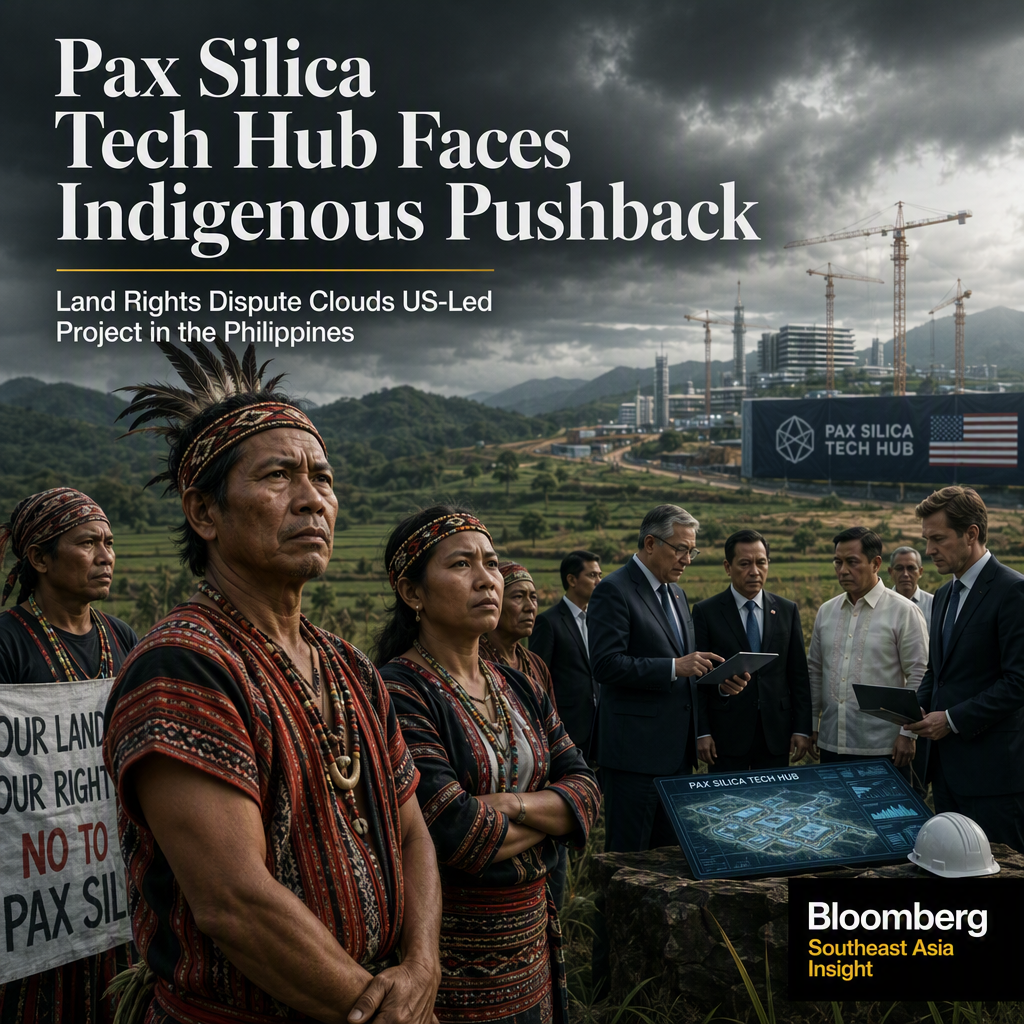
The US-led Pax Silica initiative, which aims to establish a technology hub in Capas, Tarlac province, Philippines, is encountering opposition from local indigenous communities over land rights issues. Tony Gutierrez, the indigenous people representative in the municipal legislature, stated he was unaware of the Pax Silica project until it was mentioned by Philippine President Ferdinand Marcos Jr. during his State of the Nation address last month [1]. During the same address, opponents protested in Manila against the use of indigenous land for the development of the tech hub [1].
The Pax Silica project is designed to support US interests and supply chains in the region, with the goal of positioning the Philippines as a critical node in the global technology supply chain [1]. Although specific financial figures and market analyses have not been disclosed, the initiative is expected to attract substantial foreign direct investment and is viewed as a key indicator of US engagement in Southeast Asian tech infrastructure [1].
Indigenous leaders are demanding greater transparency and consultation regarding land use and compensation, and the government has yet to clarify its approach to addressing these concerns [1]. This lack of clarity could introduce legal and financial challenges for the project. Industry observers note that similar land disputes have previously delayed or disrupted infrastructure projects in the Philippines, impacting capital flows and investor confidence [1].
The ongoing negotiations and their outcome are seen as potentially influential for broader market sentiment regarding Philippine infrastructure and technology investment [1].
CONCLUSION
The Pax Silica tech hub faces significant opposition from indigenous communities over land rights, raising concerns about transparency and compensation. The project's progress and resolution of these disputes will be closely watched by investors, as they could impact both the timeline and market sentiment for future infrastructure and technology investments in the Philippines.