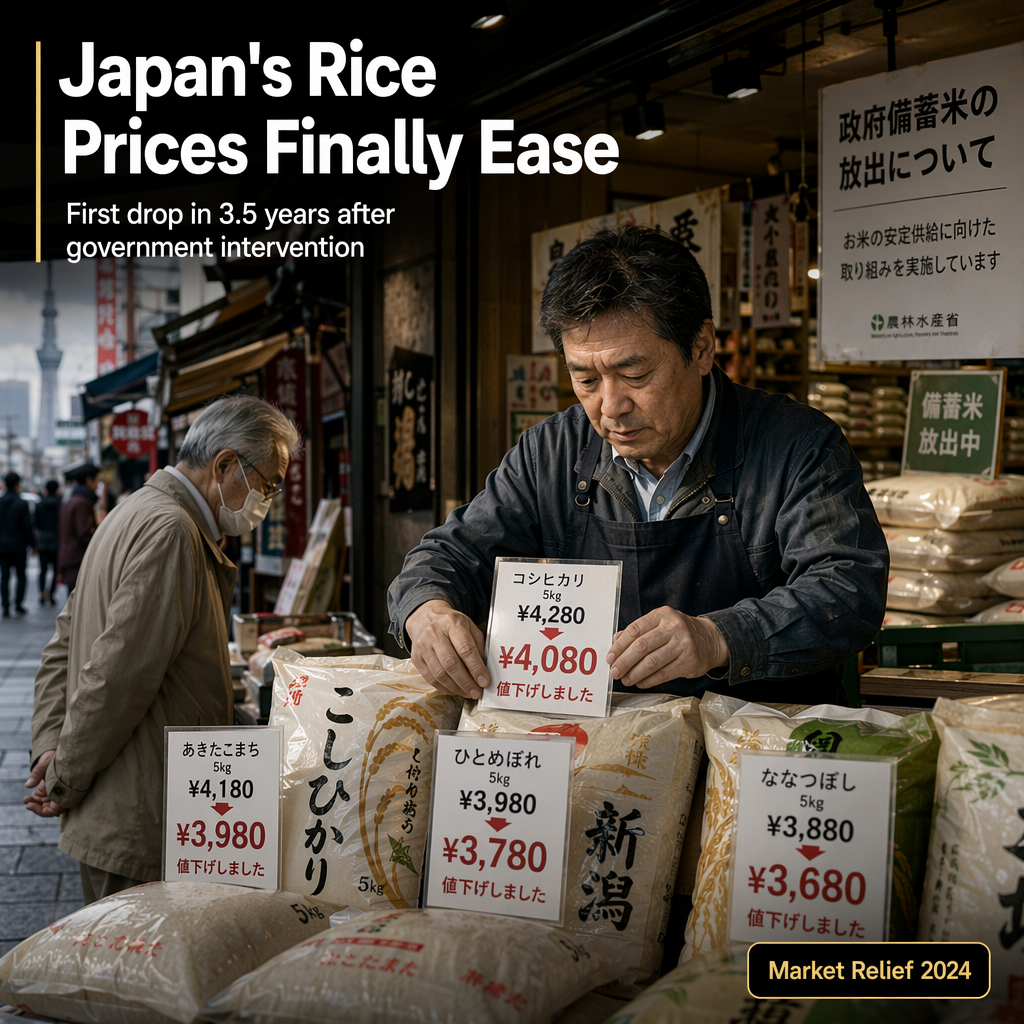
Japan's rice prices fell in May for the first time in three and a half years, marking a significant shift after a period of sharp increases that placed considerable pressure on the government and consumers alike [1]. According to an official from the internal affairs ministry, rice prices—excluding the luxury koshihikari variety—were 5.4 percent lower in May compared to a year earlier, representing the first year-on-year drop since November 2022 [1].
The surge in rice prices during 2024 and 2025 was attributed to a combination of factors, including supply disruptions caused by an intensely hot and dry summer in 2023 that damaged harvests nationwide, panic-buying following a government 'megaquake' warning two years ago, and traders hoarding rice to boost profits [1]. Additional pressures included rising prices of imported food, increased demand from record numbers of tourists, and longstanding government policies to reduce rice-farming land, compounded by an aging farming population [1].
The government, now led by Prime Minister Sanae Takaichi, responded by releasing emergency stockpiles of rice to stabilize prices [1]. This intervention appears to have contributed to the recent price decline. Despite the decrease, some consumers, such as Tokyo resident Jun Hongo, noted that rice remains expensive compared to several years ago, expressing hope for further investigation into the root causes and more stable pricing in the future [1].
The political fallout from the rice price surge included voter dissatisfaction, which contributed to the resignation of former Prime Minister Shigeru Ishiba in September after less than a year in office [1]. The current administration's popularity is partly attributed to its efforts to address the rice price crisis [1].
CONCLUSION
Japan's rice prices have finally declined after years of increases, following government intervention and easing of supply pressures. While the drop offers some relief to consumers, prices remain elevated compared to previous years, and structural challenges in the rice market persist. The government's actions have had a notable impact, but further measures may be needed to ensure long-term price stability.