
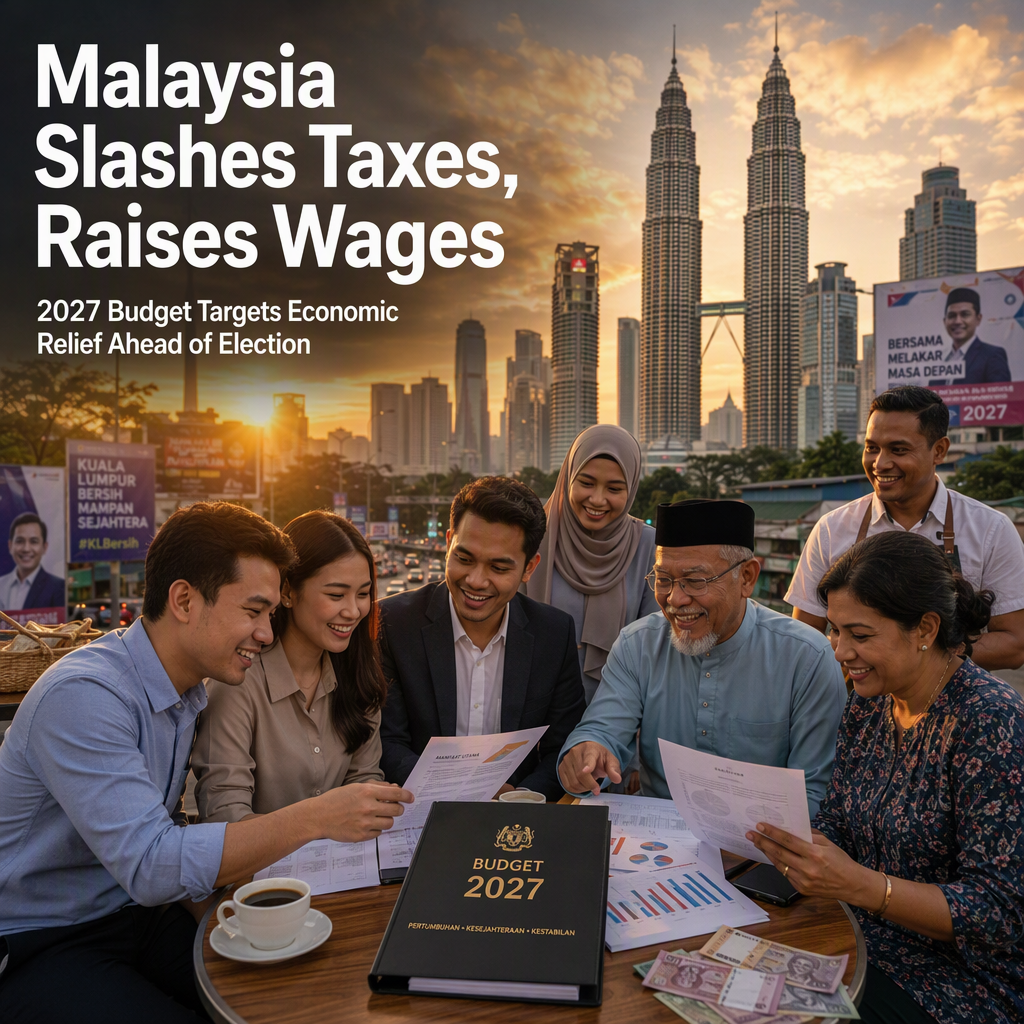
Malaysia has announced plans to cut income tax for individuals and smaller businesses in 2027, as revealed by Prime Minister Anwar Ibrahim on October 9, 2026. These measures are part of the 2027 national budget and are designed to address cost-of-living concerns and support economic growth ahead of the upcoming general election [1]. In addition to tax cuts, the government will raise wage floors to further assist workers in managing rising expenses [1].
Prime Minister Anwar Ibrahim highlighted that 'addressing cost-of-living issues is a priority for this administration,' underscoring the government's focus on providing financial relief to households and supporting the small and medium enterprise (SME) sector [1]. The budget measures are expected to have a significant impact on disposable incomes and business operations, particularly benefiting SMEs [1].
Financial analysts cited in the article anticipate that these tax and wage initiatives could stimulate domestic consumption and offer a buffer against external economic uncertainties. Market sentiment is generally positive, with expectations that the measures will help stabilize Malaysia's economy and support ongoing recovery efforts [1].
No specific technical chart analysis or trading advice was provided in the article [1].
CONCLUSION
Malaysia's 2027 budget introduces income tax cuts and higher wage floors to address cost-of-living pressures and support economic growth, particularly for households and SMEs. Analysts expect these measures to boost domestic consumption and stabilize the economy, with market sentiment remaining positive.