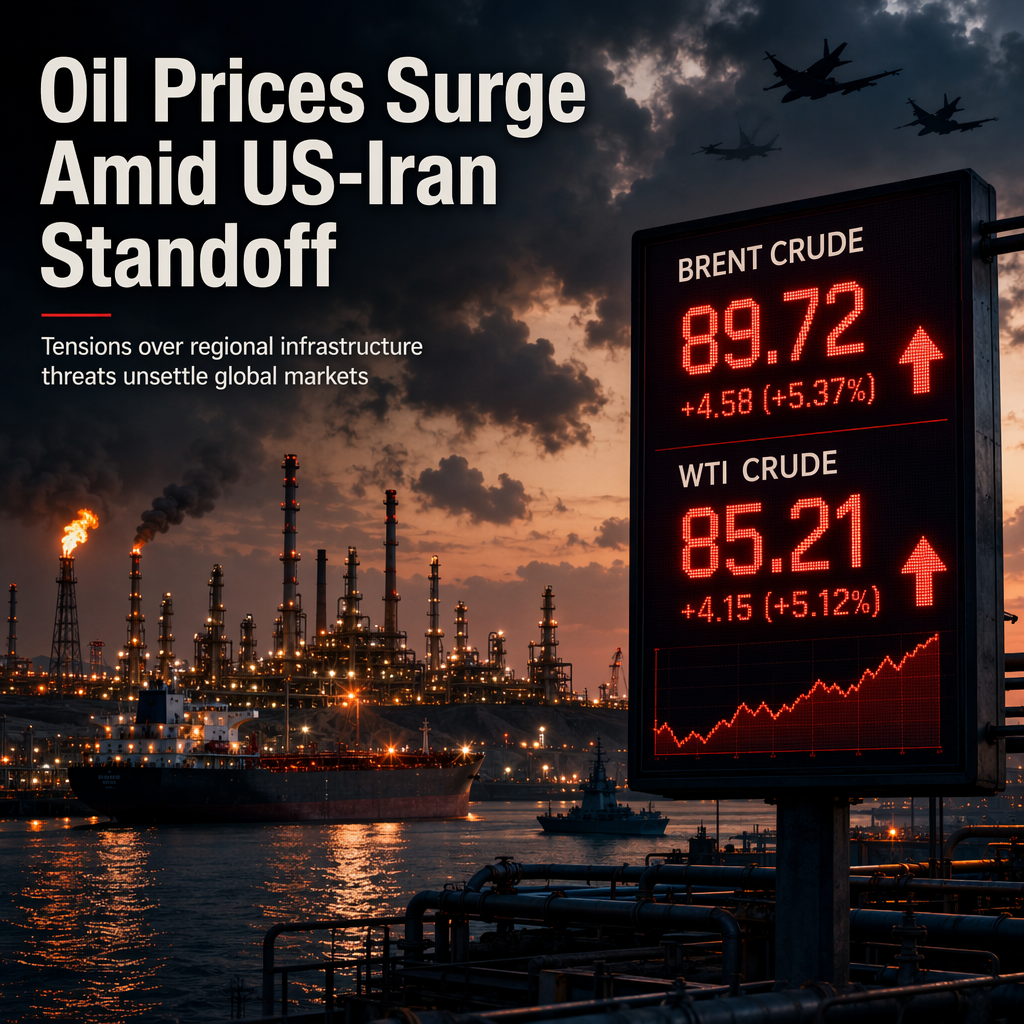
Oil prices increased on Friday amid rising tensions between the United States and Iran, following Tehran's warning that it would target regional infrastructure if President Donald Trump proceeded with threats to strike Iran's key facilities [1]. U.S. West Texas Intermediate (WTI) futures for August delivery rose by 1.32% to $80.09 per barrel, while September futures for Brent crude advanced 1.33% to $85.35 per barrel [1].
The escalation began after President Trump stated in a Fox News interview on Tuesday that U.S. forces would target Iran's infrastructure the following week unless a diplomatic breakthrough was achieved [1]. In response, a spokesperson for Iran's top military command warned via Telegram on Thursday that if Trump's threats were realized, 'everything that is still intact … that is, all the infrastructure in the region – will be crushed' [1].
Jorge León, senior vice president at Rystad Energy, commented that while a limited agreement between Washington and Tehran remains the firm's base case scenario, confidence in this outcome has weakened due to the recent developments [1]. León noted that both sides have strong economic incentives to avoid a complete breakdown in talks: the U.S. is seeking lower oil prices ahead of the November midterm elections, and Iran is reluctant to forgo a substantial economic package, including access to frozen assets and export waivers [1].
CONCLUSION
The latest escalation in US-Iran tensions has driven oil prices higher, reflecting market concerns over potential disruptions to regional infrastructure. While both sides have economic reasons to avoid a total breakdown in negotiations, the situation remains volatile, and market participants are closely monitoring further developments.