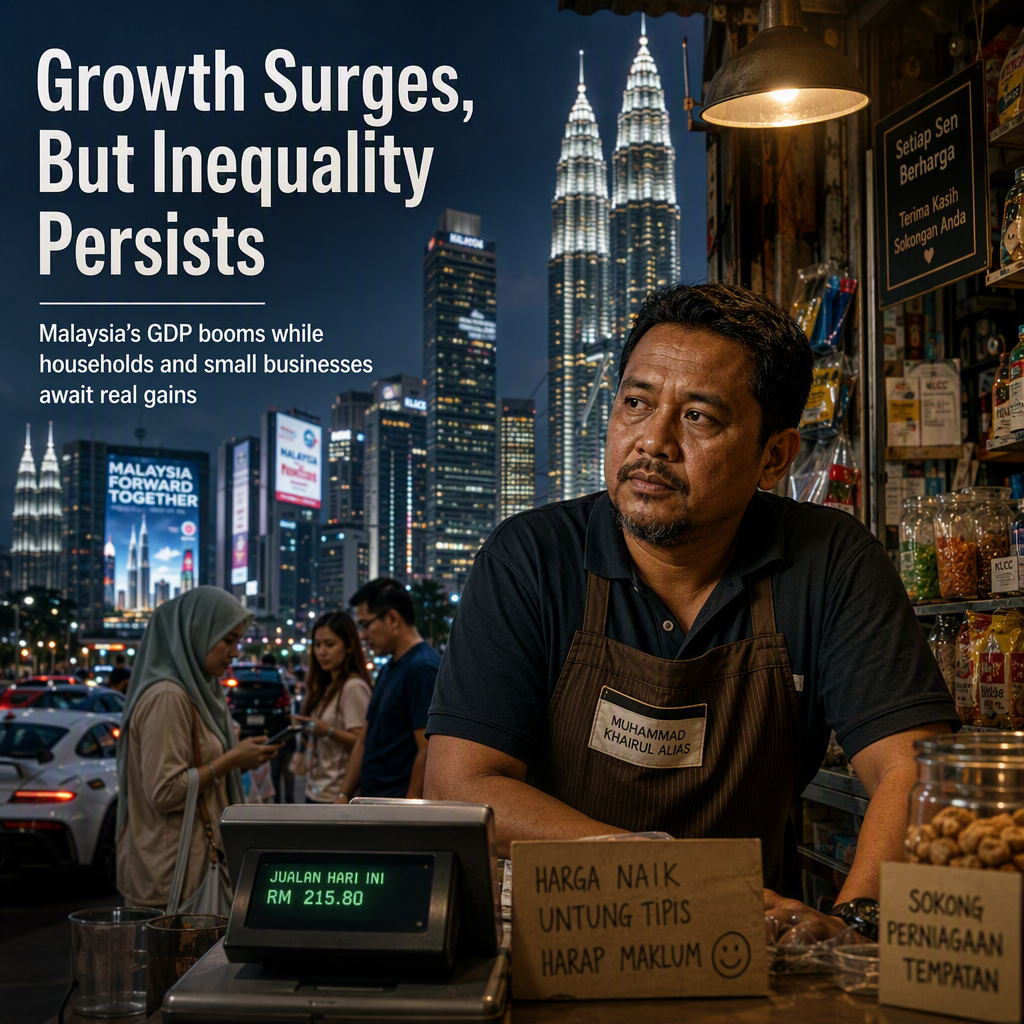
Malaysia's economy recorded an accelerated GDP growth of 6.0% in the second quarter, surpassing market expectations and signaling a strong rebound driven by manufacturing exports, higher commodity prices, and increased domestic spending [1]. Despite these positive headline figures, many ordinary Malaysians and small business owners report that their incomes and sales remain volatile, with some workers stating they have yet to feel the benefits of the country's economic expansion [1]. Shopkeeper Muhammad Khairul Alias described his retail sales as fluctuating, with periods of improvement followed by declines, underscoring the uneven distribution of economic gains [1].
Economists highlight the challenge Malaysia faces in translating robust macroeconomic growth into higher wages, more stable jobs, and improved financial well-being for households and micro-enterprises [1]. One local economist noted, "The headline growth numbers are encouraging, but beneath the surface there are signs of strain for many households and micro-enterprises," emphasizing persistent income inequality and cost-of-living pressures [1].
Market observers are closely monitoring whether government policies and private sector initiatives can effectively channel growth into broader prosperity. Analysts warn that without targeted measures, Malaysia risks a disconnect between its macroeconomic performance and the lived experience of its citizens [1].
CONCLUSION
Malaysia's strong GDP growth in the second quarter has not yet translated into tangible benefits for many households and small businesses, with income volatility and inequality remaining significant concerns. Analysts caution that unless growth is more evenly distributed, the disconnect between headline economic figures and everyday financial security may persist.