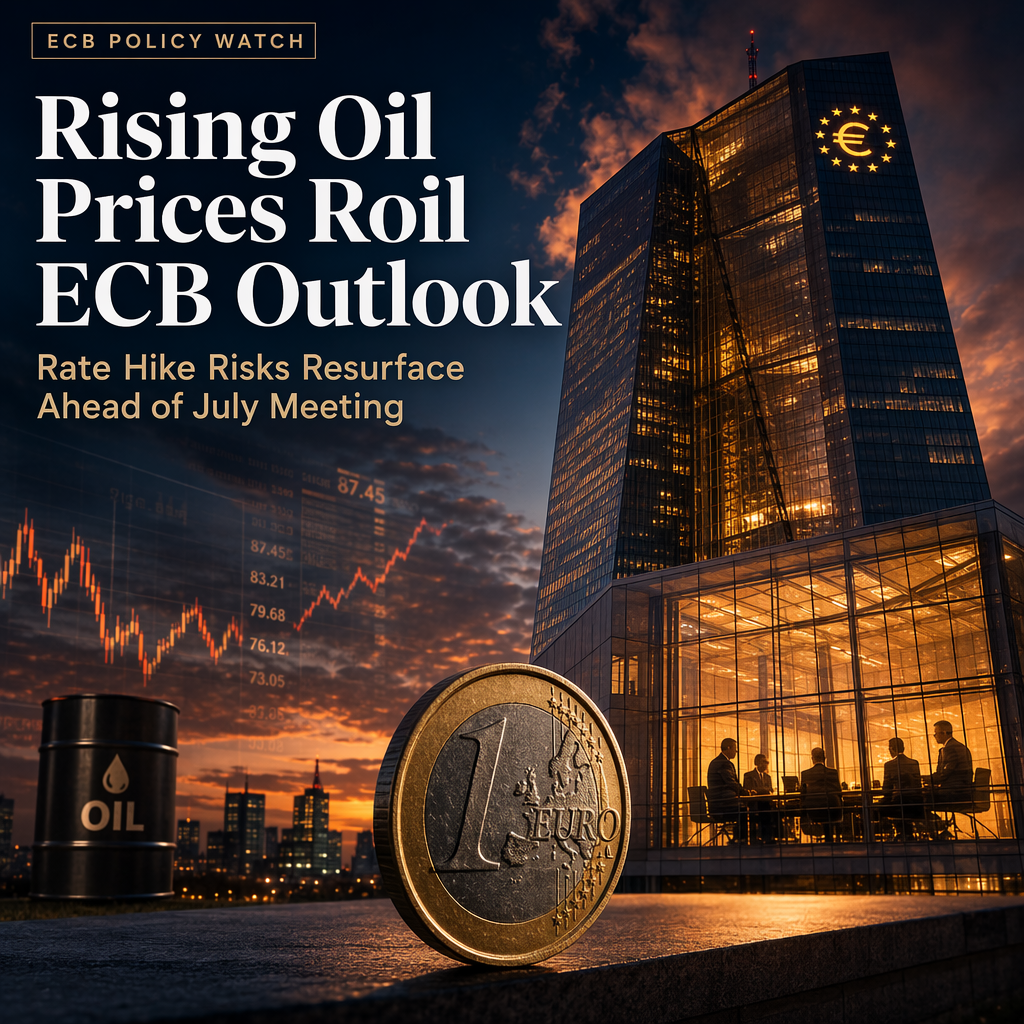
The European Central Bank (ECB) is facing renewed risk of a rate hike at its upcoming meeting, driven by escalating Middle East tensions and rising oil prices, according to ING’s Carsten Brzeski [1]. While the base case remains that the ECB will keep rates unchanged next week, Brzeski notes that a surprise hike cannot be ruled out, as the macroeconomic backdrop has reverted to conditions seen before the June meeting [1].
Since the ECB’s 11 June decision to raise rates by 25 basis points to 2.25%, energy prices have fluctuated significantly. The late-June ECB conference in Sintra reaffirmed policymakers’ determination to continue hiking rates, but a subsequent drop in energy prices below pre-war levels had reduced the likelihood of further hikes [1]. However, the recent rebound in oil prices has brought the ECB’s base case scenario from June back into focus, potentially justifying additional tightening [1].
Despite surprisingly slow inflation data in June and minimal evidence of indirect or second-round effects, the ECB’s base case scenario still supports the argument for another rate hike. Brzeski suggests that while the most realistic scenario is a hike at the September meeting, there remains a small chance of a rate increase next week. The upcoming meeting is expected to feature a significant debate between hawkish and dovish policymakers, rather than the anticipated summer lull [1].
No new macro projections will be released at next week’s meeting, but the ECB is expected to internally update its outlook to reflect the latest oil price developments [1].
CONCLUSION
The risk of an ECB rate hike has increased due to rising oil prices and renewed geopolitical tensions, though the base case remains for rates to stay unchanged next week. Market participants should prepare for heightened uncertainty and policy debate at the upcoming meeting, with a rate hike more likely in September if current trends persist.