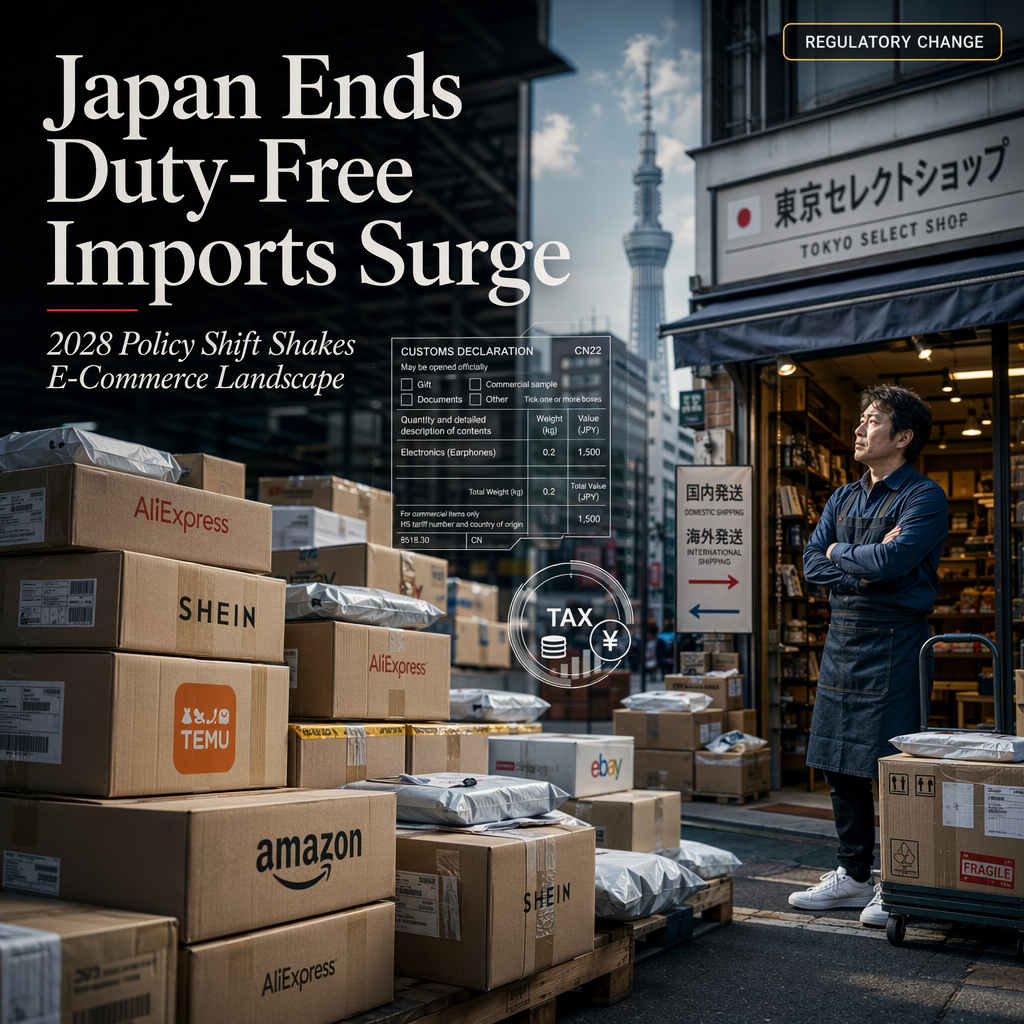
Japan experienced a sharp increase in small-value imports exempt from taxes, with the number of duty-free shipments surpassing 200 million per year and rising by approximately 20% in 2025 [1]. This surge has raised concerns among authorities about market distortion and the negative impact on domestic retailers, who are required to pay taxes on their inventory while overseas e-commerce sellers benefit from the current exemption [1].
In response to these concerns, the Japanese government has decided to abolish the duty-free exemption for small personal imports in 2028 [1]. The move is aimed at creating a fairer competitive environment for domestic businesses and comes as part of a broader global trend of tightening regulations on cross-border e-commerce [1]. Other countries are also reconsidering tax breaks for small imports as international online shopping platforms continue to expand and the volume of parcels grows rapidly [1].
The government's decision is expected to have significant implications for both international e-commerce companies and domestic retailers, as it may alter the balance of price competitiveness in Japan's retail market [1]. No specific trading advice, technical analysis, or analyst opinions are provided in the article [1].
CONCLUSION
Japan's plan to abolish the duty-free exemption for low-value imports in 2028 marks a significant regulatory shift, prompted by a 20% surge in such shipments in 2025. The move is expected to reshape the competitive landscape for both international e-commerce platforms and domestic retailers, with potentially far-reaching market implications.