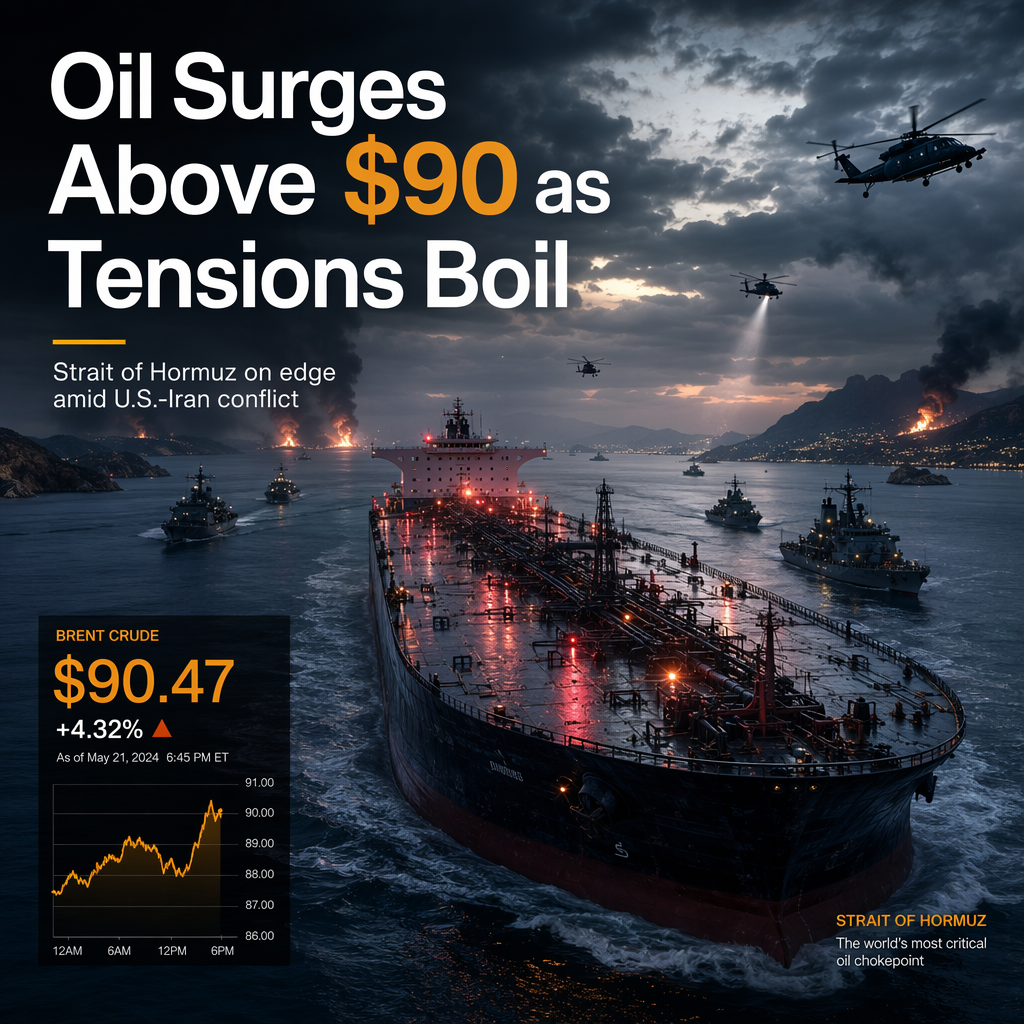
International oil markets experienced significant volatility as escalating tensions between the United States and Iran pushed Brent crude prices above $90 per barrel for the first time since June 11, while U.S. West Texas Intermediate (WTI) futures surged to $84.68 a barrel, their highest level in over a month [1]. The U.S. has continued striking Iranian targets for a ninth consecutive night, following Iranian attacks that resulted in the deaths of three U.S. service members in recent days, bringing the total U.S. military death toll to 17 [1]. The situation has heightened uncertainty in the critical Strait of Hormuz, a key chokepoint for global oil shipments, with maritime risk experts warning that security conditions have returned to a 'worst-case scenario' for oil tankers due to repeated Iranian attacks on ships over the past week [1].
Iranian Supreme Leader Ayatollah Mojtaba Khamenei issued a warning that the country has 'unforgettable lessons in store' for the U.S., and Deputy Foreign Minister Kazem Gharibabadi announced that Iran has suspended its commitments to a memorandum of understanding signed with the U.S. last month [1]. These developments have fueled concerns of an extended conflict in the region, directly impacting oil market sentiment and driving prices higher [1].
The article also notes broader geopolitical shifts, including a change in UK leadership, but the primary market-moving event remains the escalation in the Middle East and its direct effect on energy markets [1]. No specific analyst forecasts or forward-looking statements regarding oil prices were provided, but the cited maritime risk expert emphasized the elevated risk environment for oil transportation [1].
CONCLUSION
Rising U.S.-Iran tensions and repeated attacks in the Strait of Hormuz have driven oil prices sharply higher, reflecting increased market anxiety over potential supply disruptions. The situation remains fluid, with heightened geopolitical risk likely to sustain volatility in global energy markets.