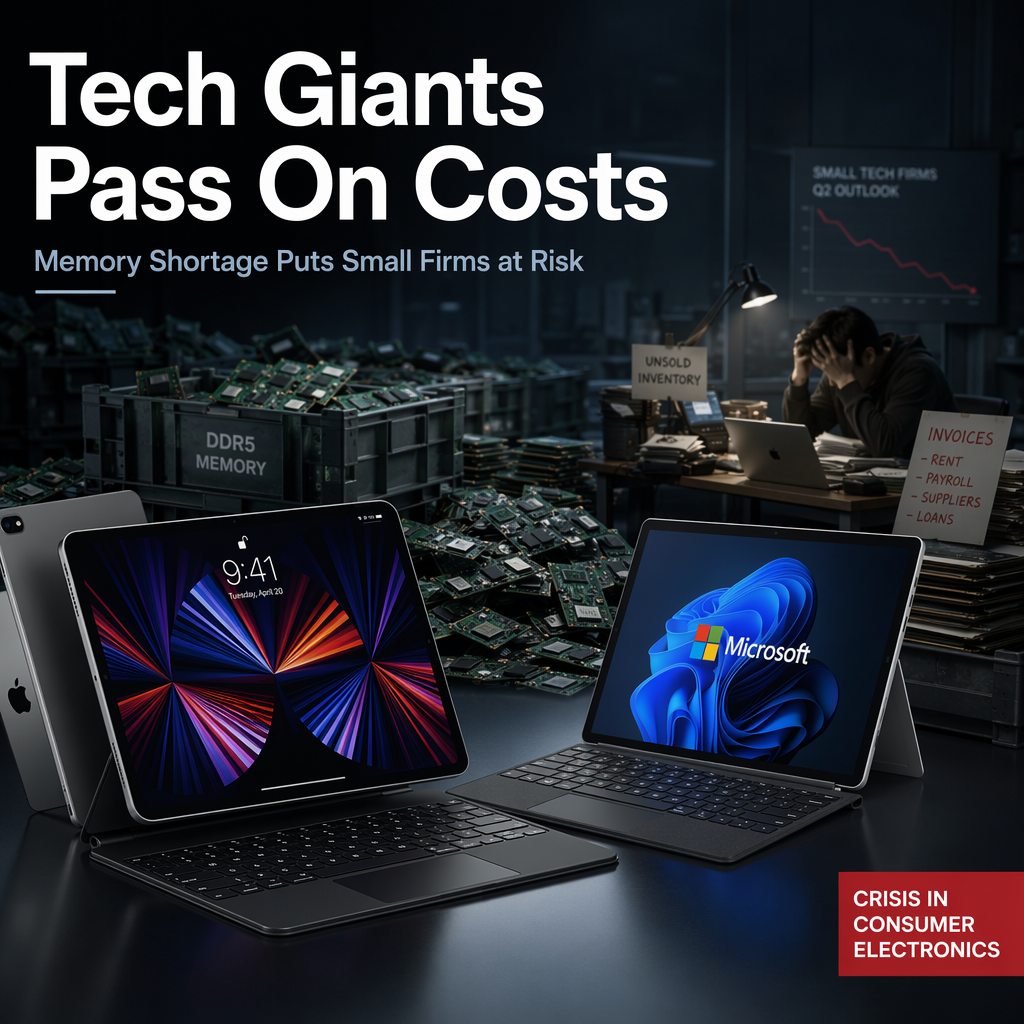
Apple and Microsoft announced price increases this week on key devices, passing on soaring memory costs to consumers as a result of a global supply crunch driven by the artificial intelligence boom. The shortage has led AI chipmakers like Nvidia to absorb increasing amounts of memory for their processors and advanced systems, exacerbating the crisis for the broader electronics industry [1].
Smaller electronics manufacturers, such as Mono Technologies, are facing severe challenges. Mono's cost for 8 gigabytes of DRAM from Micron surged from $35 during initial product development to $300 today. Co-founder Tomaž Zaman is uncertain whether to proceed with a second batch of his $600 router development kit, potentially raising the price by at least one-third or introducing a new model with 75% less memory. Zaman stated, "Even a router of our class, it's a poor value if you make it at $900, $1,000. But we have to, or we trim it down to the bare minimums" [1].
The crisis is impacting a wide range of consumer electronics, from iconic devices like iPads and Xbox consoles to niche products. Most smaller companies lack the financial cushion and supply chain leverage of giants like Apple and Microsoft, making it difficult to raise prices in an inflationary environment. GoPro warned this month that it might go out of business after memory costs increased between 80% and 115% at the end of the first quarter. Shares of Sonos have fallen 23% this year due to margin pressure from rising memory prices [1].
Nabila Popal, an analyst at IDC, described the situation as an "absolute existential crisis" for smaller Android phone manufacturers and local players making devices below $100. Memory suppliers are prioritizing large players, leaving smaller firms unable to secure necessary components [1].
CONCLUSION
The global memory shortage is forcing tech giants like Apple and Microsoft to raise prices, while smaller electronics manufacturers face potentially dire consequences. With memory suppliers favoring large customers and costs skyrocketing, many smaller firms may be unable to survive, marking a high-impact event for the consumer electronics sector.