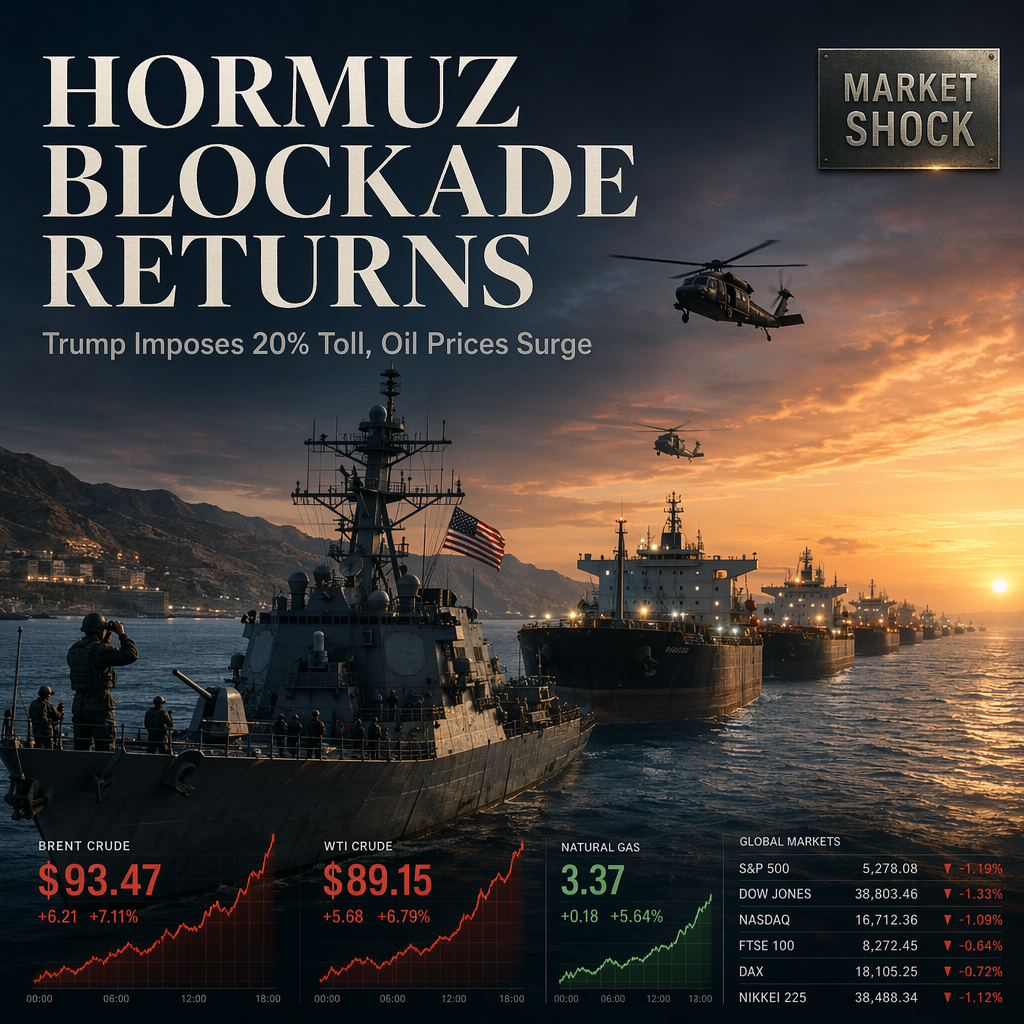
President Donald Trump has reinstated the U.S. naval blockade in the Strait of Hormuz and announced a new policy requiring all cargo passing through the strait to pay a 20% toll as reimbursement for U.S. protection efforts. This move follows the effective collapse of the ceasefire with Iran and has shocked the international community, with the UN's maritime agency stating there is 'no legal basis through which to introduce mandatory tolls' [1]. Herbjorn Hansson, CEO of Nordic American Tankers, criticized the toll as unrealistic, noting that 'Iran is suffering, America is suffering, 192 countries outside the Hormuz Strait are suffering' [1].
The U.S. has also launched another round of attacks against targets in Iran, marking the third consecutive night of military action in retaliation for strikes on commercial shipping in the Strait of Hormuz. U.S. Central Command reported a five-hour mission striking targets across Iran. Regional tensions remain high, with Jordan intercepting and downing four missiles from Iran and sirens sounding in Bahrain for the third time on Tuesday [1].
The announcement of the blockade and toll has had an immediate impact on oil markets, which surged to their highest levels since the COVID era, posting the biggest one-day gain since that period on Monday. Investors are on edge as the situation escalates, and the move is expected to influence U.S. inflation data, with economists predicting a drop in CPI for June after a 25% plunge in oil prices, although core inflation is still expected to rise [1].
President Trump stated on Truth Social that the U.S. will be known as 'THE GUARDIAN OF THE HORMUZ STRAIT' and emphasized that the toll process will begin immediately [1]. The international community remains concerned about the legality and economic impact of the toll, and market participants are closely watching for further developments.
CONCLUSION
President Trump's decision to reinstate the Hormuz blockade and impose a 20% toll on cargo has triggered a sharp rise in oil prices and heightened global market uncertainty. The move faces legal and practical challenges, with widespread criticism from international stakeholders. Investors are bracing for continued volatility as the situation unfolds.