
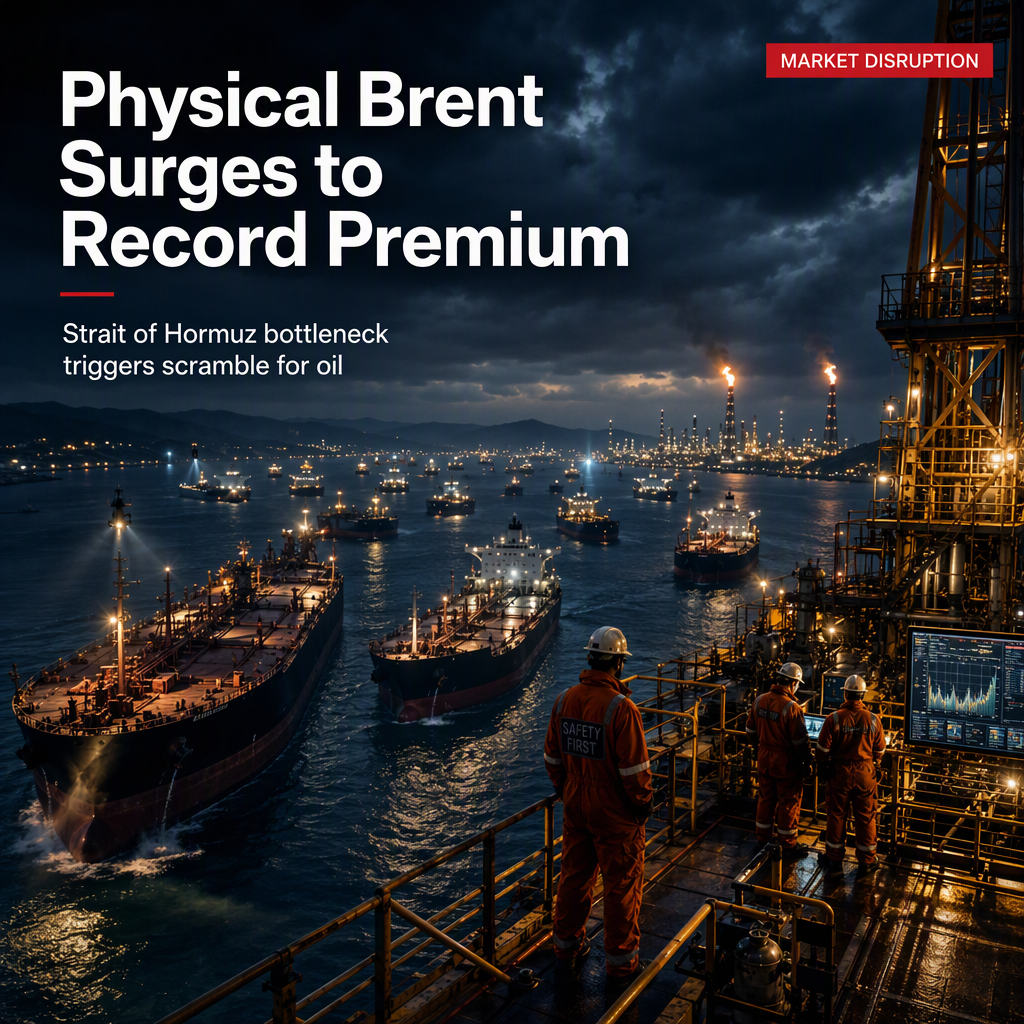
Crude oil prices for immediate delivery have surged to a record high, driven by a significant supply disruption in the Strait of Hormuz, a vital corridor for global oil shipments [1]. The premium that buyers are willing to pay for physical Brent crude, scheduled for prompt delivery, has reached unprecedented levels, resulting in the widest gap ever recorded between physical Brent and futures contracts [1]. This development highlights the acute urgency of current demand and the scarcity of available supply in the market [1].
Market participants report that the disruption in the Strait of Hormuz has led buyers to scramble for available barrels, pushing up premiums for physical Brent to record levels [1]. Producers, such as those operating North Sea oil rigs off Norway, are struggling to meet immediate demand, and trading houses are finding it difficult to secure prompt cargoes at prices anywhere near those of futures contracts [1].
Analysts note that the premium for spot Brent over Brent futures—known as the Brent cash-to-futures spread—has surged to historic highs, reflecting a market in backwardation [1]. In this market structure, prompt barrels are significantly more expensive than those for future delivery, signaling immediate supply stress and robust demand [1].
Traders and market observers caution that unless the bottleneck in the Strait of Hormuz is resolved or alternative supplies are quickly sourced, the record-high physical premiums could persist or even increase further [1]. The situation underscores the vulnerability of global energy markets to geopolitical shocks and the critical importance of physical oil supply in meeting current consumption needs [1].
CONCLUSION
The record premium for physical Brent crude underscores acute supply stress and robust demand in the wake of the Strait of Hormuz disruption. Unless the supply bottleneck is resolved or alternative sources are found, elevated premiums and market volatility are likely to persist. This event highlights the sensitivity of global energy markets to geopolitical risks.