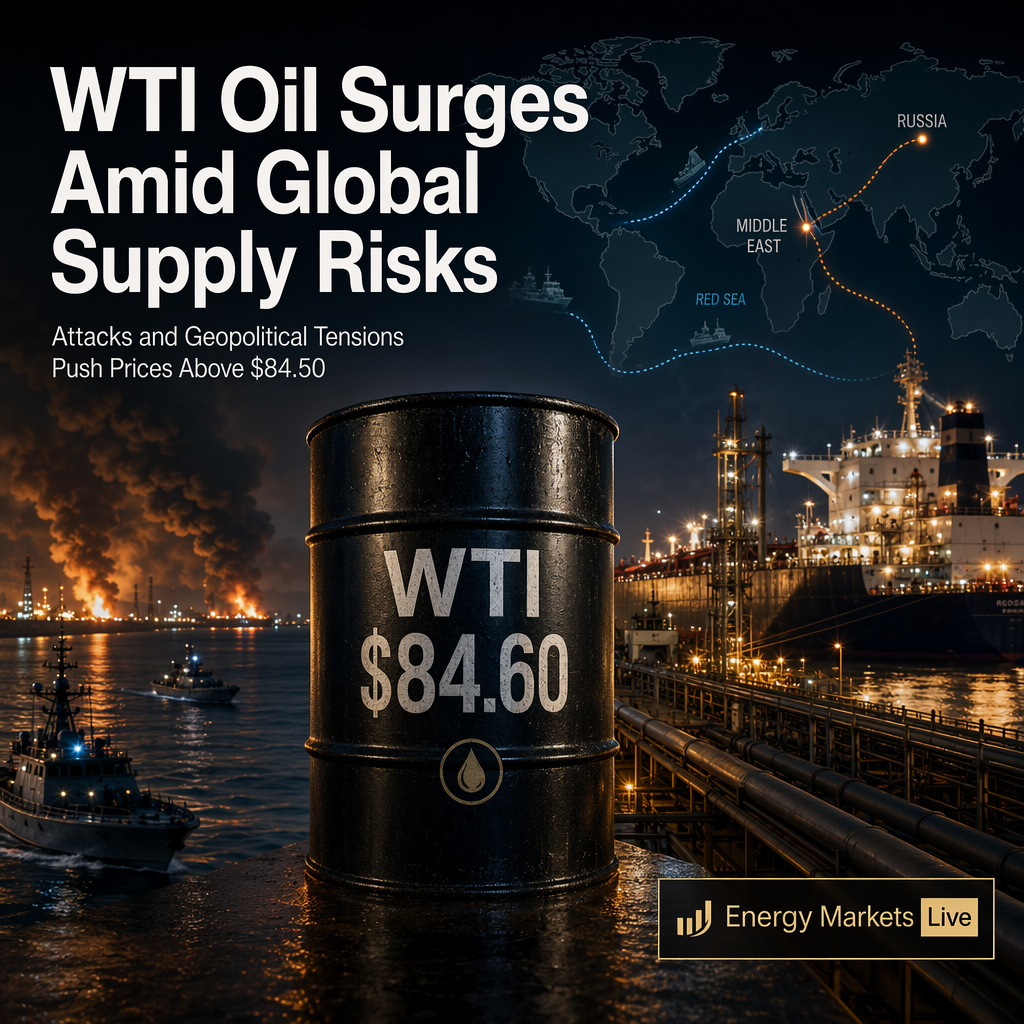
West Texas Intermediate (WTI) crude oil prices climbed for the second consecutive day, reaching approximately $84.60 per barrel during Asian trading hours on Wednesday, driven by intensifying supply risks across several key global export routes [1]. The surge in prices is attributed to heightened geopolitical tensions, particularly in the Middle East, and a series of attacks impacting critical energy infrastructure.
In the United States, President Donald Trump dismissed the possibility of imminent negotiations with Iran and warned of further military action, pledging swift retaliation if Houthi rebels in Yemen—backed by Tehran—carry out threats to disrupt commercial shipping through the Red Sea [1]. The Red Sea remains a vital alternative export corridor for Saudi Arabia, which has rerouted some crude exports via pipelines to Red Sea ports to reduce reliance on the vulnerable Strait of Hormuz. Despite these measures, security risks persist, as evidenced by a recent attack on a Kuwaiti tanker transporting oil products through the Strait of Hormuz [1].
Beyond the Middle East, energy market vulnerabilities have expanded, with traders closely monitoring a series of drone attacks on the Caspian Pipeline Consortium terminal along Russia’s Black Sea coast. This terminal is a critical hub for Kazakhstan’s crude exports, and disruptions here further exacerbate global supply concerns [1].
The combination of these geopolitical developments and attacks on key infrastructure has heightened market anxiety, contributing to the upward momentum in WTI prices. No specific analyst forecasts or forward-looking statements were provided in the article [1].
CONCLUSION
WTI oil prices have risen sharply above $84.50 per barrel as escalating geopolitical tensions and attacks on critical export infrastructure fuel supply concerns. The market is reacting strongly to these developments, reflecting heightened risk premiums and ongoing uncertainty in global energy flows.