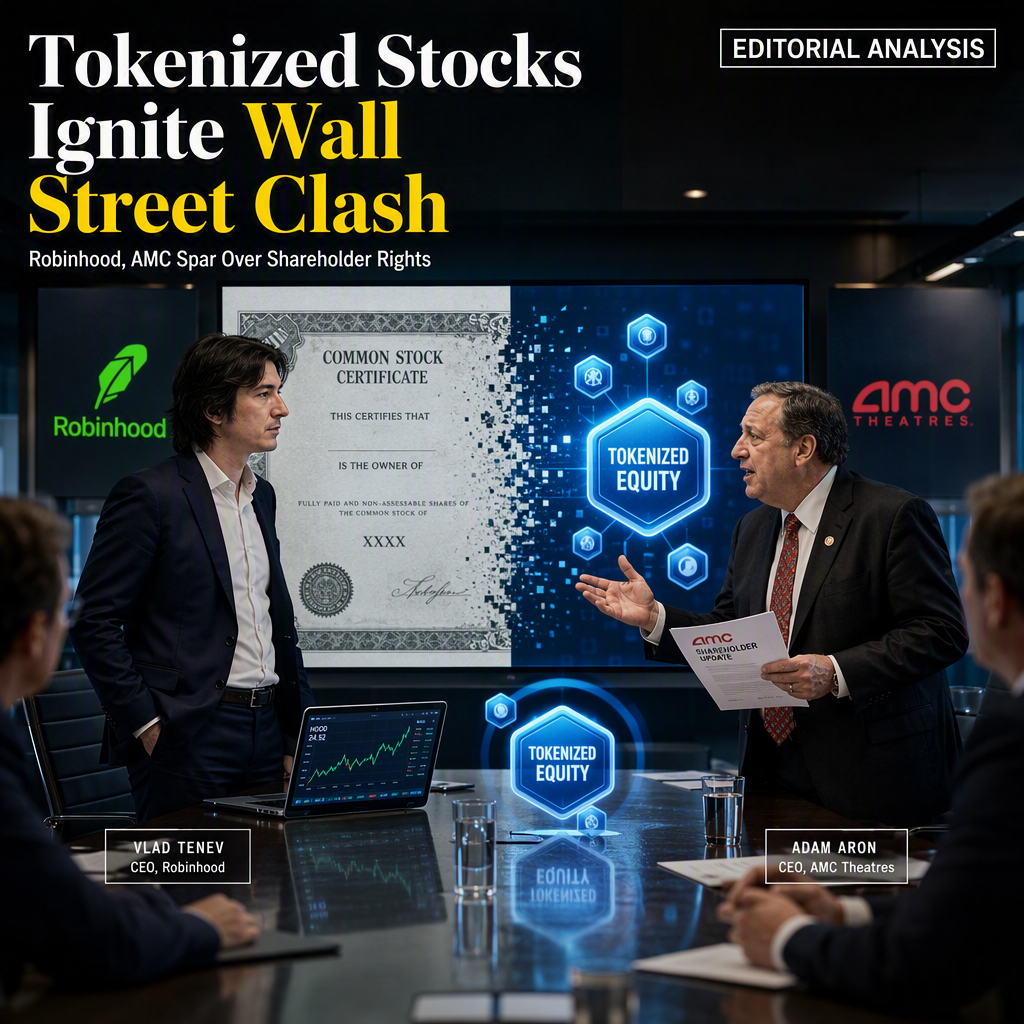
Robinhood CEO Vlad Tenev publicly defended the company's initiative to offer tokenized stocks, following strong criticism from AMC CEO Adam Aron regarding the practice. Tenev argued that once a company's shares are publicly traded, the issuer cannot control the financial products that reference those shares, including tokenized versions created by third parties. He described Robinhood's tokenization as a technology-neutral financial wrapper around publicly traded stocks, emphasizing that these products do not require issuer consent if they are structured as securities backed by underlying shares and issued by a separate entity [1].
Adam Aron, CEO of AMC, voiced concerns that tokenization allows brokerages to create exposure to company stock without the issuing company's involvement, which he believes undermines the traditional relationship between companies and their shareholders. Tenev responded by clarifying that while issuers retain control over the rights and obligations of their stock, they do not control all derivative products or references to their shares once they are publicly traded [1].
Tenev also acknowledged that holders of Robinhood's stock tokens do not receive voting rights in the underlying company, as the tokens are structured as debt securities backed by the shares. When questioned about how Robinhood would exercise the voting rights attached to the underlying shares, Tenev declined to provide specifics, stating that the company has not announced plans regarding the voting aspect [1].
The debate highlights growing tensions between traditional public companies and fintech platforms over the control and implications of tokenized financial products. No specific market reaction or analyst opinions were discussed in the article [1].
CONCLUSION
The clash between Robinhood and AMC underscores unresolved questions about control and shareholder rights in the era of tokenized stocks. While Robinhood maintains that tokenization is permissible and does not require issuer consent, AMC's leadership remains concerned about the erosion of traditional shareholder relationships. The market impact remains to be seen as the debate over tokenized securities continues.