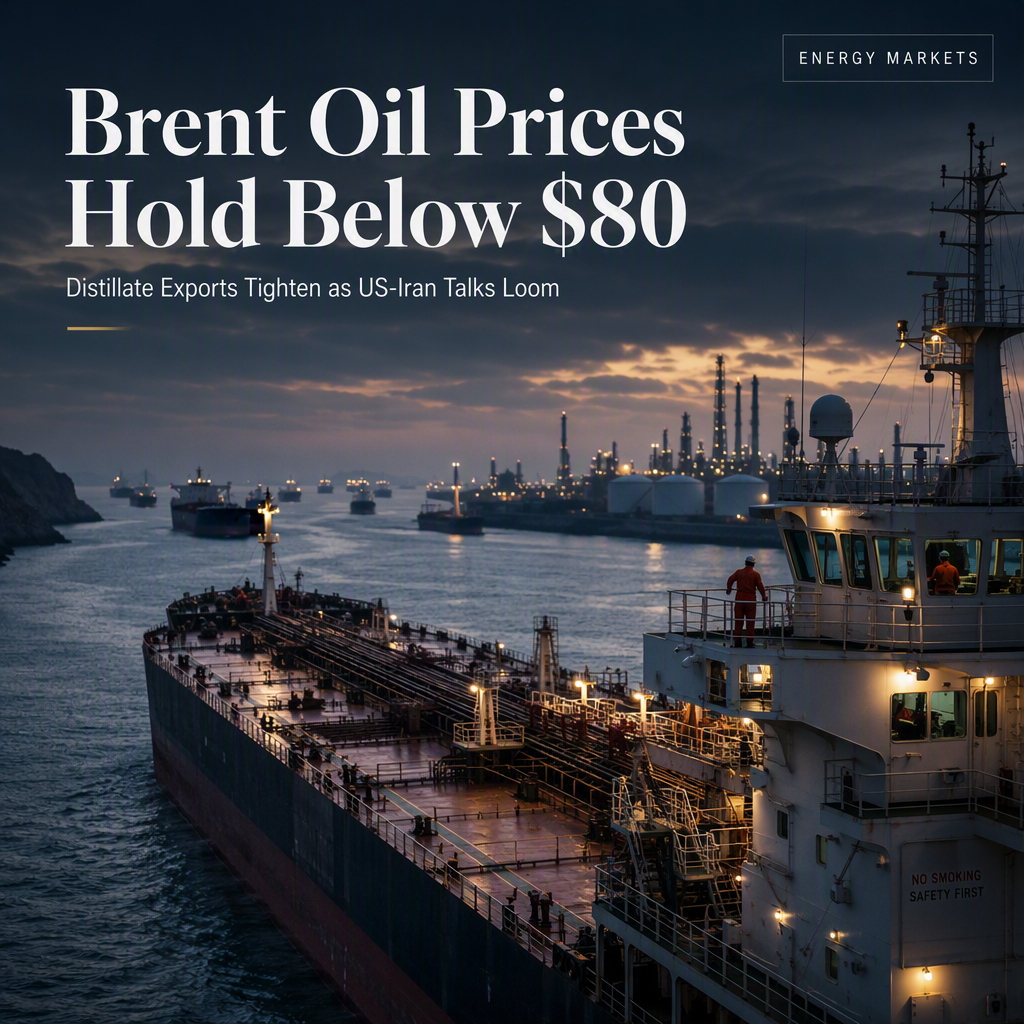
Oil prices remain under pressure, with ICE Brent trading below $80 per barrel as market participants focus on the potential for a US-Iran deal that could reopen energy flows through the Strait of Hormuz. According to ING strategists Warren Patterson and Ewa Manthey, Iran has signaled progress toward this goal, announcing an agreement with Oman on new shipping arrangements for the strait. A joint statement on the deal is being prepared, but Iran has insisted that the agreement must proceed without interference from unnamed third parties, which likely refers to the US. The trajectory of US-Iran discussions is now seen as the critical factor for the resumption of disrupted energy flows [1].
EIA data show that US commercial crude oil inventories increased by 2.48 million barrels over the last week, while the Strategic Petroleum Reserve (SPR) fell by 2.84 million barrels, resulting in a marginal total crude oil inventory decline of 362,000 barrels. Crude oil imports rose by 515,000 barrels per day week-on-week, and exports increased by 218,000 barrels per day [1].
Refined product markets, particularly for gasoline and distillates, are experiencing further tightening. Gasoline inventories fell by 1.64 million barrels, and distillate inventories dropped by 3.47 million barrels over the week. US distillate exports rose by 98,000 barrels per day week-on-week to a record 1.88 million barrels per day, contributing to the tightening market. Globally, middle distillate markets are also tight due to supply disruptions in the Middle East and Russia's export ban on diesel [1].
The combination of strong US distillate exports and ongoing global supply disruptions is keeping refined product markets tight, even as crude prices remain subdued on hopes of a diplomatic breakthrough between the US and Iran [1].
CONCLUSION
Oil markets are currently characterized by tightness in refined products, especially distillates, due to strong US exports and global supply disruptions. However, crude prices remain under pressure as the market awaits potential progress in US-Iran negotiations, which could impact future energy flows through the Strait of Hormuz.