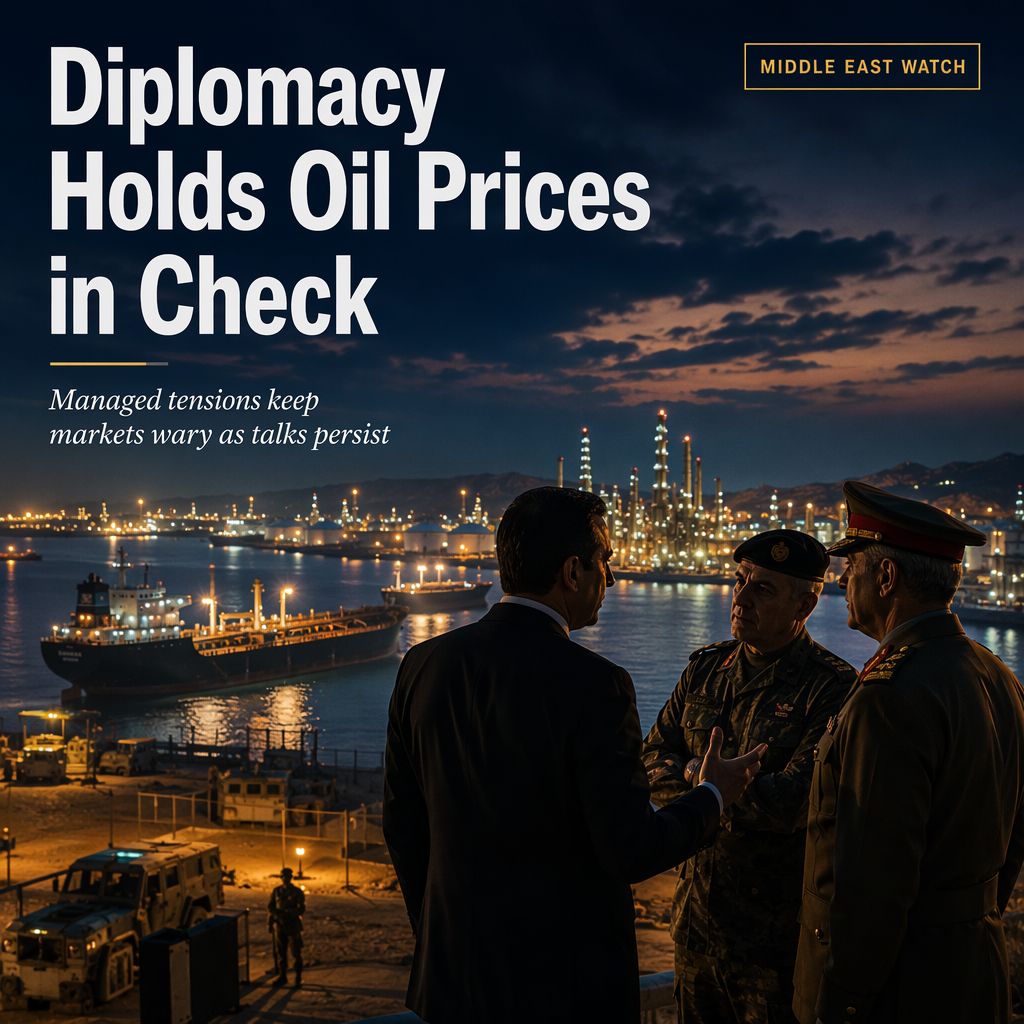
Oil prices remain elevated following recent strikes in the Middle East, as ongoing diplomatic efforts help contain escalation risks, according to BNY’s Geoff Yu [1]. Iran has signaled its intention to continue a military response while simultaneously engaging in active diplomatic mediation. Iranian Foreign Ministry spokesman Esmaeil Baghaei stated that Tehran has received proposals from mediators aimed at preventing a wider conflict and emphasized that Iran does not see its options as limited to either negotiations or war [1].
Baghaei further explained that diplomatic efforts have remained active in recent days, and Iran will persist in talks to halt U.S. actions even as its armed forces maintain a military posture. He argued that both diplomacy and defense serve Iran’s national interest, rejecting the notion of a binary choice between the two [1].
For markets, this situation keeps the conflict in a 'managed but unstable phase,' with crude prices still supported after the strikes. However, the ongoing survival of a diplomatic track is seen as marginally positive for broader risk sentiment, as markets closely monitor whether diplomacy can effectively contain the risk of further escalation [1].
CONCLUSION
Oil prices remain supported due to ongoing Middle East tensions, but active diplomatic efforts are providing some reassurance to markets. The situation is described as managed yet unstable, with the potential for further escalation being closely watched by investors.