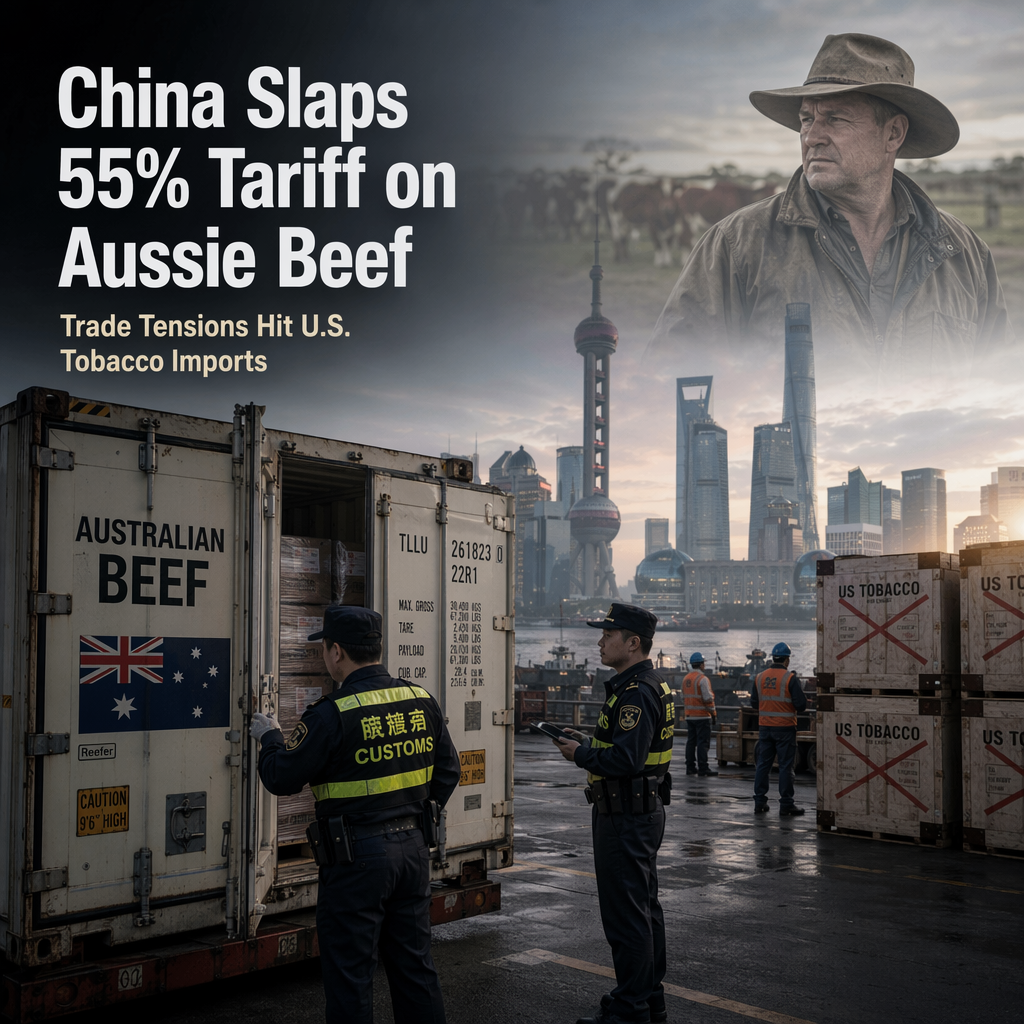
China announced on Friday that its import quota for Australian beef has been reached, triggering a 55% tariff on Australian beef imports starting Saturday [1]. This significant increase in tariffs is expected to make Australian beef much more expensive for Chinese buyers, likely affecting trade volumes and market dynamics between the two countries [1]. As China is the world's largest importer of beef, the new tariff is anticipated to pressure Australian beef producers to seek alternative markets to offset the increased costs and potential loss of competitiveness in China [1].
In a related development, the Hong Kong-listed arm of China's state-owned tobacco monopoly warned of a sharp decline in earnings for the first half of the year, citing reduced imports of U.S. leaf tobacco amid ongoing trade tensions between China and the United States [2]. The company expects a double-digit fall in both its top and bottom lines, attributing the projected profit hit to fewer imports of U.S. leaf tobacco [2]. No further financial data, earnings figures, or detailed market analysis were provided in the article [2].
Both articles highlight the impact of trade tensions on agricultural imports into China, with Australian beef and U.S. leaf tobacco facing significant barriers. The imposition of tariffs and reduction in imports are expected to affect producers and exporters in Australia and the U.S., prompting them to reassess their market strategies and seek new opportunities [1][2].
CONCLUSION
China's imposition of a 55% tariff on Australian beef and reduced imports of U.S. leaf tobacco underscore the ongoing impact of trade tensions on agricultural markets. Producers in Australia and the U.S. are likely to face increased challenges and may need to diversify their export destinations to mitigate losses. The market reaction is expected to be significant, given China's role as a major importer in both sectors.