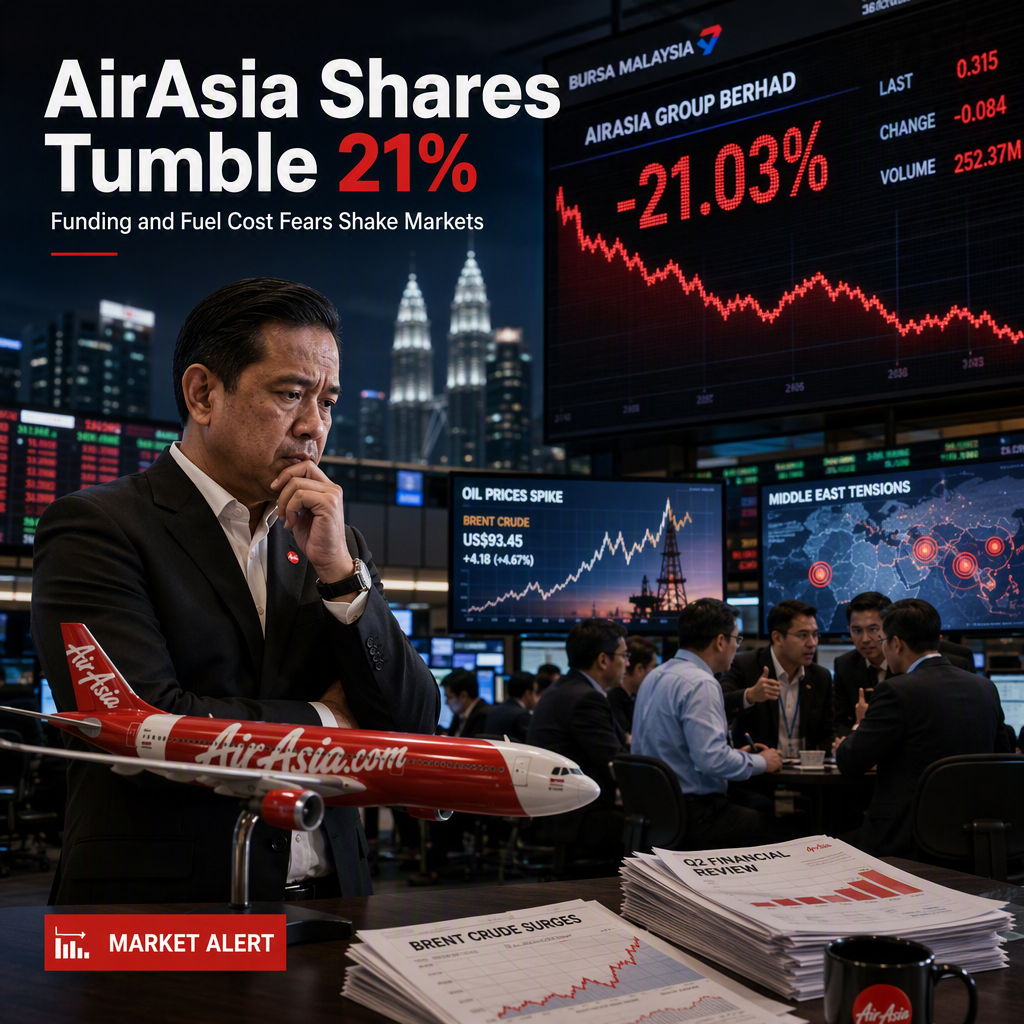
Shares of Malaysia's budget airline AirAsia Group fell sharply by 21% on Thursday, driven by escalating concerns over the company's financial stability and execution risks related to its funding plans [1]. The sell-off comes as the airline seeks $1 billion in debt financing to address mounting pressures from rising fuel costs, which have been exacerbated by geopolitical tensions in the Middle East [1].
Market analysts attribute the dramatic decline in AirAsia's share price to a combination of external factors, such as surging fuel prices, and internal challenges, including uncertainty over the airline's ability to secure necessary funding [1]. Execution risks regarding the carrier's financing strategy have further contributed to negative investor sentiment [1].
AirAsia has stated that it expects to secure the $1 billion in financing by January; however, the market remains cautious and is awaiting confirmation of the deal [1]. Traders are closely monitoring updates on the progress of the funding efforts and any further developments in fuel costs, which continue to pose a significant risk to the company's financial health [1].
Technical analysis indicates that AirAsia's shares have broken below key support levels, intensifying bearish sentiment among investors [1]. Analysts warn that unless the airline provides clearer visibility on its funding strategy and addresses fuel cost pressures, the stock may remain under pressure in the near term [1].
CONCLUSION
AirAsia's 21% share price plunge reflects deep investor anxiety over its funding outlook and exposure to rising fuel costs. The market is awaiting confirmation of the airline's $1 billion financing plan, with sentiment likely to remain negative until greater clarity emerges. Unless AirAsia can address these challenges, its stock may continue to face downward pressure.