
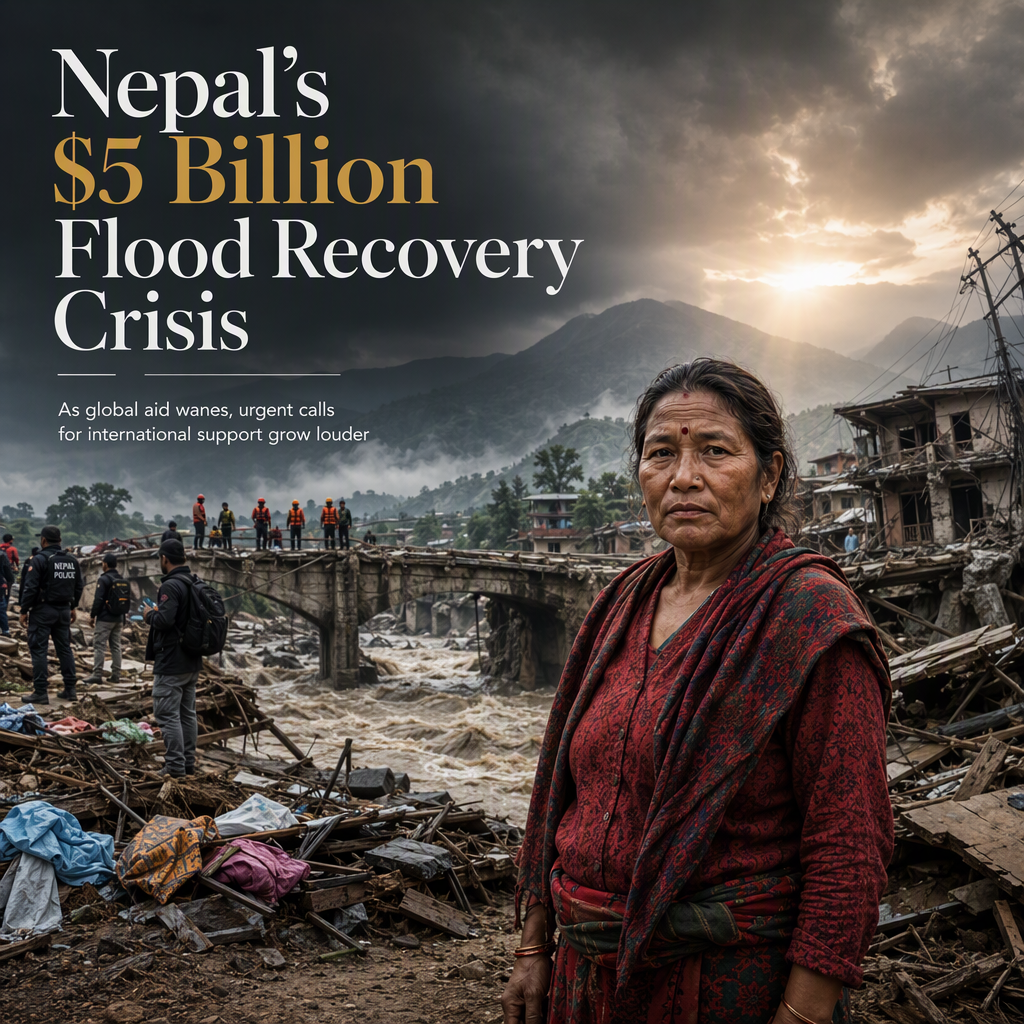
Nepal is confronting a major crisis following recent floods, with the government struggling to raise $5 billion for reconstruction and recovery efforts as global aid retreats [1]. Prime Minister Shah has appealed to the international community at the United Nations, urging them to 'share responsibility' for flood recovery, highlighting the rising costs associated with rebuilding infrastructure, restoring livelihoods, and addressing long-term climate resilience [1]. Financial officials estimate that the $5 billion recovery package is necessary to cover damages to homes, roads, power lines, and public facilities, but donor fatigue and shifting priorities among international agencies have complicated fundraising [1]. Nepal's finance ministry has warned that without external assistance, the country may face a prolonged recovery period and heightened risk of economic instability [1].
The floods have significantly impacted key sectors such as tourism and electricity exports, both vital to Nepal's economy [1]. Market analysts note that the loss of tourism revenue and disruption of hydroelectric power supply could push Nepal's current account deficit higher, increasing pressure on the Nepalese rupee [1]. There are concerns about the government's ability to maintain currency stability and attract foreign investment amid the ongoing crisis [1]. A senior official emphasized, 'The scale of the disaster demands sustained international support,' warning that if funding falls short, Nepal will have to divert resources from other development projects, potentially slowing economic growth [1].
While no technical charts or trading advice were provided, the article conveys a cautious sentiment, with authorities urging both domestic and global stakeholders to prioritize financial assistance and investment for recovery [1]. The government continues to monitor price levels in key sectors, seeking signs of recovery or further deterioration in the coming months [1].
CONCLUSION
Nepal's struggle to secure $5 billion for flood recovery underscores the urgent need for international support as donor fatigue sets in. The disaster's impact on tourism and electricity exports threatens currency stability and economic growth, raising concerns about prolonged recovery and increased economic instability. Authorities are closely monitoring key sectors, emphasizing the importance of sustained financial assistance.