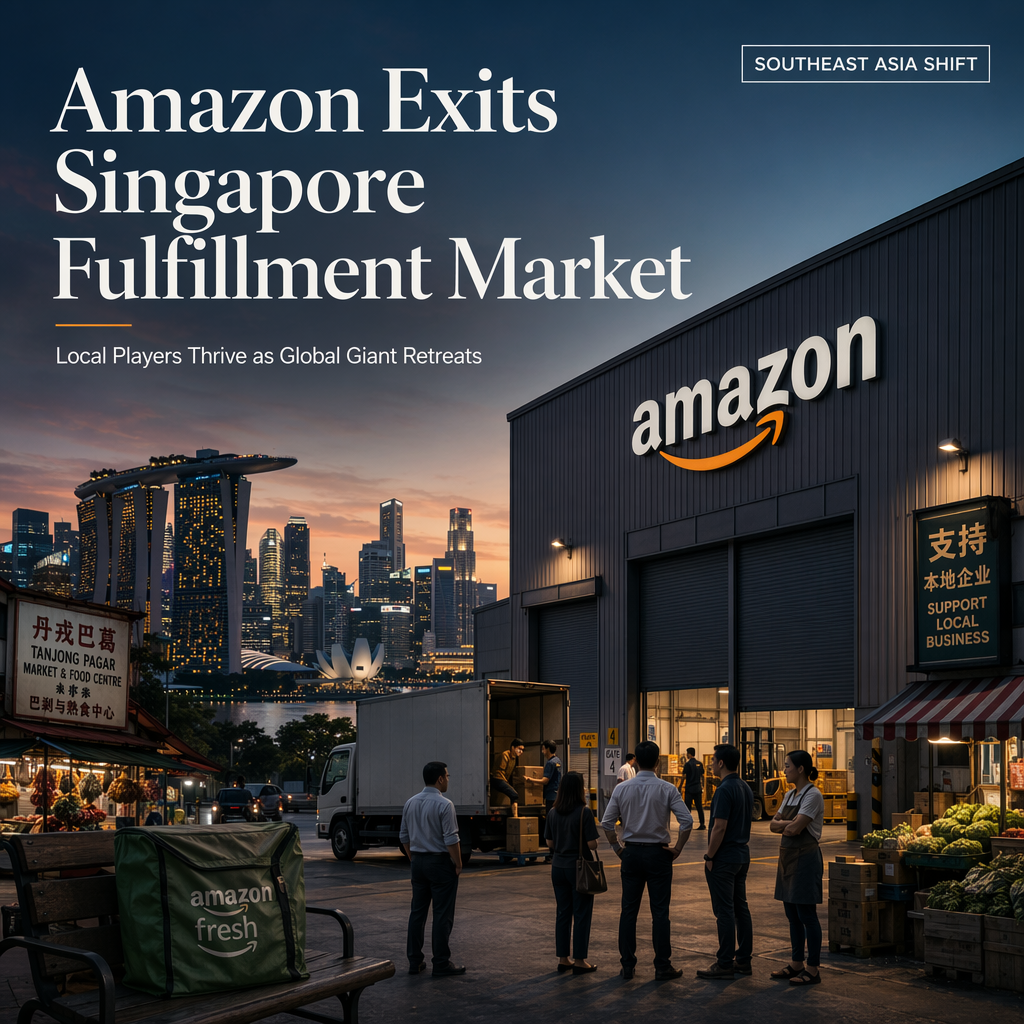
Amazon, the world's largest e-commerce company, has announced a significant retreat from the Southeast Asian market, specifically Singapore, by beginning to phase out its fulfillment service as of July 6, 2026. This service, which involved storing goods for retailers in Amazon's facilities, will be discontinued, and Amazon Fresh, the company's grocery delivery service promising two-hour delivery windows, will also cease operations. Third-party sellers who relied on Amazon's infrastructure to reach Singaporean consumers will be affected, with some expected to seek alternative platforms or manage their own logistics [1].
Amazon's market share in Southeast Asia remains in the low single digits, significantly trailing behind regional competitors such as Shopee (Sea Group), Lazada (Alibaba Group), and TikTok Shop. These local players have successfully captured the majority of the market by tailoring their platforms to local consumer preferences, payment methods, and logistics infrastructure—areas where Amazon's global strategy has struggled to adapt. An executive at a local logistics company noted that Amazon's fulfillment network in Singapore was never as extensive as in other countries, making it difficult to compete on speed and reliability [1].
Industry analysts highlight that the withdrawal underscores the challenges Amazon faces in markets where logistics networks and consumer behaviors differ markedly from those in the U.S. and Europe. The Southeast Asian e-commerce market is expected to continue growing rapidly, but analysts emphasize that success in the region depends on understanding local preferences, such as cash-on-delivery payments, local languages, and region-specific marketing strategies. Amazon's experience in Southeast Asia demonstrates the limitations of a one-size-fits-all approach in diverse and dynamic economies [1].
No price levels, support/resistance, or technical indicators were discussed in the article [1].
CONCLUSION
Amazon's decision to withdraw key services in Singapore highlights the difficulties global e-commerce giants face when competing against well-adapted local players in Southeast Asia. The move signals the importance of localization and flexibility in rapidly growing, diverse markets, and may prompt affected sellers to seek alternative platforms.