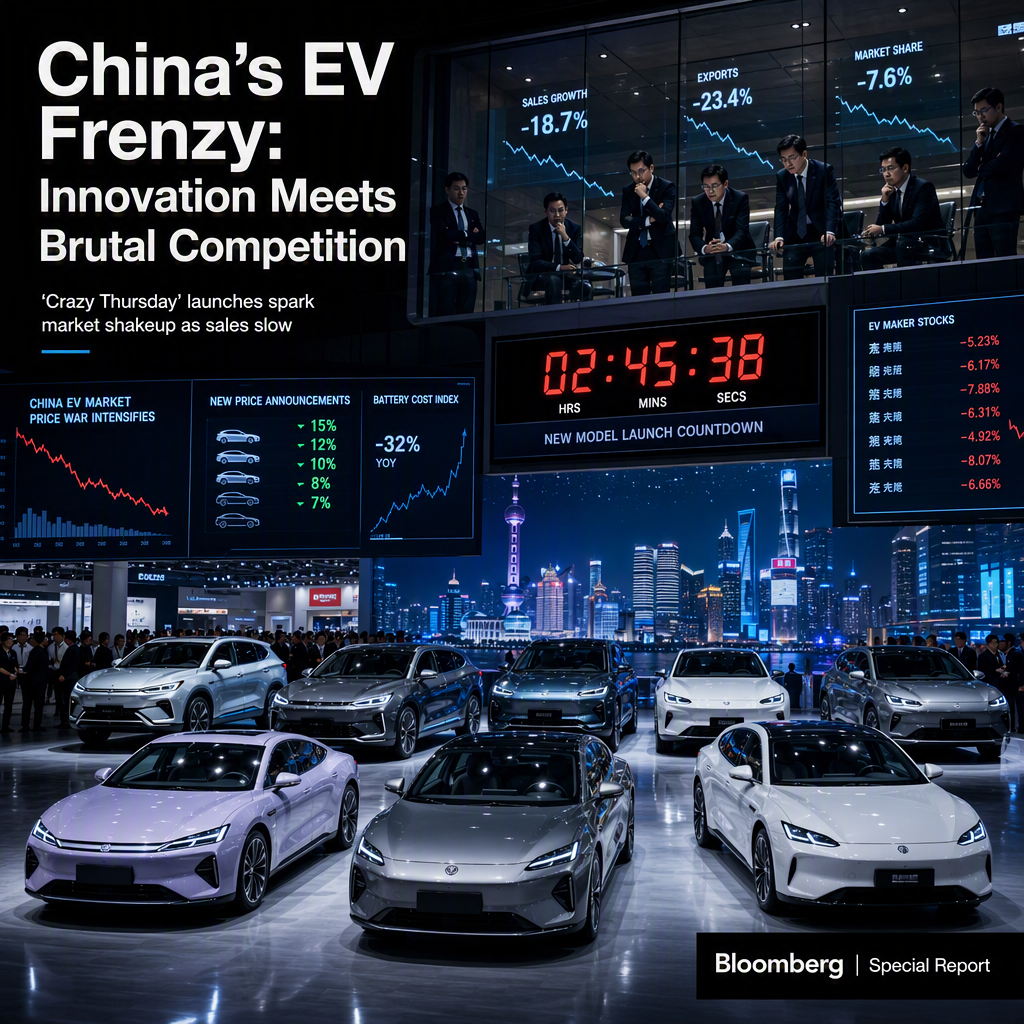
On a single day last month, at least eight Chinese automakers, including major players like Great Wall Motor and smaller companies such as Leapmotor Technology, unveiled new models, with six of them introducing new or revamped electric vehicles (EVs) or other new energy vehicles [1]. This surge of activity, referred to as 'Crazy Thursday,' illustrates the intense competition and rapid innovation currently defining China's EV sector [1]. Even BYD, the country's leading EV manufacturer, is feeling the pressure, with a BYD executive describing the market as 'brutal' due to the overwhelming number of competing models and the challenge of maintaining market share [1].
The financial implications of this crowded market are significant. The influx of new vehicles is driving down prices and squeezing profit margins, as automakers are forced to compete not only on technology and features but also through aggressive pricing strategies to attract buyers [1]. Technical analysis indicates that sales growth in China's EV market is slowing, with BYD reporting a 16% decline in first-half sales, a trend attributed to changes in government subsidies [1]. This slowdown in domestic demand has prompted companies to increase their focus on exports [1].
Industry executives express cautious optimism, acknowledging the challenges of sustainability and profitability in the current environment. Despite these concerns, automakers continue to invest in new models and technologies in hopes of capturing both domestic and international market share [1]. Market sentiment is mixed: while innovation and product launches are at record levels, analysts warn of a potential glut and overcapacity in the sector [1]. Volatility is expected to persist, with support and resistance levels for leading EV stocks becoming increasingly difficult to predict as companies adapt to shifting demand and regulatory changes [1].
CONCLUSION
China's EV market is experiencing unprecedented competition and innovation, but slowing sales and shrinking margins are raising concerns about sustainability and profitability. While automakers remain committed to launching new models and expanding internationally, analysts caution that market volatility and overcapacity could pose significant risks in the near term.