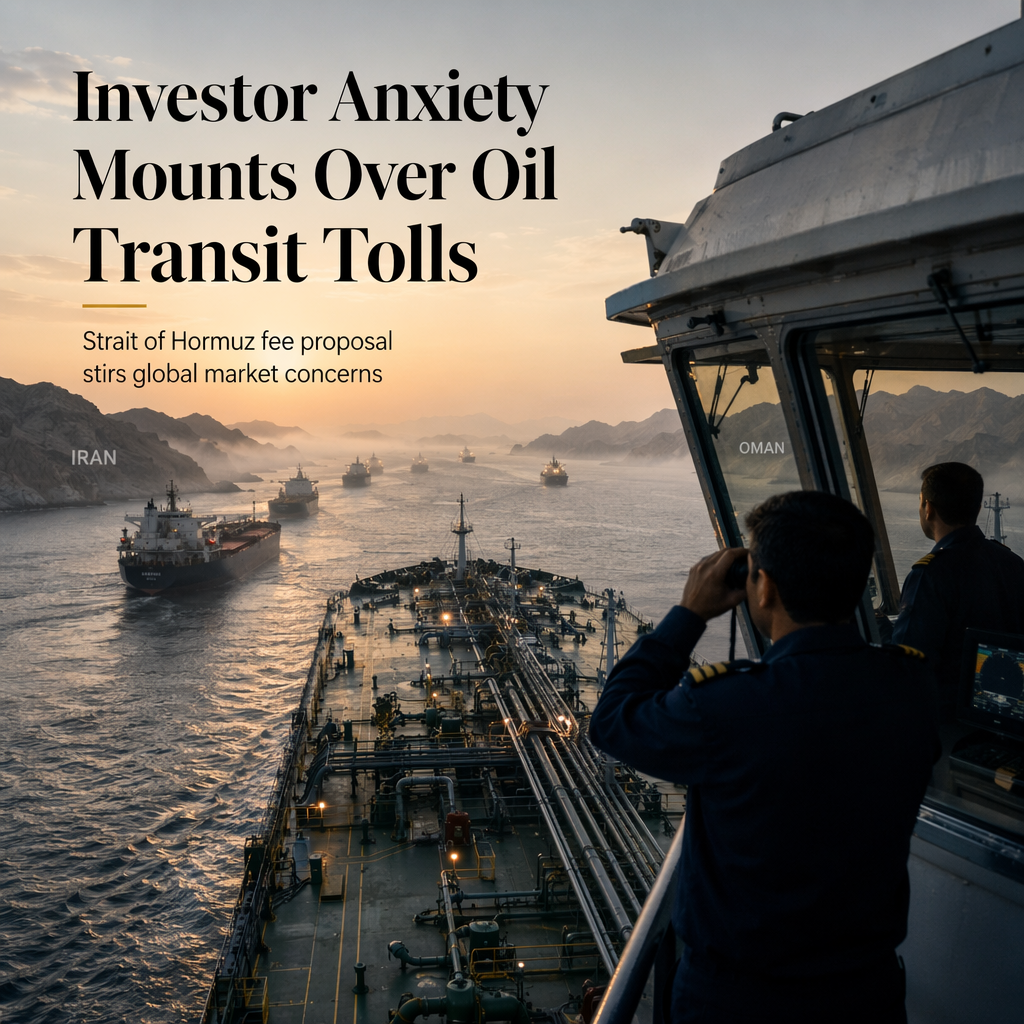
The prospect of new administrative fees for ships transiting the Strait of Hormuz has raised concerns among oil investors, who fear that similar tolls could be introduced in other critical maritime corridors such as the Strait of Malacca [1]. This anxiety follows reports that Iran and Oman have proposed to the U.S. a joint administration of the Strait of Hormuz, including the collection of administrative fees, after a memorandum of understanding was reached last month to allow safe and free navigation for 60 days [1]. The Strait of Hormuz is a vital passage, handling around 20% of the world's oil traffic [1].
Janiv Shah, vice president of commodity markets at Rystad Energy, noted that investors are becoming "a little bit jittery" about the possibility of tolls being implemented in the Strait of Malacca, which is the primary oil transit chokepoint in Asia and Oceania [1]. Shah explained that the concern stems from the precedent that could be set if Iran enacts tolls in the Strait of Hormuz, potentially leading to similar measures in the Strait of Malacca, which accounted for 29% of total maritime oil flows in the first half of 2025, according to the U.S. Energy Information Administration [1]. Crude oil makes up just over 70% of the total oil flows through the Strait of Malacca each year, with petroleum products comprising the remainder [1].
While the idea of tolls in the Strait of Malacca has alarmed investors, maritime experts remain deeply skeptical about the likelihood of such fees being introduced there [1]. Shah also indicated that, even if such a plan were to be enacted, it would likely take considerable time due to the significant volume of oil passing through the waterway [1].
The market implications of these developments are significant, as any disruption or additional cost in these strategic chokepoints could impact global oil supply chains and pricing. However, no immediate market reactions or analyst forecasts were provided in the article [1].
CONCLUSION
Investor concerns are mounting over the potential for new oil transit tolls in strategic maritime corridors, particularly following proposals for administrative fees in the Strait of Hormuz. While experts doubt the immediate introduction of similar fees in the Strait of Malacca, the situation is being closely watched due to the potential impact on global oil flows and market stability.