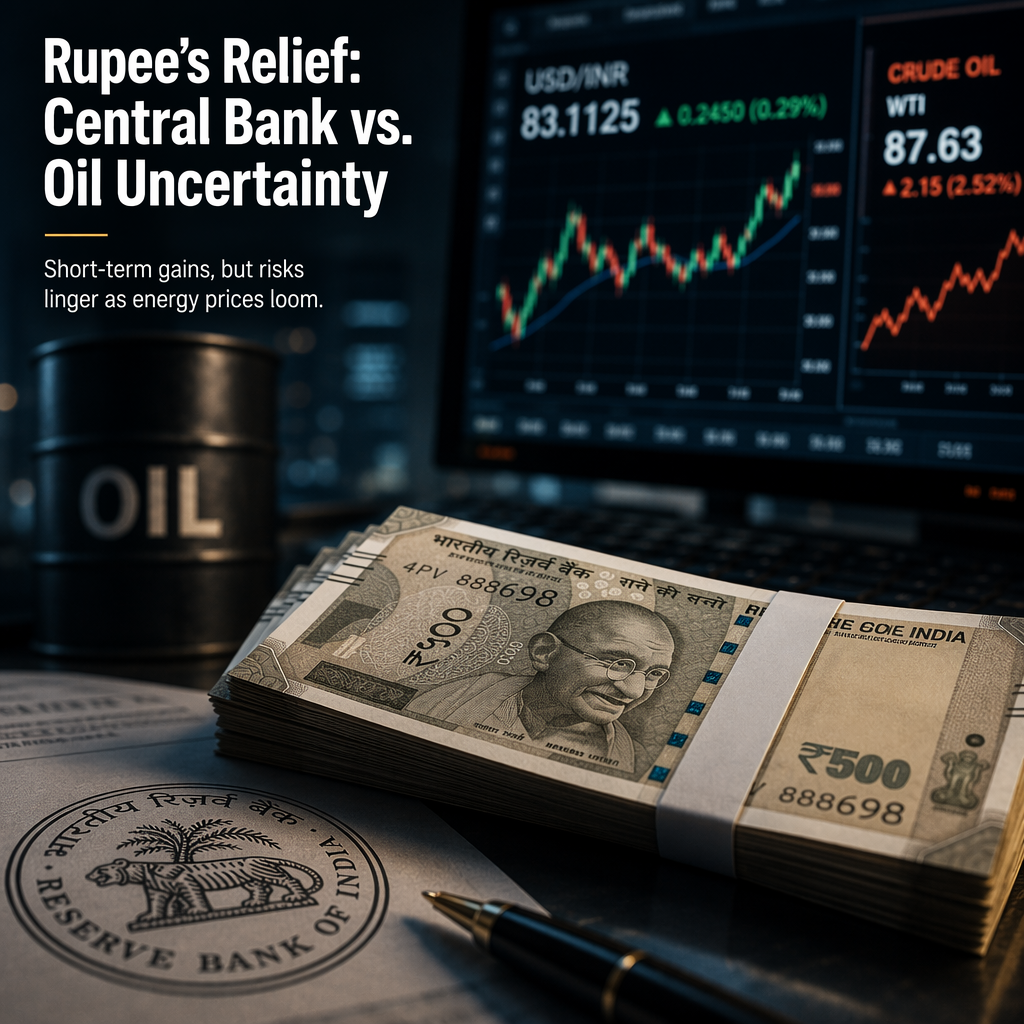
India's rupee, identified as one of the weakest performing currencies in Asia, has received temporary support following a series of structural interventions by the Reserve Bank of India (RBI) [1]. In June, the RBI introduced several measures, including hedging incentives for banks designed to attract more foreign currency deposits from nonresident Indians, with the aim of strengthening the rupee [1]. These actions were implemented in response to ongoing pressure on the currency, largely attributed to persistent energy price shocks resulting from the U.S.-Iran war [1].
Despite the central bank's efforts, the rupee remains vulnerable to external factors, particularly the trajectory of global oil prices [1]. Analysts cited in the article emphasize that while the RBI's interventions have provided some respite, the risk of renewed volatility is significant if oil prices rise again [1]. The stability of the rupee is therefore seen as dependent on both the effectiveness of domestic policy measures and developments in the international energy market [1].
Market participants are monitoring technical support levels for the rupee, with some analysts warning that a sustained breach below key thresholds could lead to further selling pressure [1]. Trading sentiment is described as cautious, with investors awaiting additional signals from both the central bank and global oil markets [1].
Looking ahead, the rupee's short-term outlook is closely tied to the success of the RBI's structural measures and the direction of energy prices, with risks skewed toward further weakness if oil costs escalate [1].
CONCLUSION
The Reserve Bank of India's recent measures have provided the rupee with some short-term stability, but the currency remains at risk due to ongoing energy price pressures. Market sentiment is cautious, and the rupee's outlook will largely depend on both domestic policy effectiveness and global oil price movements.