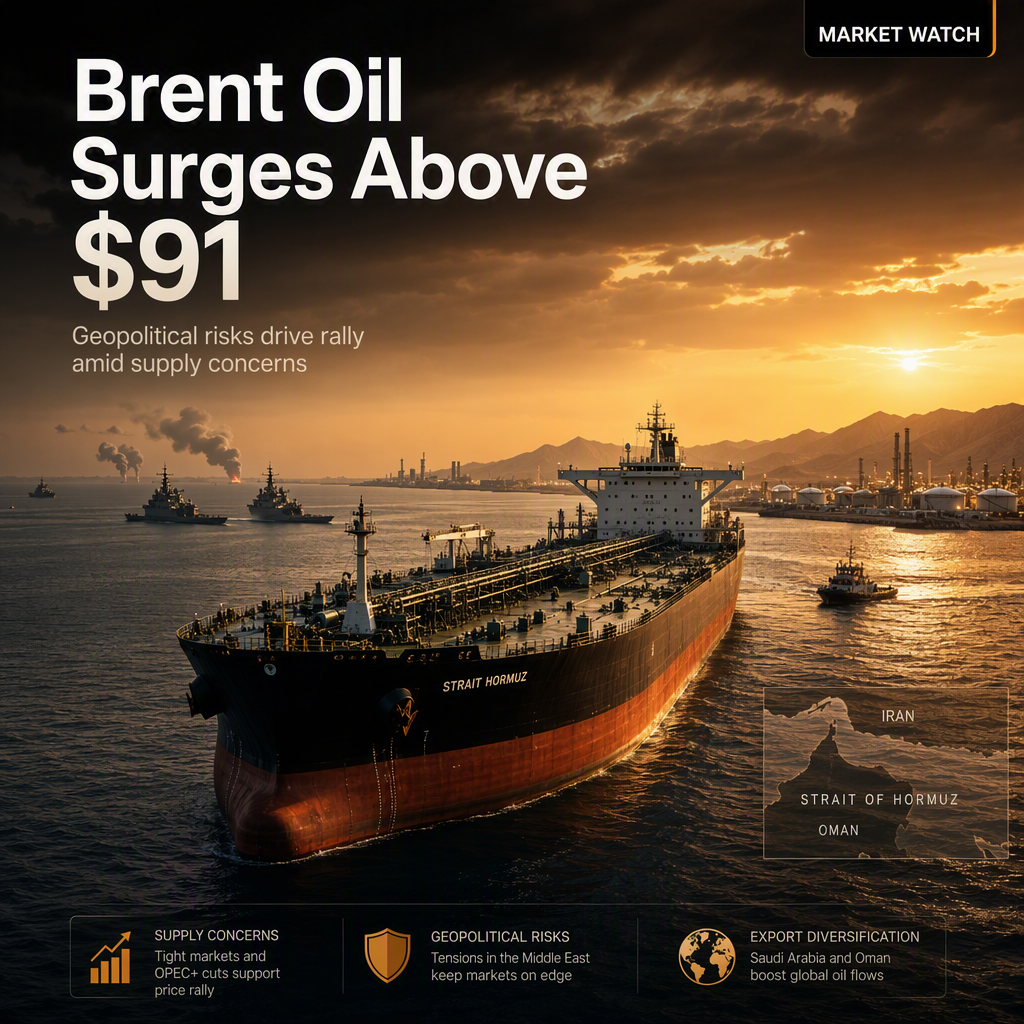
Brent crude oil prices have extended their rally, trading above $91 per barrel, supported by escalating geopolitical risks and ongoing supply concerns, according to ING strategists Ewa Manthey and Warren Patterson [1]. The rally marks the third consecutive session of gains for ICE Brent, with sentiment buoyed by US President Donald Trump's decision not to extend the US-Iran peace agreement and persistent security risks in the Strait of Hormuz, both of which have heightened fears of potential supply disruptions [1].
Saudi Arabia is reportedly taking steps to diversify its export routes, offering crude cargoes from locations off the coast of Oman. Saudi Aramco is marketing Arab Medium and Arab Heavy grades via ship-to-ship transfers from terminals such as Sohar, signaling efforts to reduce reliance on the Persian Gulf for exports [1].
On the demand side, Chinese refinery throughput dropped 15.8% year-on-year to 12.5 million barrels per day in July, reflecting weak refining activity. Apparent oil demand in China also declined 17.5% year-on-year to 12.04 million barrels per day, attributed to softer industrial activity, weak refining margins, and increased adoption of electric vehicles [1].
In the middle distillates market, the ICE gasoil crack approached $76 per ton, supported by reports of Ukrainian attacks on Russia's Ust-Luga processing facility and ongoing Russian diesel export restrictions. Speculative net-long positions in the oil market rose for a sixth consecutive week, reaching their highest level since February, reflecting expectations of a tighter market [1].
CONCLUSION
Brent oil's rally above $91 per barrel is driven by heightened geopolitical tensions and supply concerns, with additional support from Saudi Arabia's export diversification and disruptions in Russian supply. Weak demand indicators from China contrast with strong speculative positioning, suggesting ongoing market volatility and a bullish outlook for oil prices.