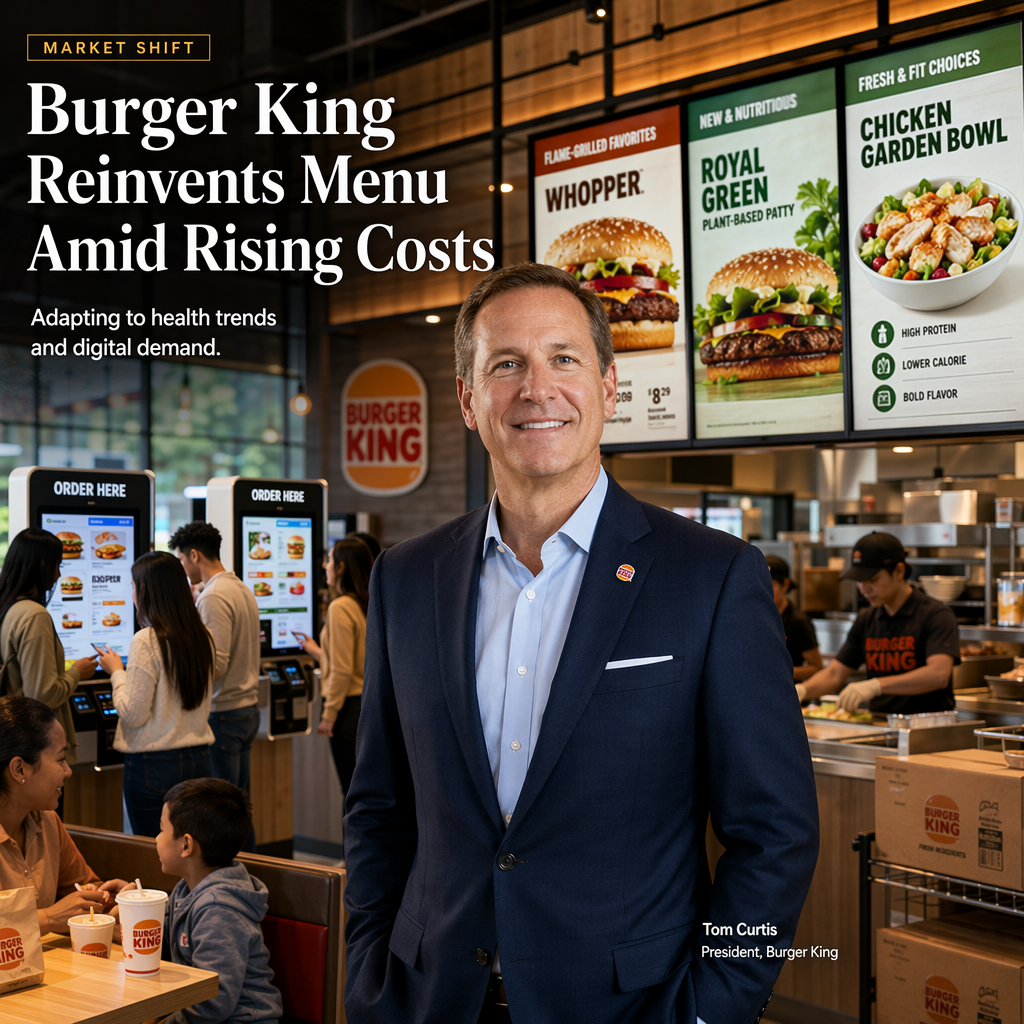
Burger King is responding to significant shifts in American eating habits and rising food costs by adapting its menu and business strategies, according to company President Tom Curtis in an interview with NBC News’ Hallie Jackson [1]. The fast-food chain, known for its Whopper burgers, is closely monitoring the growing popularity of GLP-1 weight-loss drugs and the increasing demand for health-conscious menu options [1]. Curtis stated, 'We’re focused on making sure we have offerings for everyone, whether that’s our classic burgers or lighter options,' highlighting the company's commitment to menu innovation while maintaining its core brand identity [1].
The company is also addressing supply chain challenges, which have led to increased costs across the industry. Although Curtis did not disclose specific financial figures, he emphasized Burger King’s efforts to balance affordability for customers with the need to offset rising expenses. This involves analyzing market data to determine attractive price points that accommodate higher ingredient and labor costs [1].
Digital ordering and delivery have become increasingly important for Burger King, with Curtis noting significant growth in these areas. The company is investing in technology and convenience to meet customer expectations, leveraging digital platforms to boost sales and streamline operations. These initiatives are aimed at improving both customer experience and profitability [1].
Overall, Burger King is navigating a challenging environment by innovating its menu, managing costs, and adapting to new consumer behaviors, particularly the adoption of GLP-1 weight-loss drugs. The company’s strategy reflects a focus on maintaining competitiveness in the fast-food market while responding to broader industry trends [1].
CONCLUSION
Burger King is proactively addressing rising costs and evolving consumer preferences by innovating its menu and investing in digital platforms. While specific financial figures were not disclosed, the company’s focus on affordability and technology suggests a medium market impact. The takeaway is that Burger King aims to remain competitive by adapting to both health trends and operational challenges.