
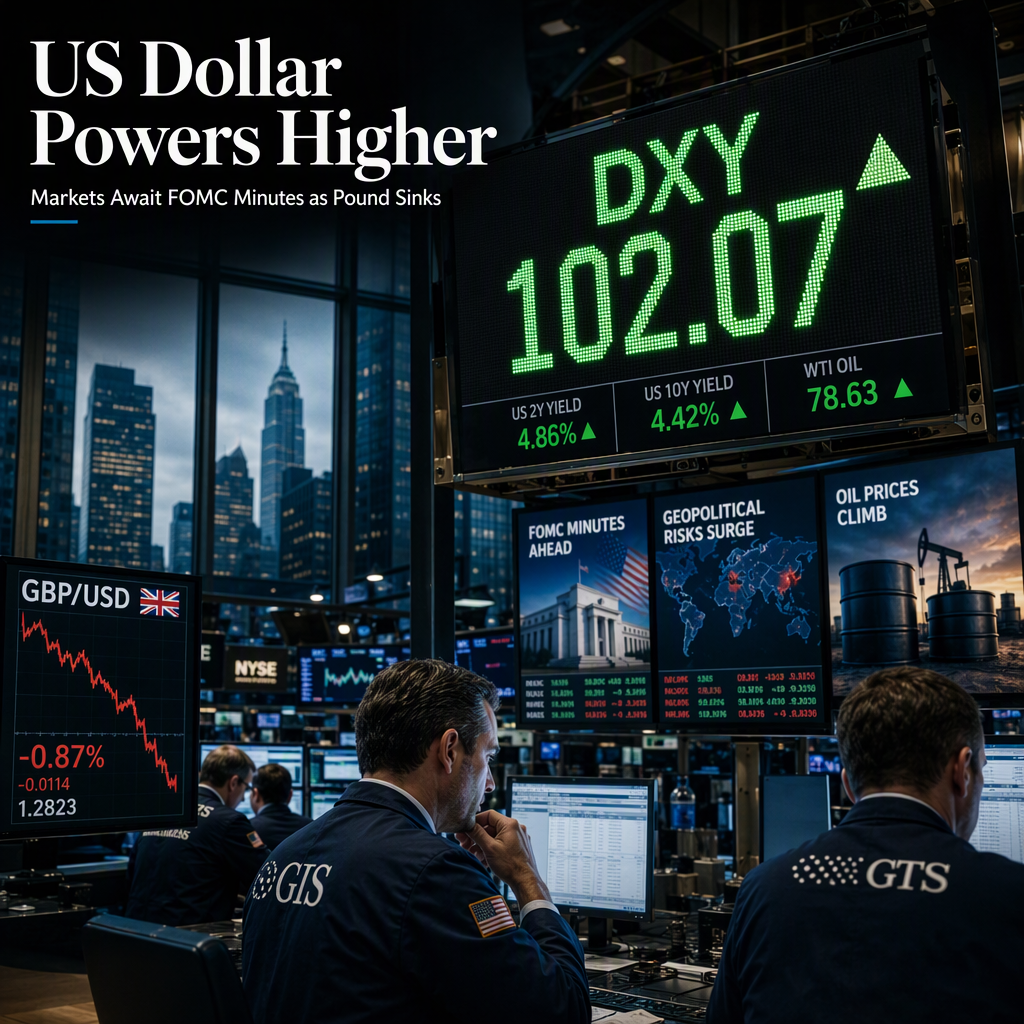
The US Dollar Index (DXY) climbed back above the 102.00 mark during the Asian session on Wednesday, reversing part of the previous day's decline and approaching its highest level since April 2025, ahead of the release of the Federal Open Market Committee (FOMC) meeting minutes [1]. The DXY's advance was supported by persistent geopolitical uncertainties, including Saudi-backed forces in Yemen claiming control over strategic Red Sea points and retaliatory attacks by the Iran-backed Houthi group on Saudi targets, as well as increased Iranian activity in the Strait of Hormuz, which contributed to rising oil prices [1]. These developments, along with US bond yields remaining near multi-year highs, bolstered demand for the safe-haven US Dollar [1].
Traders are closely watching the FOMC minutes for clues about the Federal Reserve's future policy path. While the odds of an October rate hike have diminished, with interest-rate swaps showing traders pricing in an almost 20% probability of a hike at the October meeting according to the CME FedWatch tool [2], there remains an 85% chance priced in for a rate increase by year-end [1]. The technical outlook for the DXY remains bullish, with the index holding above the 101.75-101.65 resistance and the 14-period Relative Strength Index (RSI) at 71.45, indicating strong buying pressure but also suggesting overbought conditions [1].
The British Pound (GBP) weakened against the US Dollar, with GBP/USD trading around 1.3250 during Asian hours on Wednesday, after modest gains the previous day [2]. The pair's decline was attributed to the strengthening US Dollar and rising oil prices, which could stoke inflation concerns and expectations for further Fed rate hikes [2]. However, the downside for GBP/USD may be limited by easing expectations for Fed hikes following softer US jobs data last week [2]. Strategists at Scotiabank noted mixed trading among G10 currencies versus the USD, with most showing gains into Tuesday’s North American open, highlighting the fragmented nature of Dollar trading [2].
On the UK side, the Pound could find support from persistent inflation concerns and expectations that the Bank of England (BoE) will keep rates higher for longer. BoE policymaker Catherine Mann warned that inflation above the 2% target appears embedded in the economy and could reach 4% around the turn of the year, especially during wage negotiations. Mann has consistently voted for a 25-basis-point rate hike to 4% since July, citing wage dynamics as a source of further price pressures [2]. Technically, GBP/USD maintains a bearish near-term tone, trading below both the nine- and 50-day Exponential Moving Averages, with the 14-day RSI at 39.3, indicating persistent downside pressure [2].
CONCLUSION
The US Dollar's recovery above 102.00 reflects ongoing safe-haven demand amid geopolitical tensions and firm US bond yields, while traders await further guidance from the FOMC minutes. The British Pound remains under pressure against the Dollar, though inflation concerns and BoE policy expectations may offer some support. Overall, the market remains cautious, with near-term trends hinging on upcoming central bank signals and geopolitical developments.