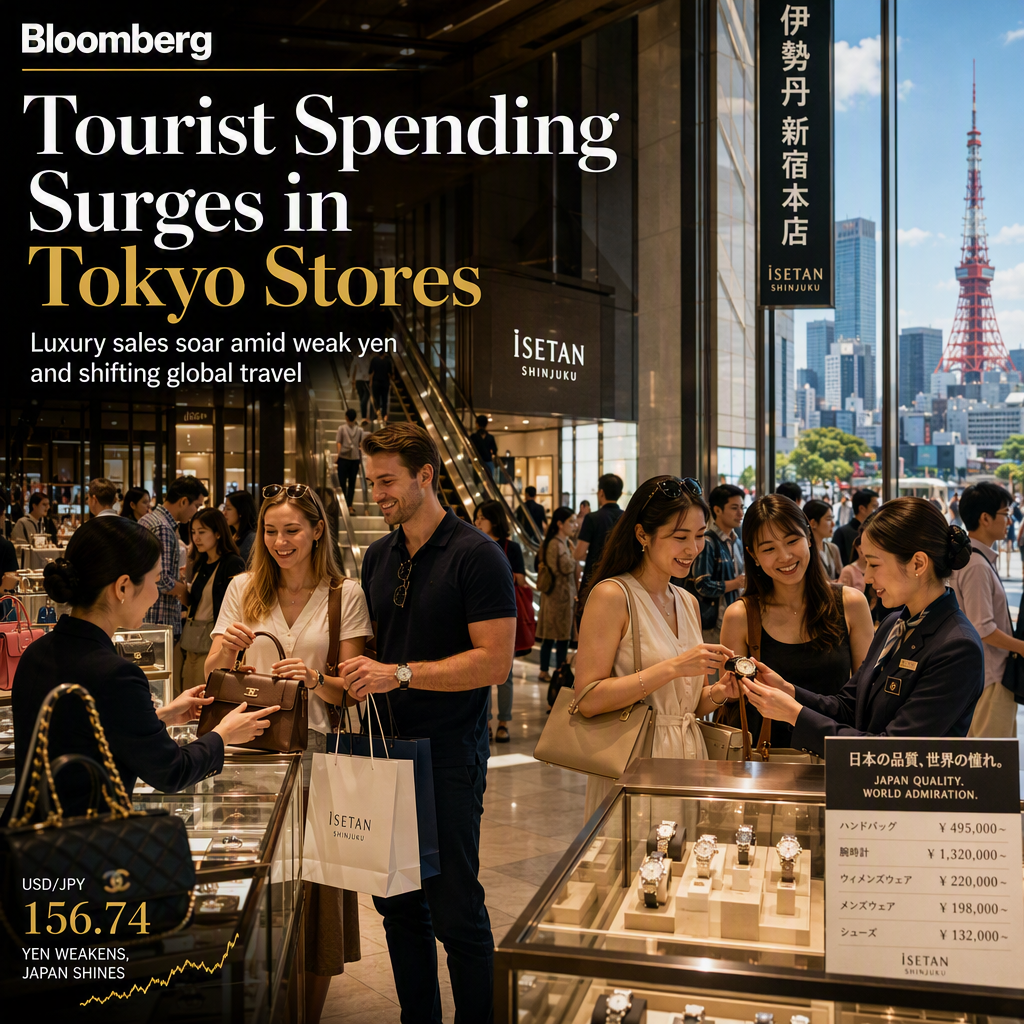
Nearly 40% of department stores in Japan expect sales from international tourists to increase during the current fiscal year, according to industry surveys cited in the article. This anticipated growth is attributed to a rise in visitors from Europe, the U.S., and Southeast Asia, which is helping to offset a decline in travelers from China [1].
The weak yen is a significant factor driving luxury goods purchases, particularly at flagship locations such as Isetan's Shinjuku store in Tokyo. Department store managers have observed increased spending on premium brands and high-ticket items, as the favorable exchange rate makes Japan an attractive destination for foreign shoppers seeking luxury goods [1].
In response to the changing customer demographics, department stores are adjusting their marketing strategies and product offerings to appeal to a broader international clientele. The expectation of rising sales from inbound tourists is viewed as a positive development for the retail sector, especially given that domestic consumption remains subdued [1].
Financial data from industry surveys suggests that department stores are forecasting modest growth in tourist-driven revenue this fiscal year, with several chains predicting year-on-year increases in spending by overseas visitors. Market analysts note that there is potential for further gains if travel restrictions are eased and global economic conditions improve, which would reinforce Japan's status as a shopping destination for international tourists [1].
CONCLUSION
Japanese department stores are optimistic about an increase in tourist spending, driven by a weak yen and a shift in visitor demographics. While domestic consumption remains weak, the retail sector is adapting to capitalize on growing demand from international shoppers, with further upside possible if global travel conditions improve.