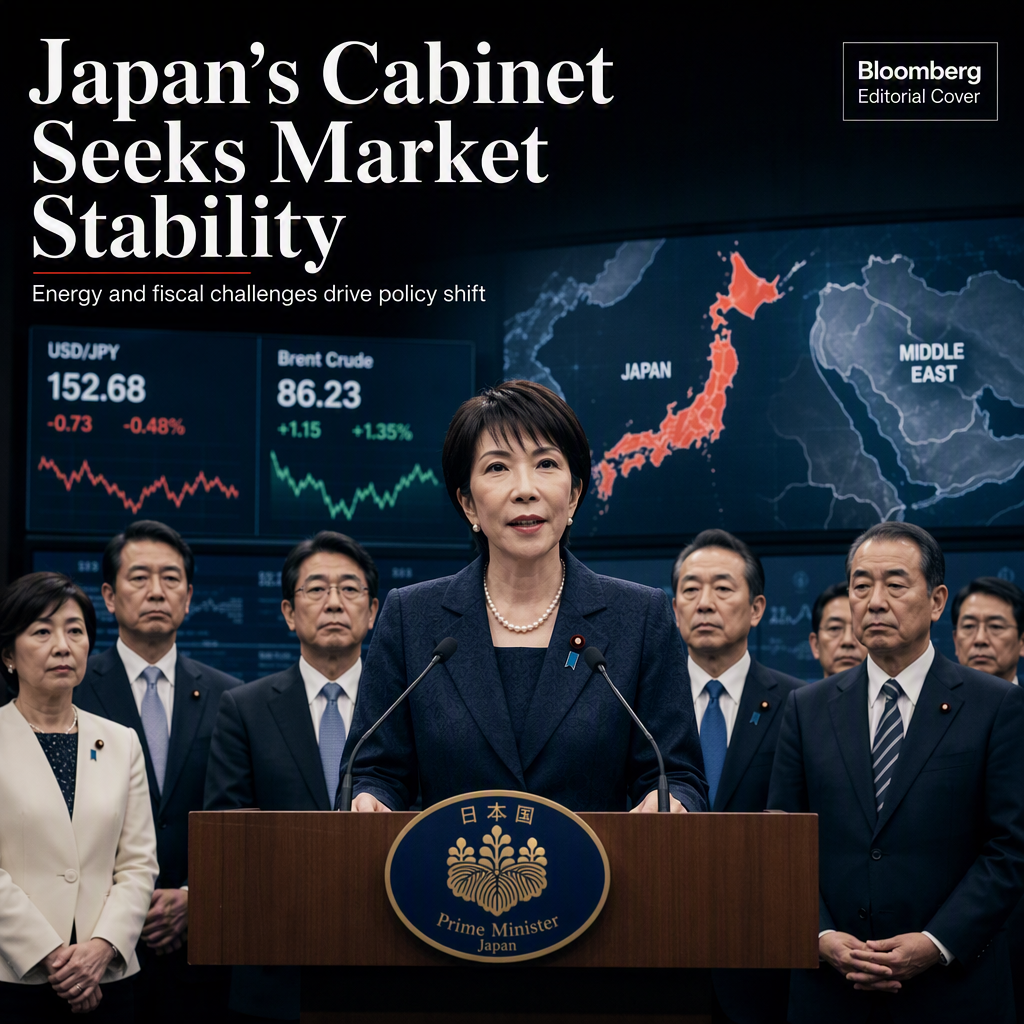
Japanese Prime Minister Sanae Takaichi has instructed her newly reshuffled cabinet to intensify dialogue with financial markets and focus on energy procurement, following the cabinet reshuffle on September 17, 2026 [1]. Takaichi emphasized the need for 'transparent and consistent' communication regarding fiscal policy, highlighting its importance for maintaining market confidence during ongoing economic uncertainty and geopolitical tensions, particularly those related to the Middle East [1].
Cabinet members have been urged to engage more actively with financial market participants, ensuring clarity on Japan's fiscal stance and addressing concerns about energy security. The government is expected to implement measures aimed at stabilizing markets, including potential responses to volatility in energy prices and fluctuations in the yen [1].
The Prime Minister’s statement comes amid heightened scrutiny of Japan's fiscal management and its response to global energy risks. The administration is committed to supporting market sentiment and tackling challenges such as a potential $63 billion fiscal shortfall linked to food tax cuts and defense buildup. Additionally, the government aims to reinforce its industrial policy, with a $2.3 trillion initiative focused on reviving growth in Japan [1].
Analysts note that clear communication and fiscal discipline are crucial for avoiding further depreciation of the yen and maintaining investor confidence. Technical indicators suggest resistance levels for the yen around 150 to the dollar, with support near 155, contingent on developments in energy markets and government policy announcements. Market participants are advised to monitor government statements closely for signals on intervention or changes in fiscal policy, as traders anticipate potential price action in Japanese equities and the yen in response to energy procurement strategies and fiscal announcements from the new cabinet [1].
CONCLUSION
Japan's new cabinet, under Prime Minister Takaichi, is prioritizing market stability and energy security amid fiscal and geopolitical challenges. Analysts and traders are closely watching for government signals on fiscal policy and energy procurement, as these will likely influence the yen and Japanese equities. The administration's commitment to transparent communication and fiscal discipline is seen as key to maintaining investor confidence.