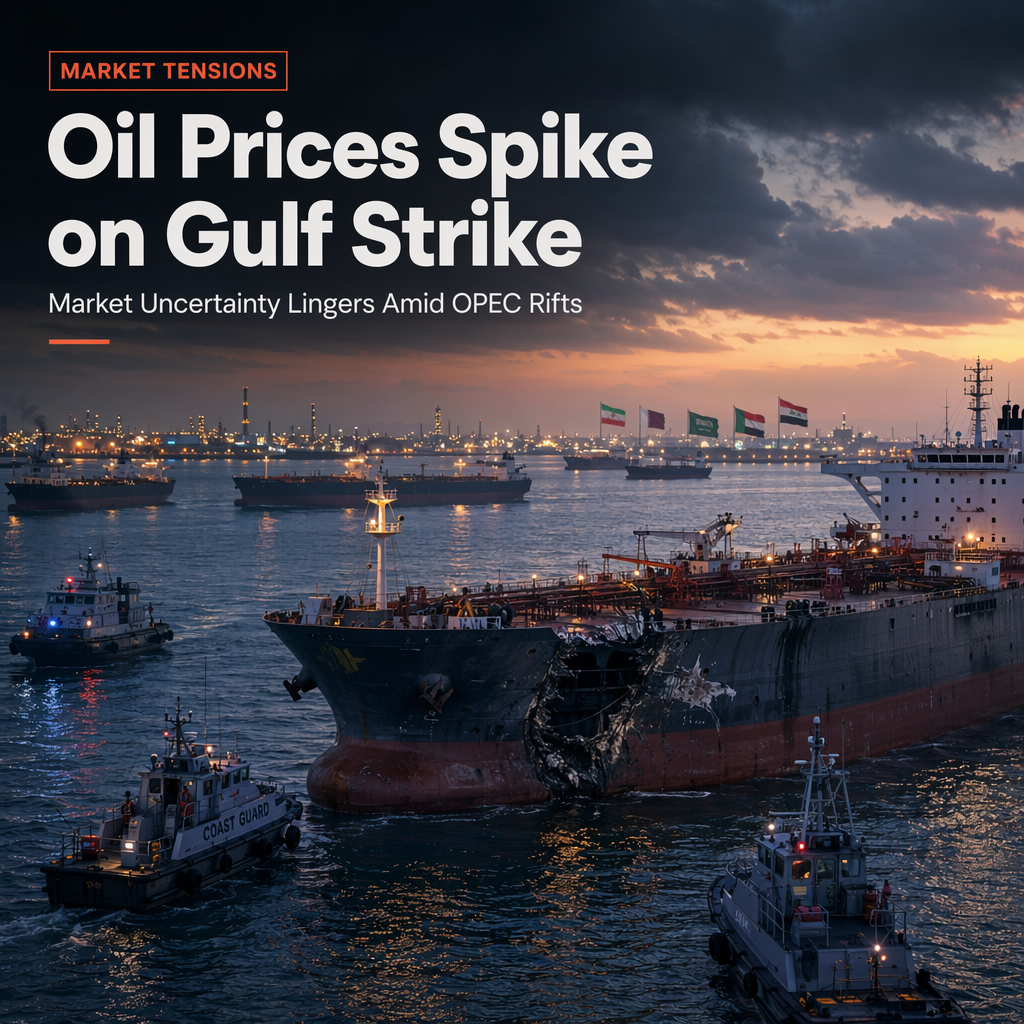
Oil prices experienced a sharp rebound after a commercial vessel was struck in the Strait of Hormuz, with ICE Brent settling more than 2% higher, according to ING strategists Warren Patterson and Ewa Manthey [1]. This incident underscored the fragile state of the ceasefire in the region and highlighted ongoing risks to vessels operating in the Persian Gulf [1]. Despite this temporary price recovery, ING notes that overall market momentum remains to the downside, as oil flows through the Strait of Hormuz continue to recover, primarily due to previously stranded vessels now leaving the Persian Gulf [1].
The strategists caution that once these stranded vessels have exited, there could be a pullback in flows. Additionally, the latest vessel strike is expected to slow traffic further, with the International Maritime Organisation suspending its evacuation plan for stranded ships [1].
On the supply side, OPEC is facing internal challenges following the UAE's recent exit from the group. Iraq's oil ministry is pressuring OPEC for a higher production quota and has threatened to reconsider its membership if its demands are not met. Iraq, the second-largest producer in OPEC, has a production capacity of almost 4.7 million barrels per day [1]. ING analysts suggest that if Iraq's threats materialize, it could contribute to a surplus narrative for 2027 [1].
CONCLUSION
While oil prices briefly rebounded following security concerns in the Persian Gulf, the overall market sentiment remains bearish as flows recover and OPEC faces internal tensions. The potential for slower vessel traffic and OPEC supply uncertainties could influence future market dynamics.