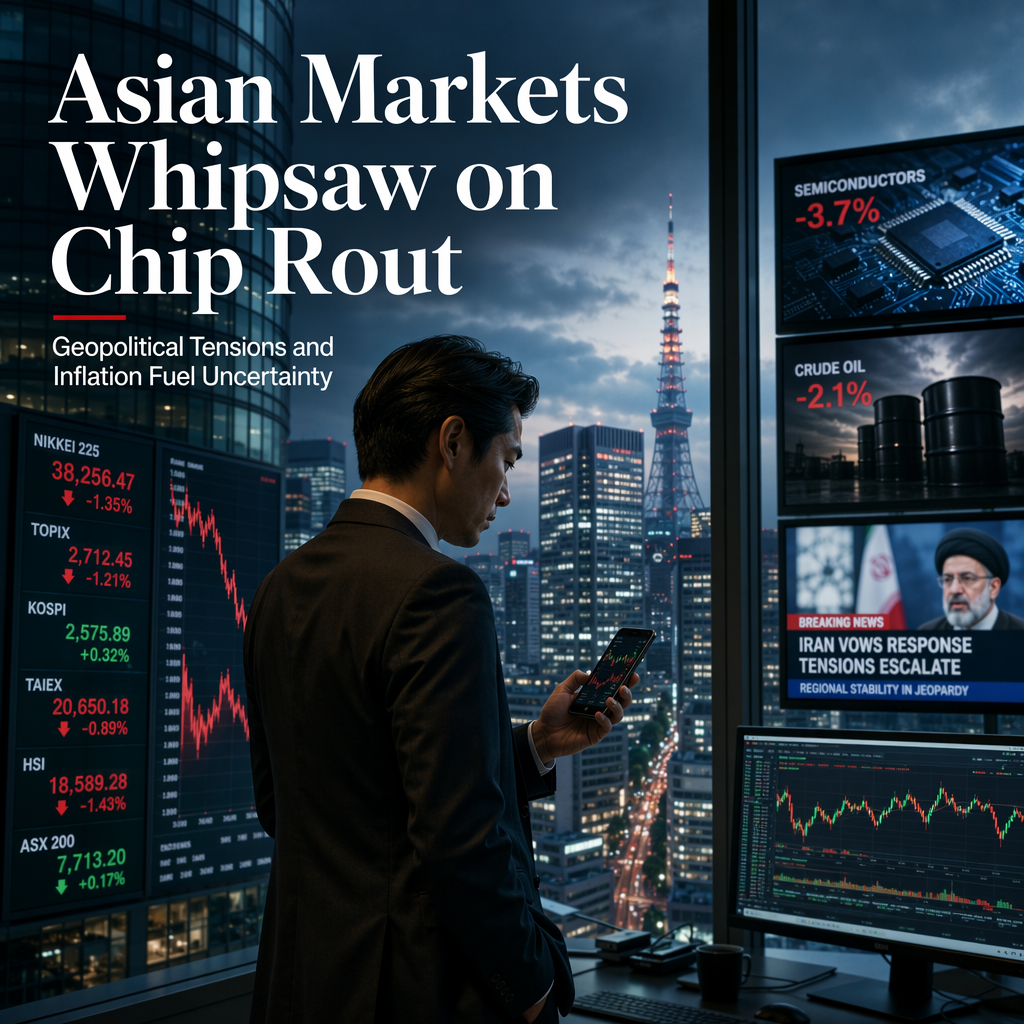
Asian stock markets experienced choppy trading on July 30, with shares in Japan and South Korea swinging between gains and losses following recent sharp declines in the main Tokyo and Seoul indexes. This volatility was driven by a combination of bargain hunting, as investors engaged in dip buying after the sell-off, and ongoing concerns about the broadening U.S.-Iran war, inflationary pressures, and a slump in the chip sector [1].
The semiconductor sector remained under significant pressure, with shares of chip companies continuing to slide due to worries about increased competition from China and persistent global supply chain issues. Rising oil prices, which have approached $100 per barrel, and inflation concerns further weighed on investor sentiment [1].
Currency markets reflected a risk-off tone, as the yen neared 164 against the dollar and yields rose in tandem with oil prices. Technical analysts observed that both the Tokyo and Seoul indexes were testing key support levels, suggesting the potential for further volatility if geopolitical tensions escalate or sector-specific weakness continues [1].
Market participants are closely monitoring upcoming earnings reports from major technology firms and developments in the U.S.-Iran conflict for additional trading cues. Investors are advised to watch support and resistance levels in the main Asian indexes and movements in chip-related stocks to assess the likelihood of short-term rebounds or further declines [1].
CONCLUSION
Asian markets remain volatile as investors weigh dip-buying opportunities against ongoing risks from the chip sector slump, inflation, and escalating geopolitical tensions. The outlook hinges on upcoming earnings reports and developments in the U.S.-Iran conflict, with technical levels in Tokyo and Seoul indexes being closely watched for signs of market direction.