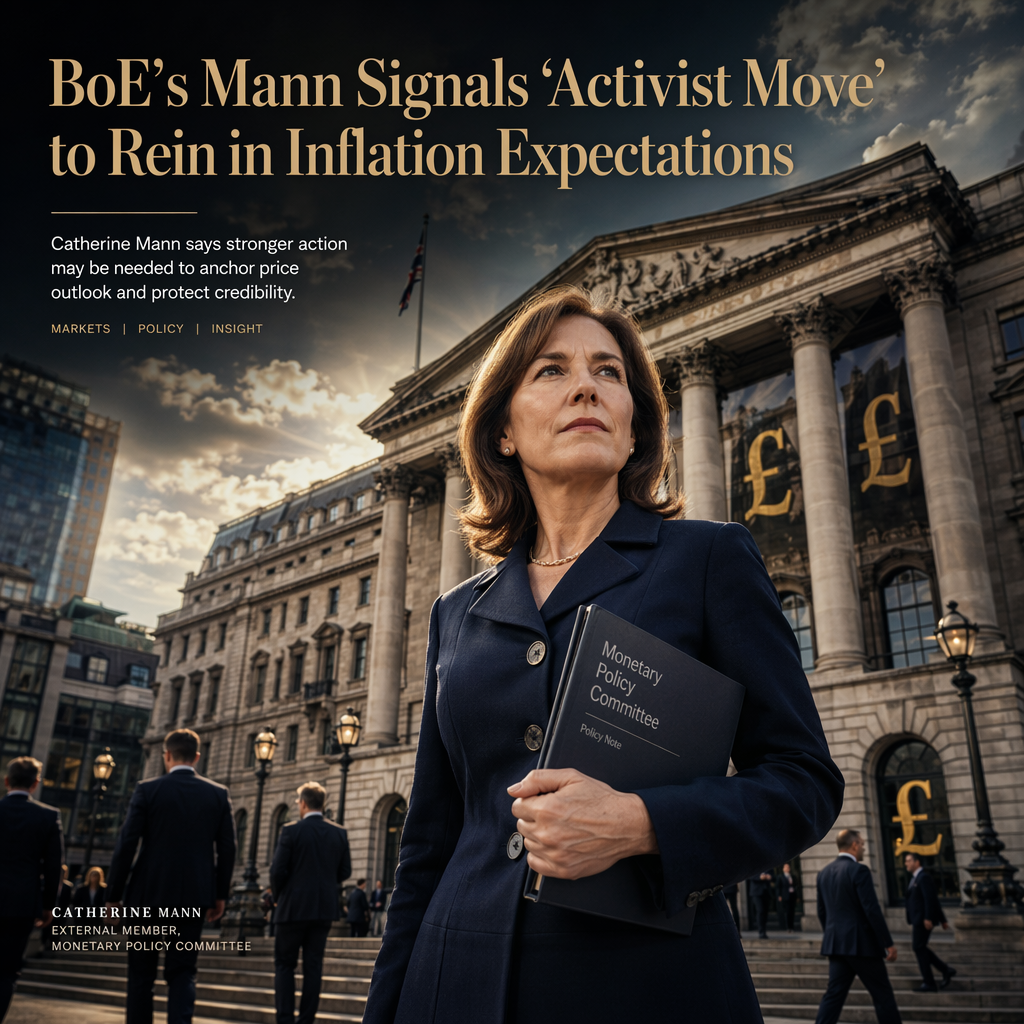
Bank of England (BoE) policymaker Catherine Mann stated on Thursday that an 'activist move' may be necessary if inflation expectations and outcomes shift unfavorably, according to a speech text released by the BoE ahead of an event hosted by Natixis [1]. Mann emphasized that if outturns, particularly in expectations, are unfavorable to the underlying inflation process, such a move could help bring inflation expectations and outcomes back toward the BoE’s 2% target [1].
Mann highlighted that, as of June, there were more upside risks to inflation than downside risks to economic activity [1]. She noted that cost-oriented inflation pressures were being offset by domestic-oriented financial restrictiveness, and that disaggregated labor signals in some sectors appeared less weak than the overall unemployment rate suggested [1]. Mann also indicated that data in the second half of the year would be particularly important for her policy assessment [1].
The speech was rated 8.2/10 on the FXS Speechtracker, significantly above the historic 7.2/10 baseline, indicating a stronger and more significant policy message [1]. Mann’s remarks pointed to a hawkish tilt, with a bias toward maintaining a longer period of restrictive policy rather than moving quickly to ease rates [1]. She referenced factors such as energy prices, margins, wage deals, and pockets of stronger labor demand as ongoing concerns that underlying inflation pressure could reassert itself, especially if expectations deteriorate [1].
Mann’s focus on the potential need for an 'activist move' and her emphasis on the importance of upcoming data reinforce a higher bar for rate cuts, which is seen as supportive for the Pound relative to its peers [1].
CONCLUSION
Catherine Mann’s comments signal a cautious and hawkish stance from the Bank of England, with a willingness to act decisively if inflation expectations worsen. The emphasis on upside inflation risks and a higher threshold for rate cuts suggests continued support for the Pound and a medium market impact.