
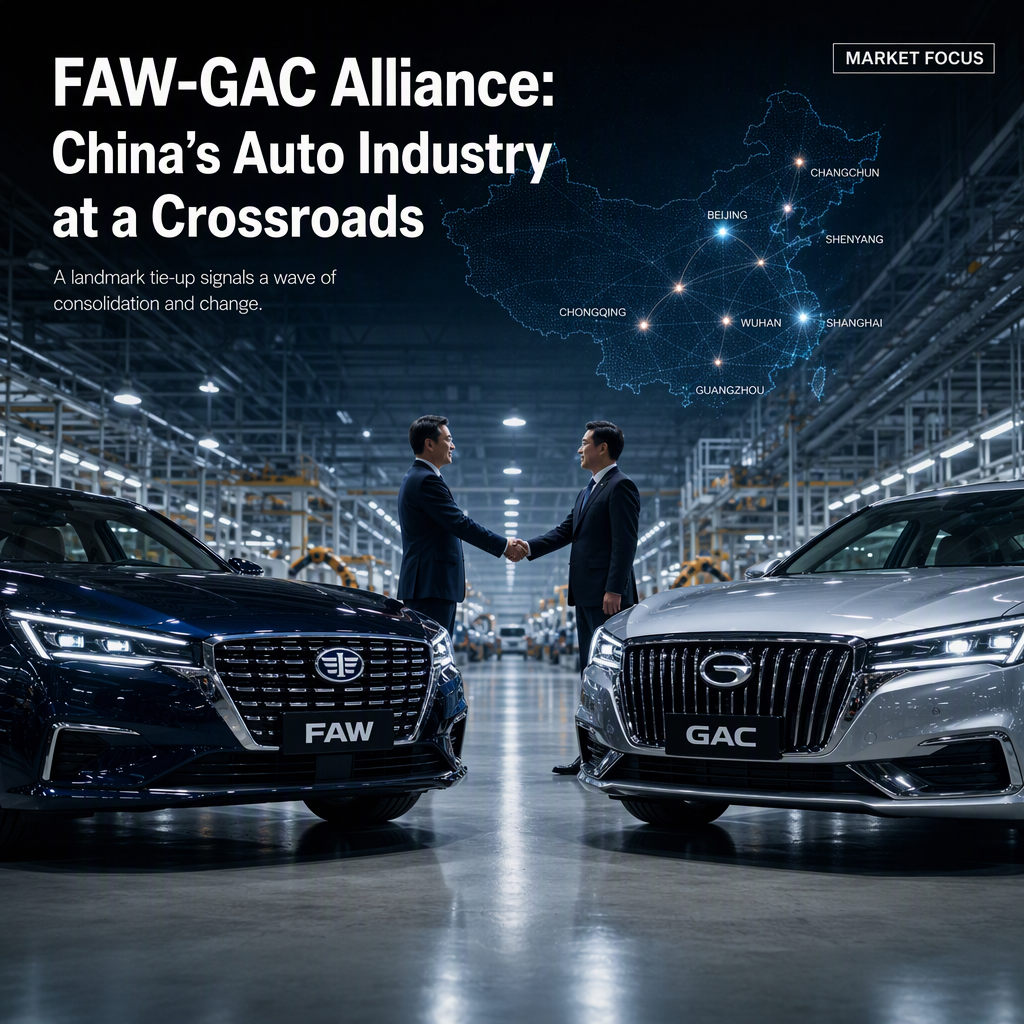
A significant development has occurred in China's automotive sector with a high-profile tie-up between two major state-owned carmakers, FAW and GAC, which is seen as a pivotal moment for industry consolidation in the world's largest car market [1]. The agreement will result in FAW becoming the No. 2 shareholder in GAC, marking a notable shift in the industry's structure [1]. This move comes as Beijing grows increasingly impatient with chronic overcapacity and the resulting intense pricing pressure and thinning margins that have characterized the sector [1].
Analysts interpret the FAW-GAC deal as a clear demonstration of Beijing's intent to curb cash burn in an overcrowded market and to address inefficiencies through consolidation [1]. The deal is viewed as a potential catalyst for further mergers and alliances, especially among smaller players who may struggle to survive without economies of scale [1]. Market watchers suggest that this consolidation aligns with Beijing's broader strategy to foster national champions capable of competing both domestically and internationally, particularly as Chinese automakers continue their aggressive expansion into overseas markets [1].
The FAW-GAC agreement is widely seen as a tipping point that could prompt other companies to pursue strategic partnerships or mergers, with the aim of reducing redundant investment, streamlining production, and ultimately boosting profitability in a sector long challenged by excess capacity and fierce competition [1].
CONCLUSION
The FAW-GAC tie-up marks a significant step toward consolidation in China's auto industry, reflecting Beijing's push to address overcapacity and improve competitiveness. Analysts expect this deal to trigger further mergers and alliances, potentially reshaping the sector and enhancing profitability.