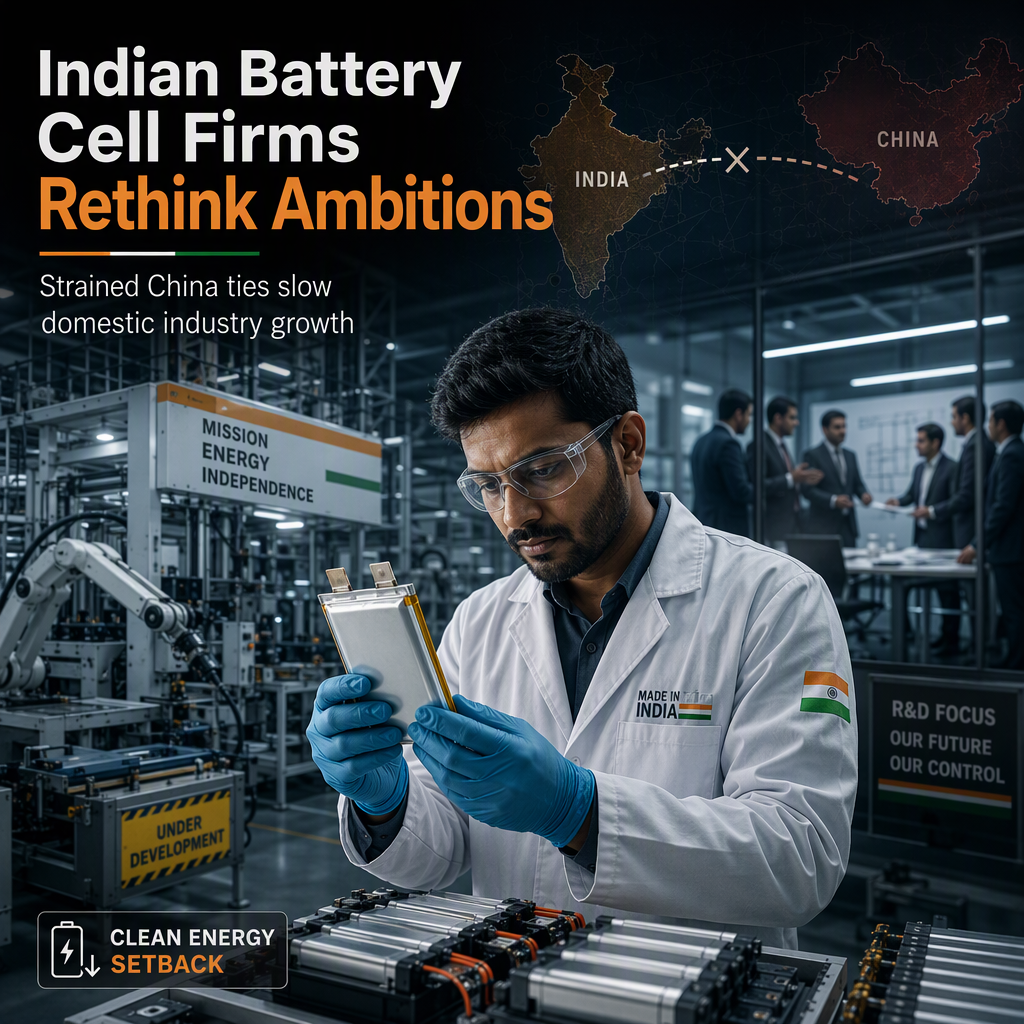
Indian battery cell manufacturers, including major conglomerates such as Amara Raja and JSW, are reducing their ambitions in the sector as partnerships with Chinese companies deteriorate due to Beijing's reluctance to share advanced technologies and ongoing geopolitical tensions [1]. This development poses a setback to India's efforts to establish a domestic battery cell manufacturing industry, which is considered vital for supporting the country's clean energy objectives, including electric vehicle adoption and renewable energy storage [1].
Experts cited in the article note that Indian companies possess the capability to produce lithium iron phosphate cells independently, as the technology is widely available. However, they emphasize that time is critical given the rapid pace of advancements in battery technology globally [1]. In response to the loss of Chinese knowhow, Amara Raja is accelerating its research and development investments and, along with other firms, is prioritizing the development of internal capabilities [1].
The shift away from Chinese partnerships could result in delays to India's goal of building a robust battery cell manufacturing ecosystem. The article highlights that the absence of Chinese expertise and supply chains may lead to increased costs and slower technological progress unless Indian companies can quickly secure alternative sources of knowledge [1].
CONCLUSION
Indian battery cell firms are facing significant challenges as strained relations with Chinese partners hinder technology transfer and slow domestic industry growth. While companies like Amara Raja are ramping up R&D to compensate, the transition may delay India's clean energy ambitions and increase costs unless alternative solutions are found quickly.