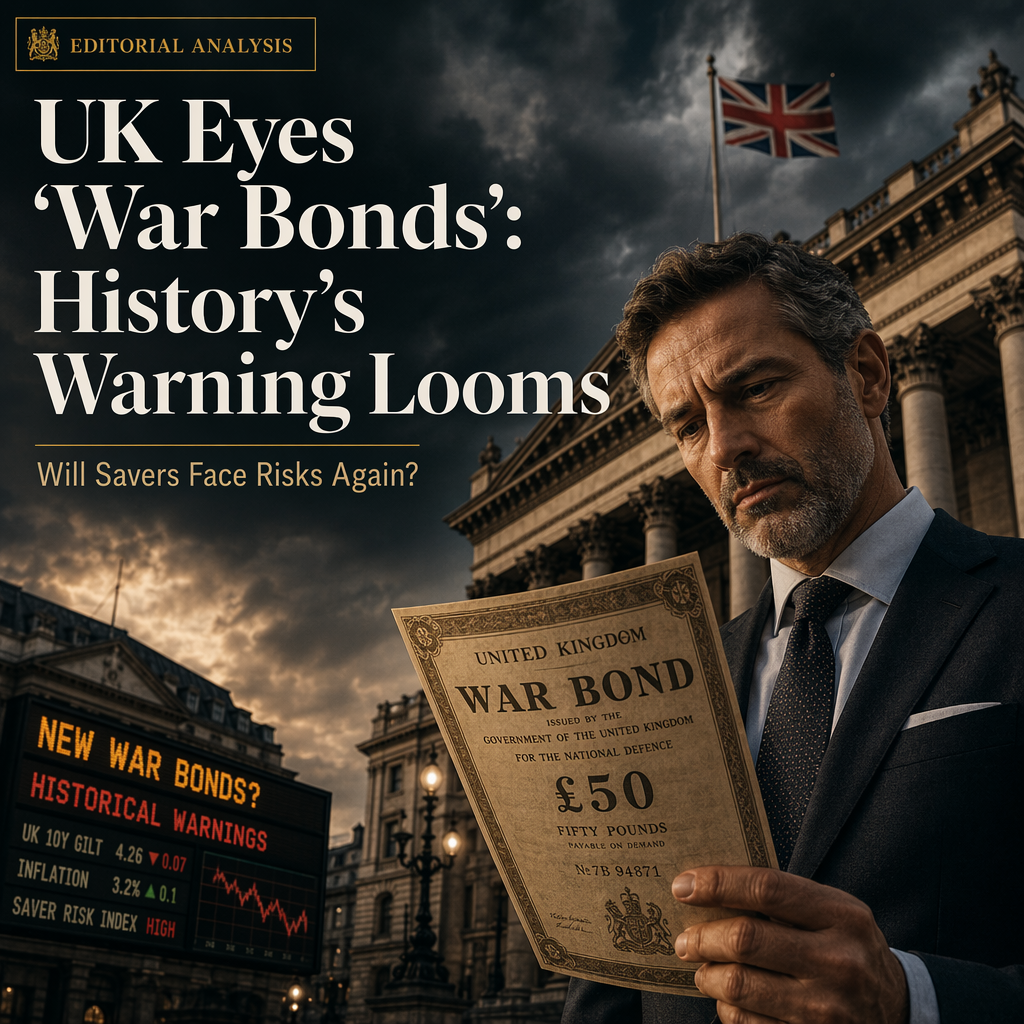
The United Kingdom is considering the issuance of new 'war bonds' to finance increased defense spending, a proposal that has sparked debate due to historical precedents. The idea involves selling hypothecated debt to investors, potentially with special perks to attract funds away from cash savings, echoing strategies used during World War I [1].
In 1914, the UK government issued a 'war loan' with a 3.5% coupon, aiming to raise £350 million but only securing £91 million ($121 million), with the Bank of England covertly covering the shortfall. A subsequent 1917 war loan campaign, led by then-chancellor David Lloyd George, raised £2.5 billion from three million investors, equivalent to approximately £261 billion today. The campaign assured investors that they 'run no risk,' a claim later disproven by events [1].
By 1932, the government deemed the 5% coupon unsustainable and converted the bonds into perpetuals with a reduced 3.5% coupon. Over time, inflation eroded the value of these investments, and by 2014, the original £100 invested in 1917 was worth little more than £2. The government finally redeemed the remaining £1.9 billion in outstanding debt, which was still held by over 120,000 investors, many of whom inherited the bonds [1].
The current proposal for 'war bonds' has gained traction following the resignation of the previous defense secretary, who left his post in protest over the Treasury's reluctance to increase defense spending. The article highlights the risks for savers, referencing the historical outcome where investors suffered significant losses due to inflation and government restructuring of the debt [1].
CONCLUSION
The UK's consideration of new 'war bonds' to fund defense spending is drawing scrutiny due to the historical precedent of significant losses for investors. While the proposal aims to attract private capital, past experiences suggest caution for savers, as inflation and policy changes previously eroded returns.