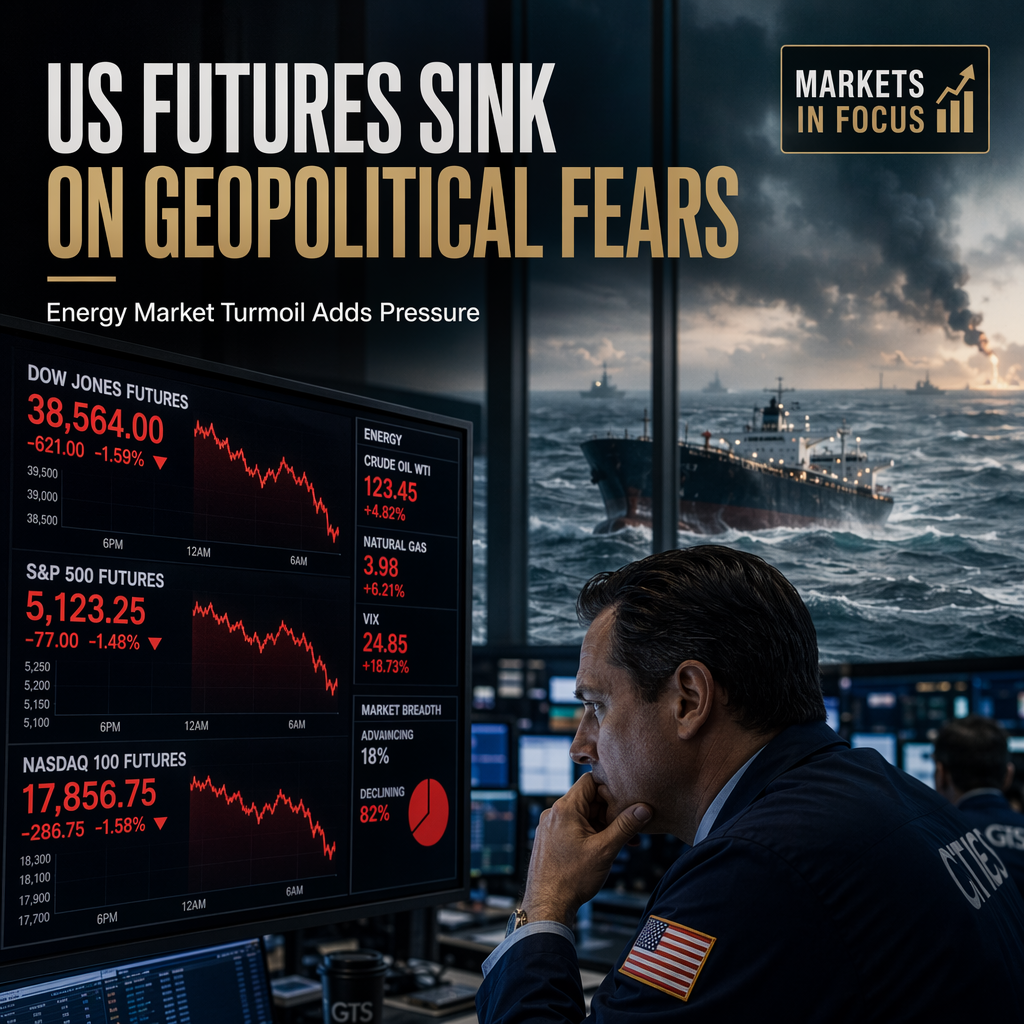
US stock futures declined in early European trading on Friday, with Dow Jones futures down 0.13% near 52,270, S&P 500 futures falling 0.60% to around 7,380, and Nasdaq 100 futures plunging 1.29% to approximately 29,350 [1]. The downturn was attributed to escalating global energy anxieties and heightened geopolitical risks, particularly following a suspected projectile attack on a cargo vessel near Oman. This incident led to the suspension of United Nations evacuation efforts in the critical Strait of Hormuz and cast uncertainty over potential US-Iran peace negotiations [1].
The situation intensified after Thursday's market close, when two US officials reported that Iranian forces had fired on the vessel as it traversed the strait. In response, Iranian authorities warned they would no longer guarantee the security of ships traveling outside designated Hormuz shipping lanes [1]. This development has contributed to increased market volatility and risk aversion among investors.
The geopolitical uncertainty followed a mixed session on Wall Street. The Dow Jones Industrial Average posted a modest gain of 0.14%, while the S&P 500 ended nearly flat. The Nasdaq Composite, however, fell 0.46%, marking its fourth consecutive day of losses [1]. An early rally, driven by Micron Technology's strong earnings and a positive revenue outlook for the August quarter, saw Micron shares surge 15.7% and initially boosted the semiconductor sector. Despite this, the gains were erased as selling pressure returned to megacap technology stocks, leading to broad declines by the close [1].
No forward-looking analyst opinions were cited in the article. The market's reaction was primarily driven by immediate geopolitical developments and sector-specific earnings news [1].
CONCLUSION
US stock futures experienced notable declines due to rising geopolitical tensions in the Strait of Hormuz and renewed energy market concerns. Despite positive earnings from Micron Technology, persistent weakness in megacap technology stocks and heightened global risks weighed heavily on market sentiment. Investors remain cautious amid ongoing uncertainty.