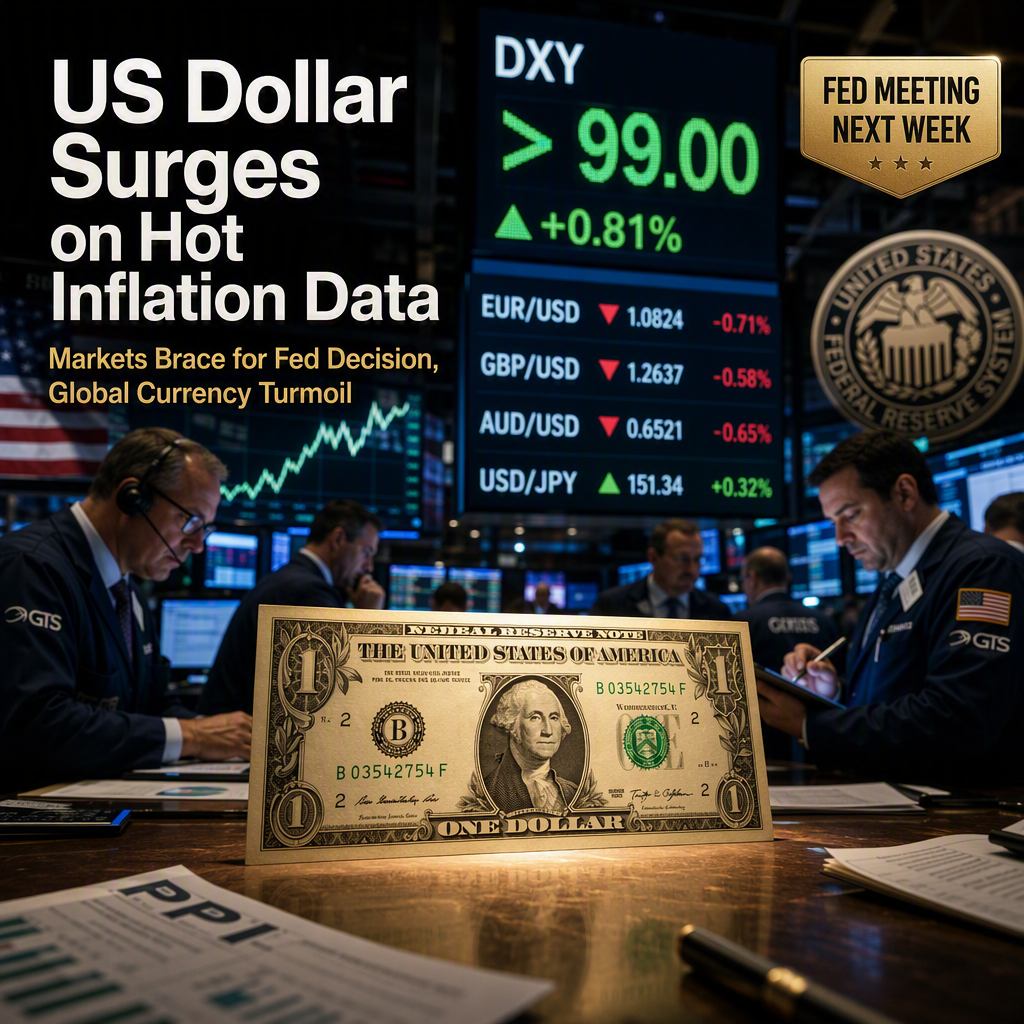
The US Dollar Index (DXY) rebounded strongly, surpassing the 99.00 level, following the release of a hotter-than-expected Producer Price Index (PPI) which rose 5.4% year-over-year to August. This robust inflation print has reinforced market expectations for a Federal Reserve rate hike at the upcoming meeting next week [1].
Currency markets reflected the US Dollar's strength, with the Greenback posting notable gains against major peers. The USD was strongest against the Australian Dollar, rising 0.85%, and also advanced 0.74% against the New Zealand Dollar and 0.52% against the British Pound. Against the Euro, the Dollar gained 0.27%, while it climbed 0.21% versus the Japanese Yen and 0.34% against the Swiss Franc [1].
The EUR/USD pair slipped to settle around the 1.1600 level, despite the European Central Bank (ECB) delivering a widely anticipated 25-basis-point rate hike, raising its deposit rate to 2.50%. ECB President Christine Lagarde described the move as a 'no-brainer,' and markets increased bets on further tightening. However, the broad-based US Dollar rally kept the Euro under pressure. Upcoming speeches by Lagarde and ECB chief Philip Lane are expected on Friday [1].
GBP/USD also retreated toward the 1.3500 region, weighed down by the resurgent US Dollar. Market participants are now focused on a busy UK data calendar, including monthly GDP, Industrial Production, Manufacturing Production for July, and Consumer Inflation Expectations, all due on Friday [1].
Looking ahead, attention is shifting to the August Consumer Price Index (CPI), with markets anticipating the headline rate to remain around 3.4%. The preliminary Michigan Consumer Sentiment and inflation expectations gauges are also on the radar, which could further influence market direction [1].
CONCLUSION
The US Dollar's sharp rebound, driven by hotter-than-expected PPI data, has heightened expectations for a Fed rate hike and pressured major currency pairs. With key inflation and sentiment data due, markets remain focused on the Fed's next move and potential policy signals from global central banks.