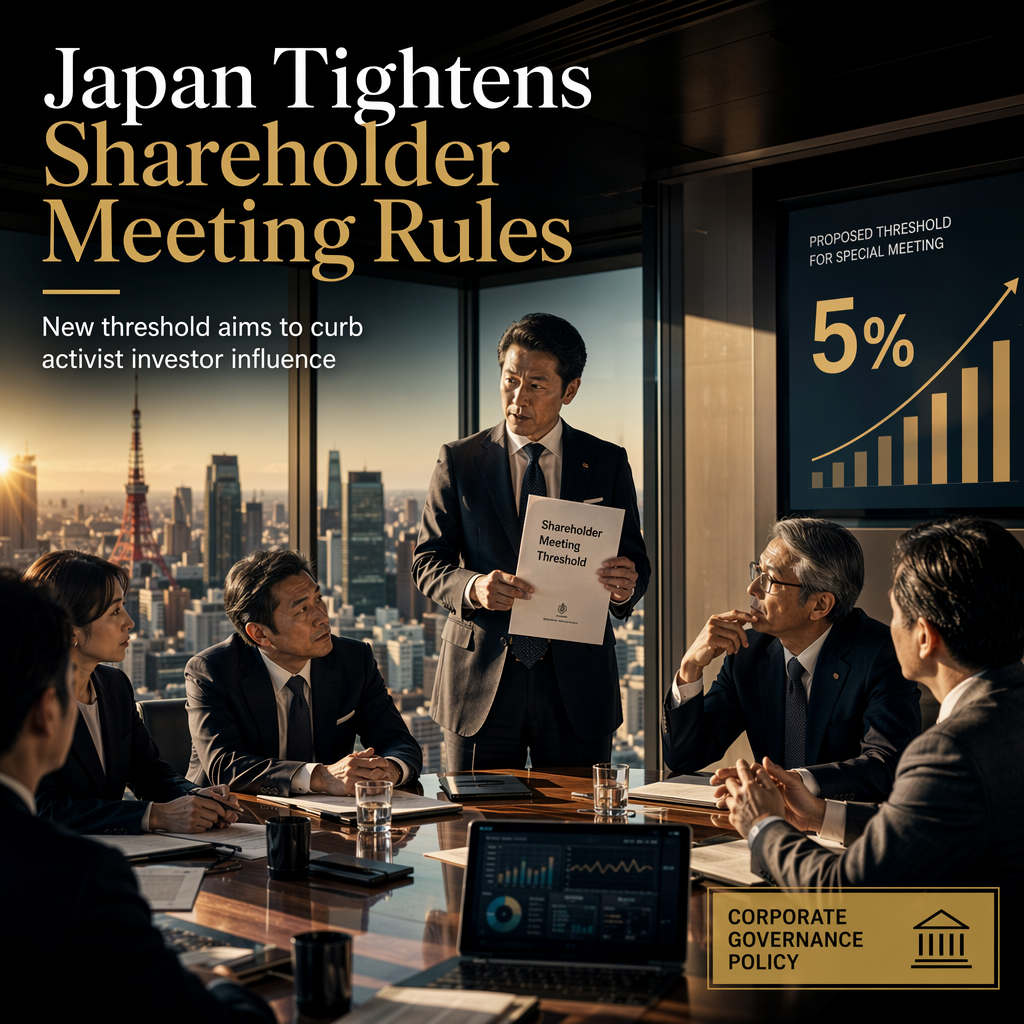
Japan's government and the ruling Liberal Democratic Party are preparing to raise the ownership threshold required for shareholders to request extraordinary meetings at Japanese listed companies. The proposed change would mandate that shareholders hold at least 5% of voting rights to call a special meeting, a significant increase from the current requirement, which has allowed activist investors with smaller stakes to initiate such meetings more easily. This policy shift is aimed at curbing what authorities describe as excessive calls for extraordinary meetings by activist investors, a trend that has led to a rise in shareholder proposals in recent years [1].
The move reflects growing concerns among policymakers about the influence of activist investors on corporate governance in Japan. By increasing the threshold, the government seeks to limit the frequency of special meetings and reduce the pressure on companies from minority shareholders. The proposal is still in the works and has not yet been finalized or implemented [1].
No specific market reactions, analyst opinions, or forward-looking statements regarding the potential impact on share prices or corporate behavior were mentioned in the article. Additionally, no individual companies or ticker symbols were cited in the coverage [1].
CONCLUSION
Japan's planned increase in the ownership threshold for calling special shareholder meetings is designed to limit activist investor influence and reduce the number of extraordinary meetings. While the proposal is still under consideration, it signals a shift in corporate governance policy that could affect shareholder engagement in Japanese listed companies.