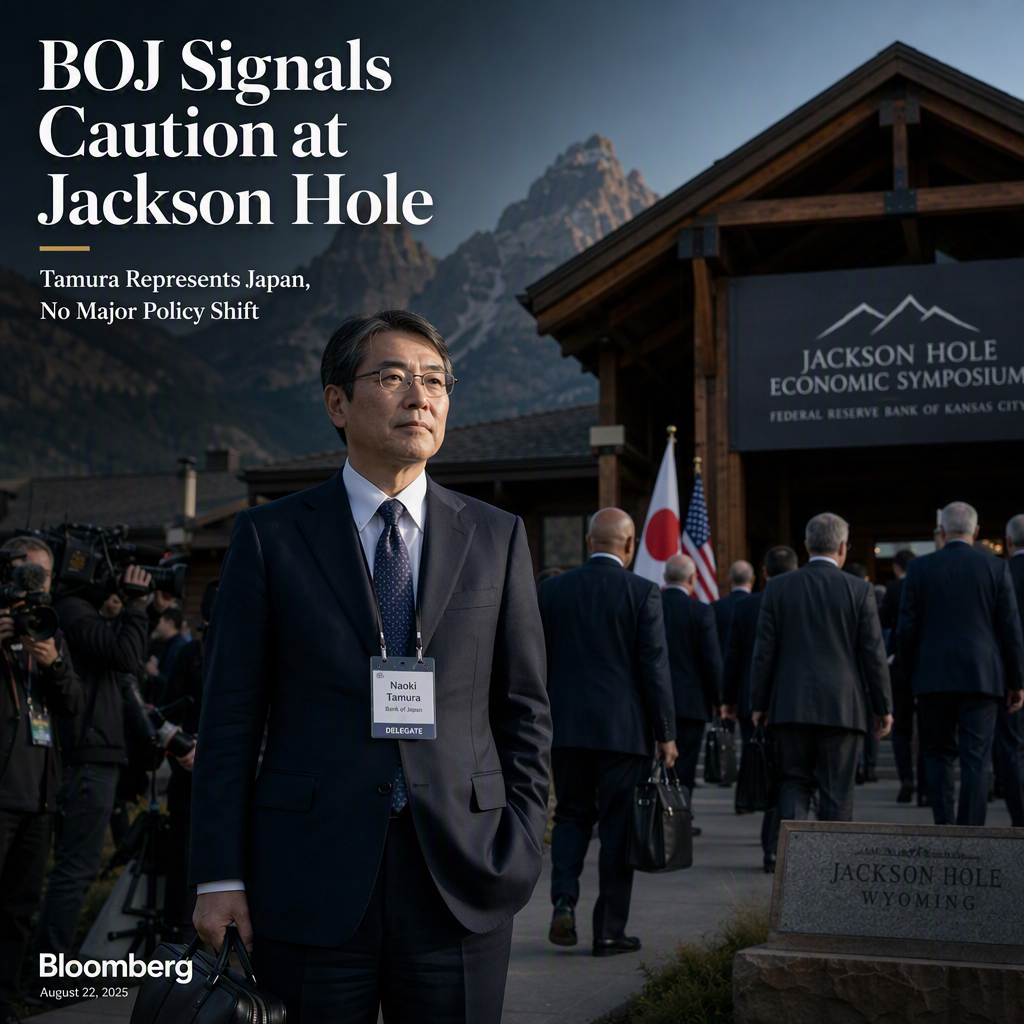
The Bank of Japan (BOJ) has decided to send policy board member Naoki Tamura, rather than Governor Kazuo Ueda or the deputy governors, to the Jackson Hole Economic Symposium in the U.S. this week, a move described as unusual by market observers [1]. Tamura, a former executive at Sumitomo Mitsui Banking Corp. and considered one of the more hawkish members of the BOJ's policy board, will represent the central bank at the event [1].
This decision has dampened speculation that the BOJ will make any statements regarding the future direction of interest rates at Jackson Hole. Analysts interpret the absence of Governor Ueda and his deputies as a signal that no major policy announcements are likely during the symposium [1]. Market participants had been closely watching for signals from the BOJ, especially as expectations for faster rate hikes have pushed up Japanese bond yields [1].
The BOJ is currently facing increased pressure from inflation risks and rising long-term interest rates. Recent remarks from BOJ deputy Himino have highlighted concerns about inflation but have not indicated an imminent rate hike [1]. As a result, market sentiment has shifted towards the possibility of faster monetary tightening, with technical analysis showing increased volatility in the Japanese bond market and support levels being tested [1]. The yen has also come under scrutiny, with US Treasury buybacks prompting market vigilance for potential interventions to stabilize the currency [1].
Investors are advised to monitor developments at Jackson Hole closely, particularly for any indirect signals from Tamura regarding the BOJ's stance. Price levels for Japanese government bonds and the yen are expected to remain sensitive to policy-related news and any changes in the inflation outlook [1]. Overall, Tamura's attendance is seen as a strategic move by the BOJ to maintain flexibility in its communication with global markets while avoiding premature signals about rate hikes or changes to its monetary policy framework [1].
CONCLUSION
The BOJ's decision to send Tamura instead of Governor Ueda to Jackson Hole signals a cautious approach, with no major policy shifts expected at the event. Markets remain alert to any indirect signals, as Japanese bond yields and the yen continue to react to inflation risks and monetary policy expectations.