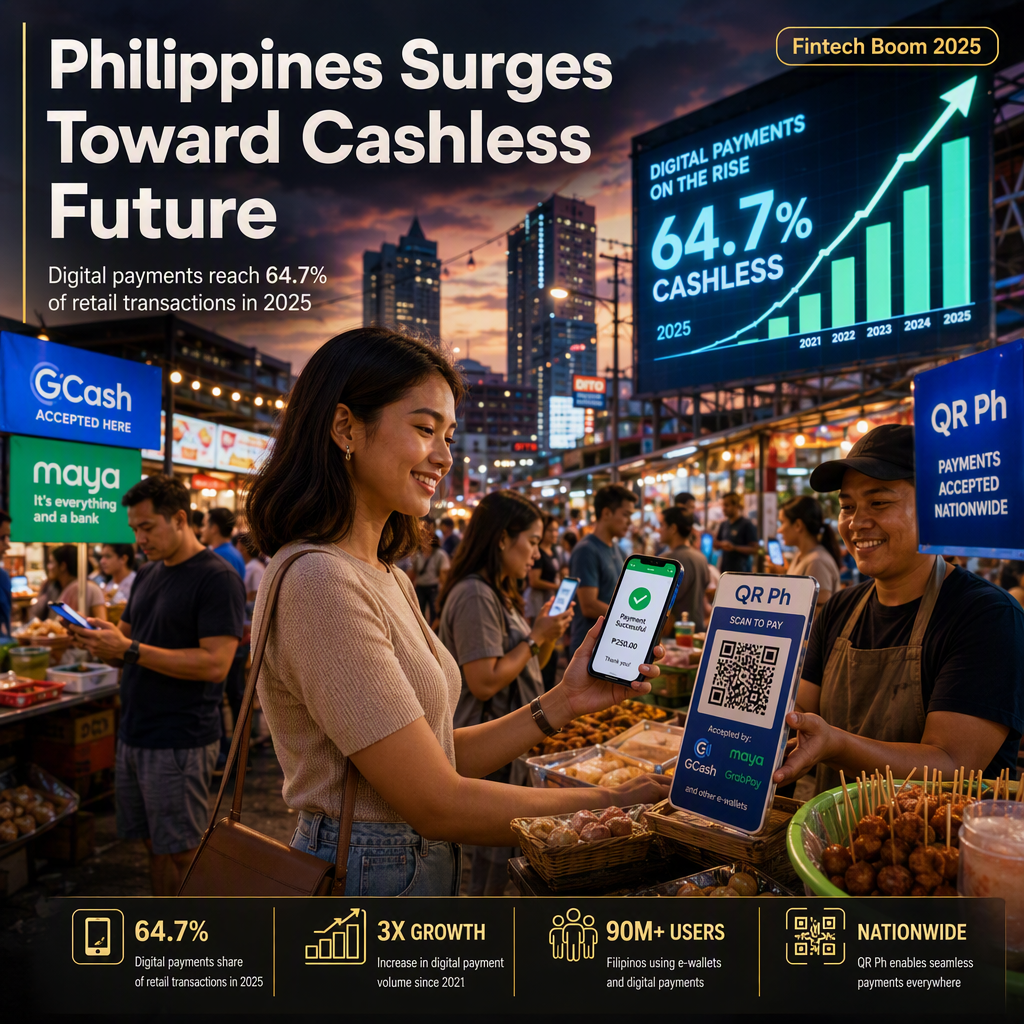
Digital payments in the Philippines accounted for 64.7% of all retail transactions in 2025, marking a significant milestone in the country's transition from cash-based payments to a cashless economy [1]. This surge was driven by the rapid adoption of national QR standards, particularly the unified 'QR Ph' network, and robust policy support from financial regulators [1]. Digital wallets such as GCash and Maya, alongside the QR Ph network, have played pivotal roles in accelerating this shift, making it easier for both consumers and merchants to transact digitally and reducing reliance on cash [1].
The central bank's push for digitalization, combined with private sector innovation from companies like GCash and Maya, has led to a notable increase in digital wallet usage and the expansion of QR payment infrastructure across the country [1]. Market analysts highlight that the Philippines is quickly catching up to regional leaders like Thailand, Malaysia, and Singapore, thanks to its strong digital ecosystem and government-backed initiatives [1]. Projections indicate continued growth in digital payment adoption, with a further decline in cash transactions expected [1].
Industry experts believe this move toward cashless transactions will have far-reaching implications for the retail, banking, and fintech sectors, creating new opportunities for innovation and operational efficiency [1]. Financial leaders emphasize the importance of maintaining momentum and ensuring the security and accessibility of digital payment systems [1]. Payment trend charts show a steady climb in digital transaction volume, with key support levels at 60% and resistance at 70%, suggesting the next psychological threshold for market participants [1].
The overall sentiment is overwhelmingly positive, with trading advice favoring fintech and payment stocks as attractive investments amid the ongoing digital transformation [1].
CONCLUSION
The Philippines' rapid adoption of digital payments, reaching 64.7% of retail transactions in 2025, signals a major shift toward a cashless economy. Strong policy support and private sector innovation are expected to drive further growth, benefiting fintech and payment sectors. Market sentiment remains highly positive, with analysts projecting continued expansion and new opportunities in digital finance.