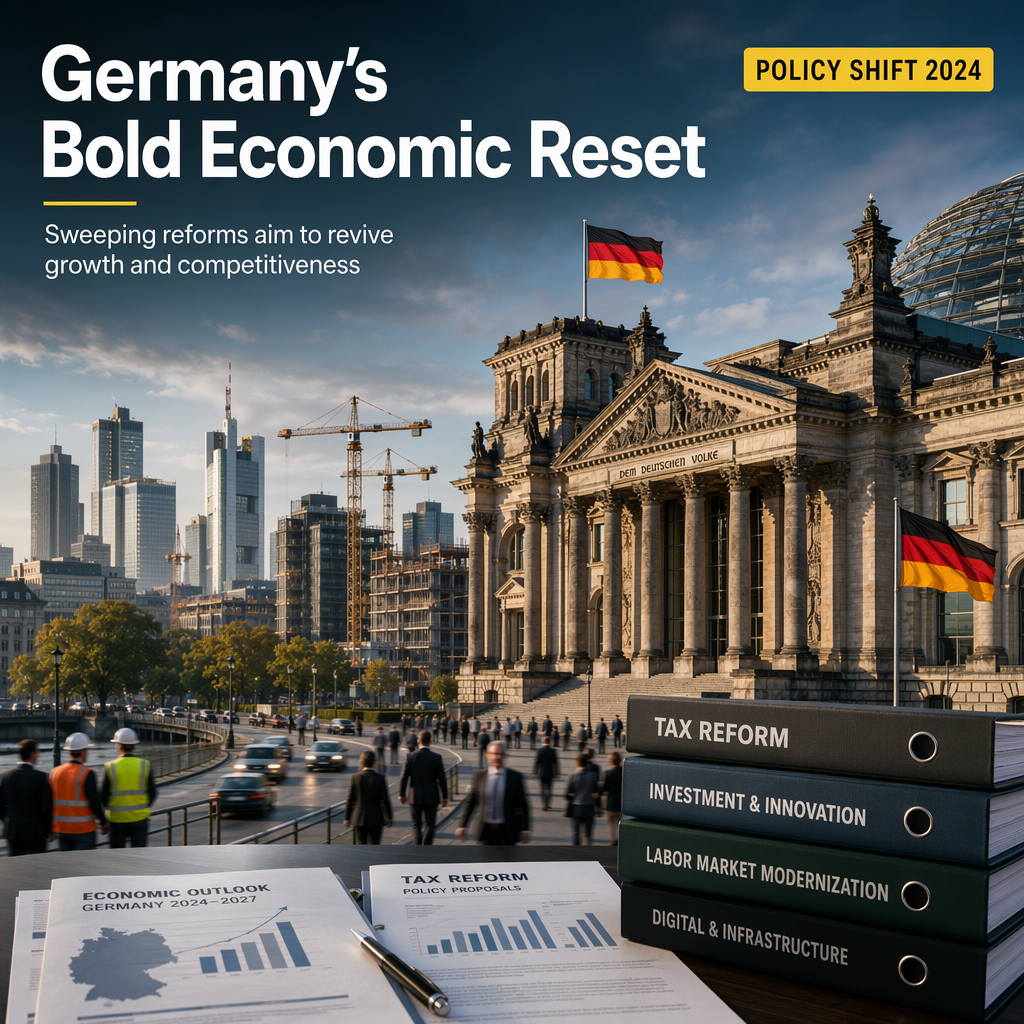
The German government has announced a comprehensive reform package aimed at revitalizing the country's economic competitiveness and supporting a more optimistic GDP outlook, according to ING's Carsten Brzeski [1]. The reforms focus on cutting red tape, increasing labour market flexibility, and capping healthcare and pension costs to restore competitiveness. A notable new element in the package is tax relief for lower and middle-income households, while previously discussed measures such as bureaucracy reduction and simplification are also included [1].
Brzeski highlights that, although the measures will not immediately transform Germany's stagnating economy into a booming one, they are expected to create a framework for future growth and put public finances on a more sustainable footing, especially in light of demographic changes [1]. The package still requires parliamentary approval, and some areas, such as a long-term strategy for affordable energy and tax relief for companies, remain unaddressed [1].
The ongoing fiscal stimulus for infrastructure and defence is also cited as contributing to a more optimistic narrative for German growth. The reforms are seen as a significant shift from analysis to tangible action, indicating that the German government is taking proactive steps to address economic challenges [1].
CONCLUSION
Germany's new reform package marks a decisive move towards enhancing competitiveness and supporting future economic growth. While immediate effects may be limited, the measures lay important groundwork for sustainable public finances and a more positive growth outlook. Market sentiment is cautiously optimistic, pending parliamentary approval and further action on energy and corporate tax relief.